
 392
392 14 minutes read
Contents
- Why travel agents should be selling Milan right now
- Practical information for travel agents
- Where to stay in Milan: Neighbourhoods and hotel options
- Top things to do in Milan: Must-see attractions
- Milan activities by travel type
- Nearby destinations: Day trips from Milan
- Milanese food: What your clients should try
- Insider tips for Milan
- Milan as a “Destination Next” recommendation
Why travel agents should be selling Milan right now
Milan in Italy works for every client profile as one of the leading destinations for a European city break. Here’s why Milan stands out:
- First-time visitors come for bucket list experiences like the Duomo cathedral and seeing da Vinci’s ‘The Last Supper’.
- Its combination of world-leading art (the Last Supper, the Brera gallery, the Duomo cathedral), the global fashion and design industry, an excellent food scene, and outstanding day-trip options makes it one of the most complete city destinations in Northern Italy.
- Repeat visitors return to discover Isola, Tortona, Porta Ticinese, and the Bovisa design district; neighbourhoods that make Milan one of the most genuinely contemporary cities in Italy.
- Northern Italy’s transport hub with high-speed rail to Venice (around 2h15), Florence (1h45), Rome (3h), and Turin (1h), plus Malpensa’s international connections, making it the natural starting or ending point for any Northern Italy programme.
RateHawk’s hotel supply across the Duomo, Brera, Navigli, and Porta Nuova districts gives you the inventory to build a customized Milan itinerary for every client.
Practical information for travel agents
Travel guidelines
Weather and best time to visit Milan
- Spring (April–May): The best time to visit Milan for most clients, with mild temperatures of 14–22°C. The city’s parks and canals are at their most beautiful with manageable crowds.
- Summer (June–August): Hot temperatures of 28–33°C and humid. Many Milanese leave in August and some independent restaurants and businesses close for part of the month, making the city quieter and the museums less busy than in spring.
- Autumn (September–October): An excellent alternative to spring. Fashion week in September and the pleasant temperatures of October make it a strong time to visit.
- Winter (November–March): Cold and often foggy with temperatures of 5–10°C. The city’s café culture and Michelin-starred restaurant scene are at their best; the Christmas decorations on the Duomo are spectacular.
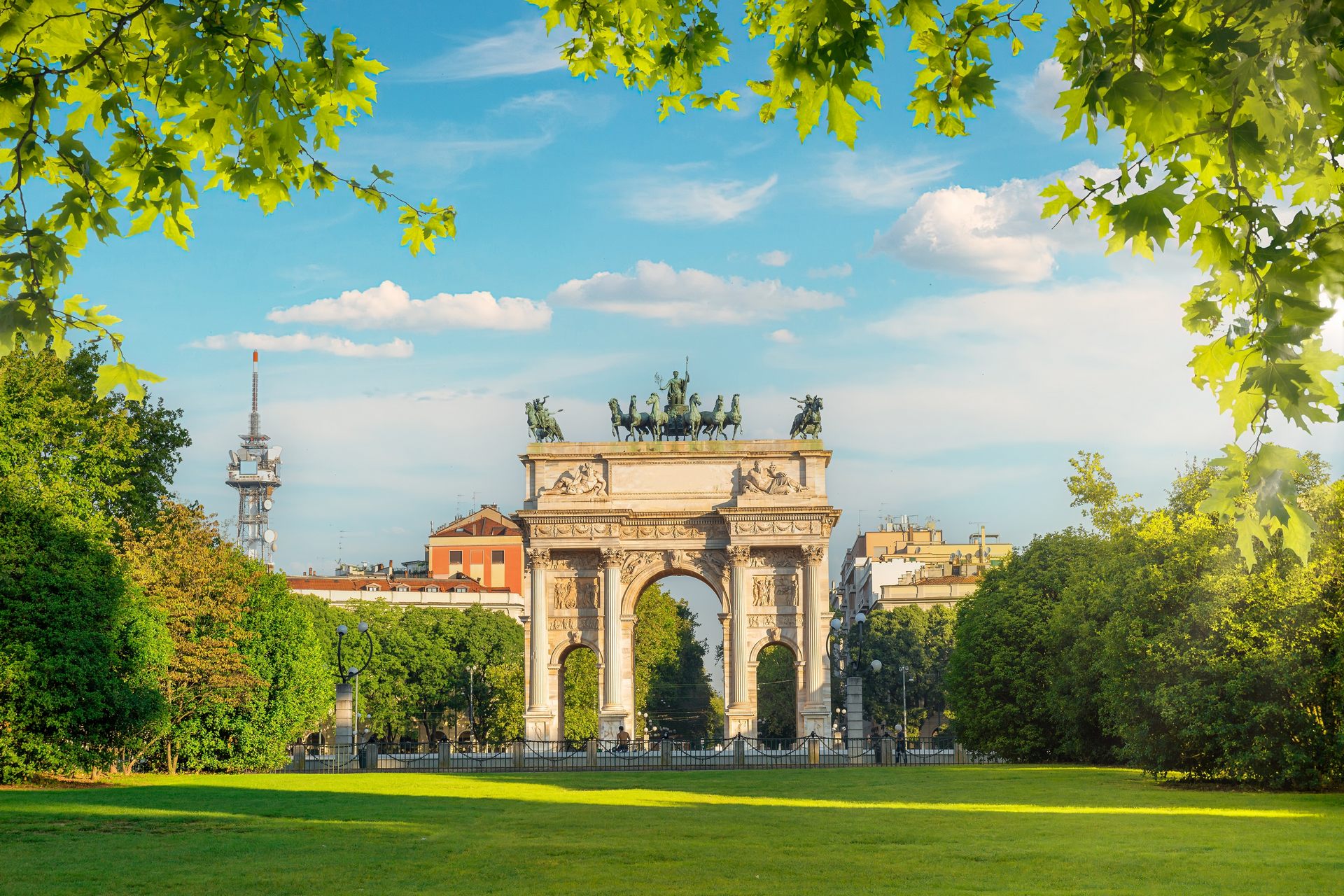
Photo by givaga on Shutterstock
Milan fun facts
- The Duomo di Milano took nearly six centuries to complete. Construction began in 1386, and the last bronze doors were installed in 1965. It is among the world’s largest Gothic cathedrals with over 3,400 statues on its exterior alone.
- Milan is widely regarded as one of the world’s leading fashion capitals alongside Paris, New York, and London. The headquarters of Prada, Versace, Armani, and Dolce and Gabbana are all within a few kilometres of each other in the city centre.
- The Navigli canal district dates from the 12th century. Leonardo da Vinci studied and proposed improvements to Milan’s canal system during his time in the city.
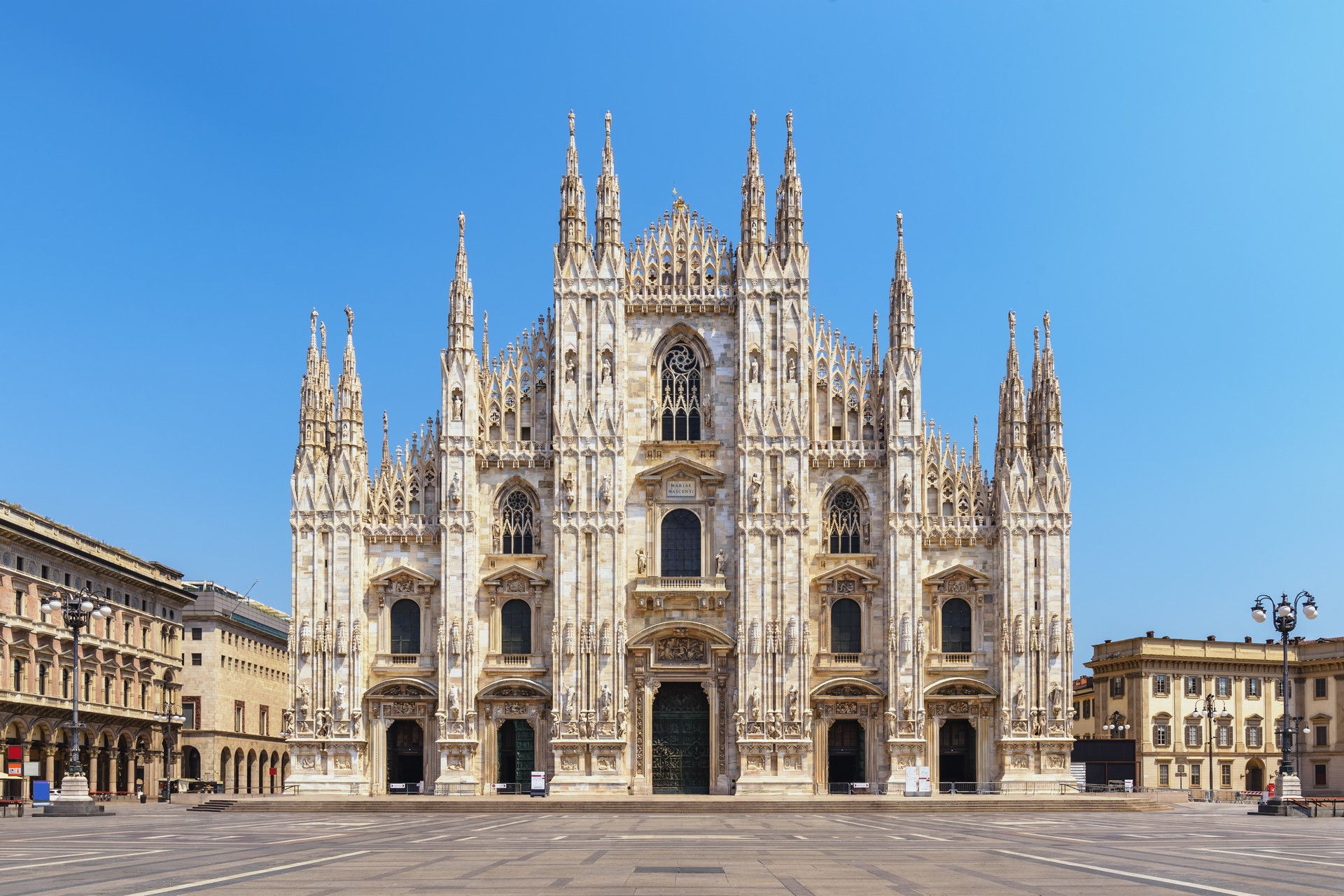
Photo by Noppasin Wongchum on Shutterstock
Getting around Milan
The city has an excellent metro, tram, and bus system that makes navigation easy for first-time visitors. The historic centre is compact and walkable; the metro extends easy access to outer districts.
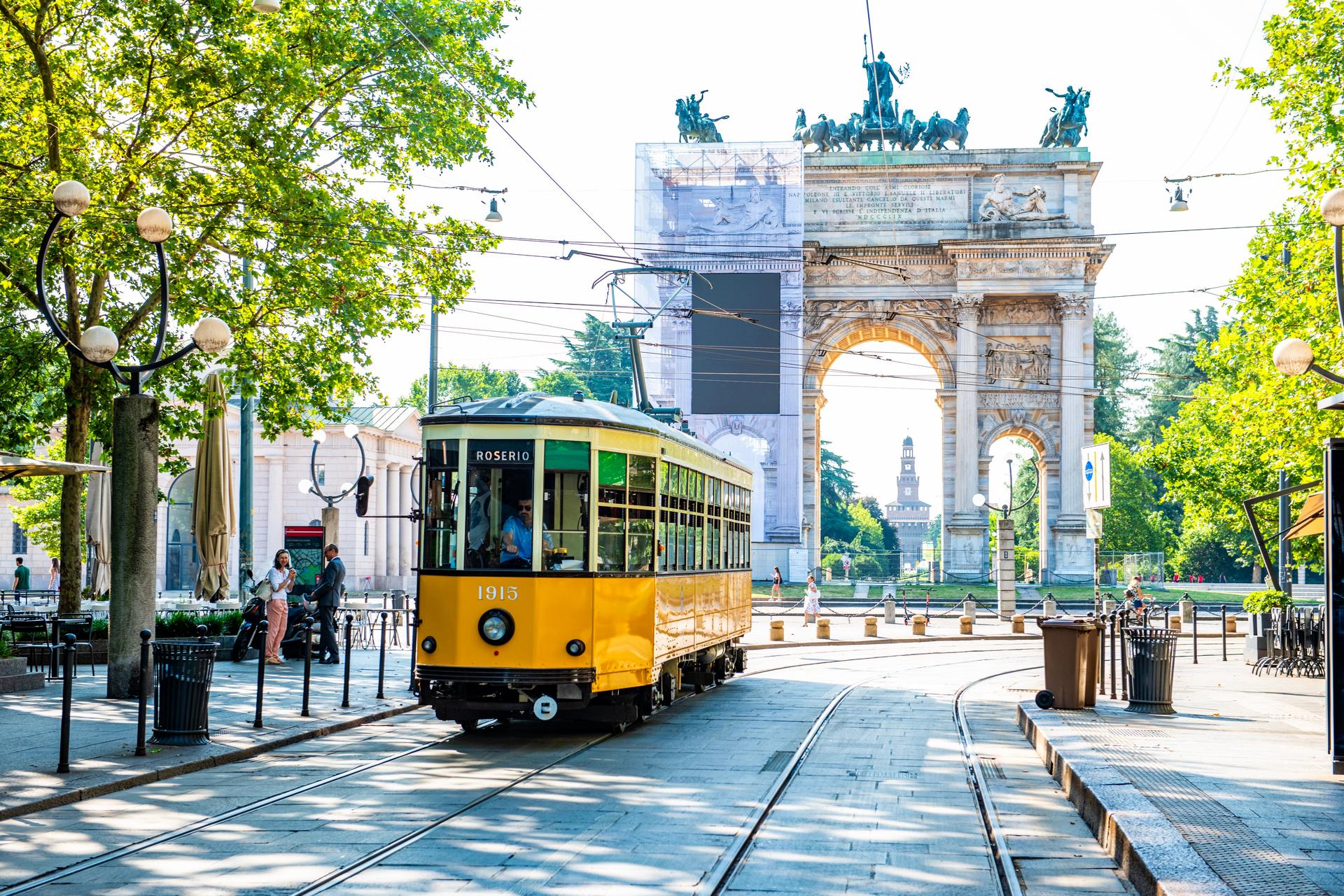
Photo by Resul Muslu on Shutterstock
- Metro: Five lines (M1 red, M2 green, M3 yellow, M4 blue, and M5 lilac) connect all major visitor districts. The Duomo is served by M1 and M3; Brera is accessible via Lanza (M2), Cairoli (M1), or Montenapoleone (M3); Porta Genova (M2) serves the Navigli district.
- Tram: Historic vintage orange trams cover ground across the city centre in an atmospheric way. Tram 2 is useful for reaching the Navigli canals from the Duomo area.
- Taxi and transfers: MyTaxi (FREE NOW) and licensed taxis are metered and plentiful. Pre-booked private transfers are the most convenient option for Malpensa airport connections.
RateHawk insight
Travel agents can showcase their knowledge of Milan by incorporating transportation into their clients’ packages. RateHawk makes it easy to enhance the value of your client’s package with airport transfers and hire cars. If Milan is the first stop in a “Grand Tour” of Italy, then travel agents can streamline travel by adding high-speed train tickets to Florence, Venice, Rome, and Turin.
Where to stay in Milan: Neighbourhoods and hotel options
Around the Duomo and the historic centre
Best for: First-time visitors and luxury clients.
The most central and prestigious base in Milan, within walking distance from the Galleria Vittorio Emanuele II, La Scala opera house, and the city’s main luxury shopping streets. Hotels range from grand five-star properties to well-positioned mid-range options. The strongest choice for first-time Milan visitors and luxury clients.
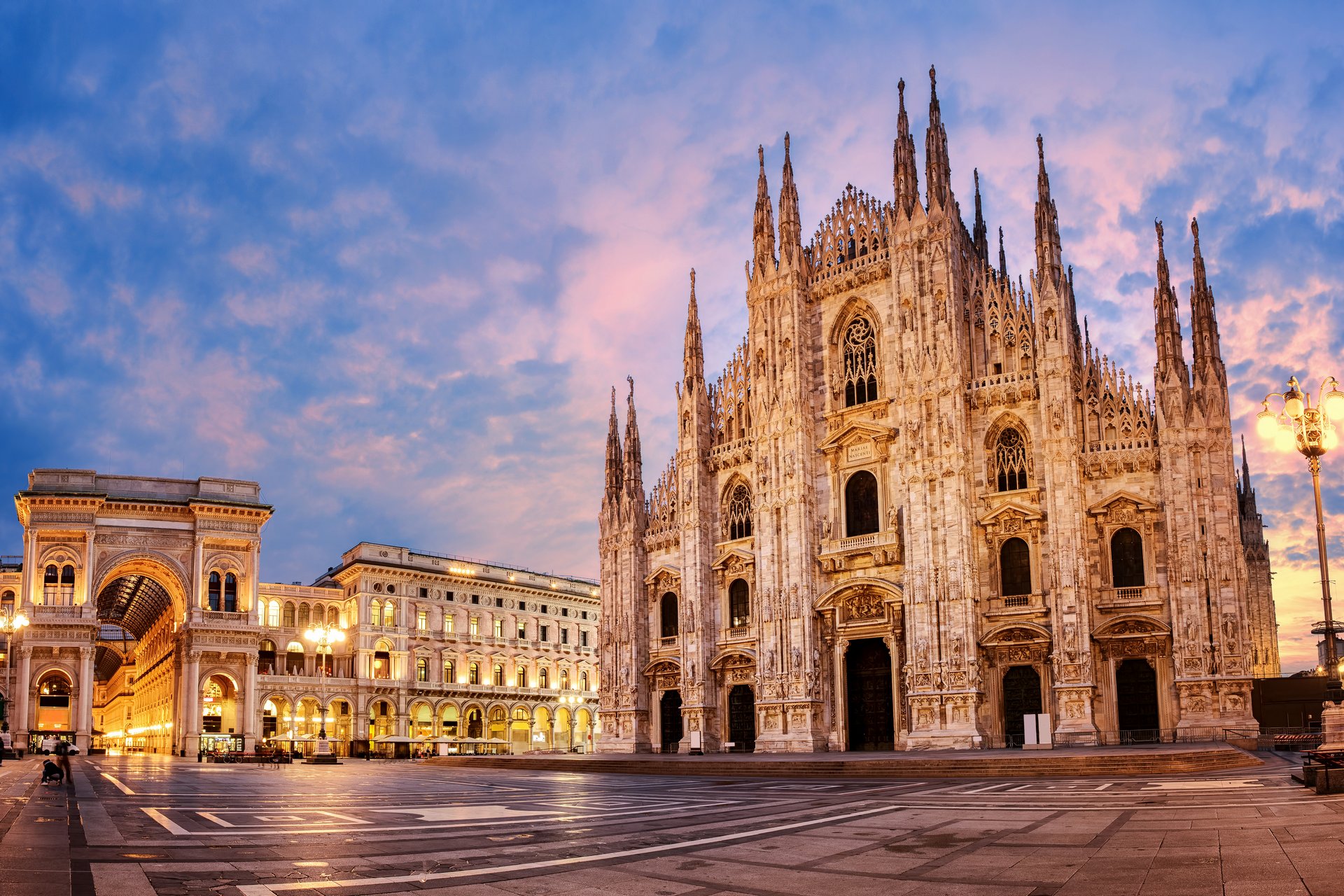
Photo by Boris Stroujko on Shutterstock
Brera
Best for: Art-focused clients and repeat visitors.
Milan’s most characterful neighbourhood with cobbled streets, independent restaurants, wine bars, antique bookshops, and the best concentration of independent galleries in the city. A boutique hotel in Brera combines proximity to the Duomo, just 15 minutes on foot, with a more local, atmospheric experience. Ideal for art-focused travellers and repeat visitors.
Navigli and the canal district
Best for: Solo travellers and foodies in search of nightlife.
Milan’s most bohemian neighbourhood with independent restaurants, vintage shops, aperitivo bars on the canal banks, and a strong street art scene. Slightly south of the historic centre (20 minutes by tram from the Duomo) but well connected. Best for younger independent travellers and clients drawn to Milan’s food and social scene.
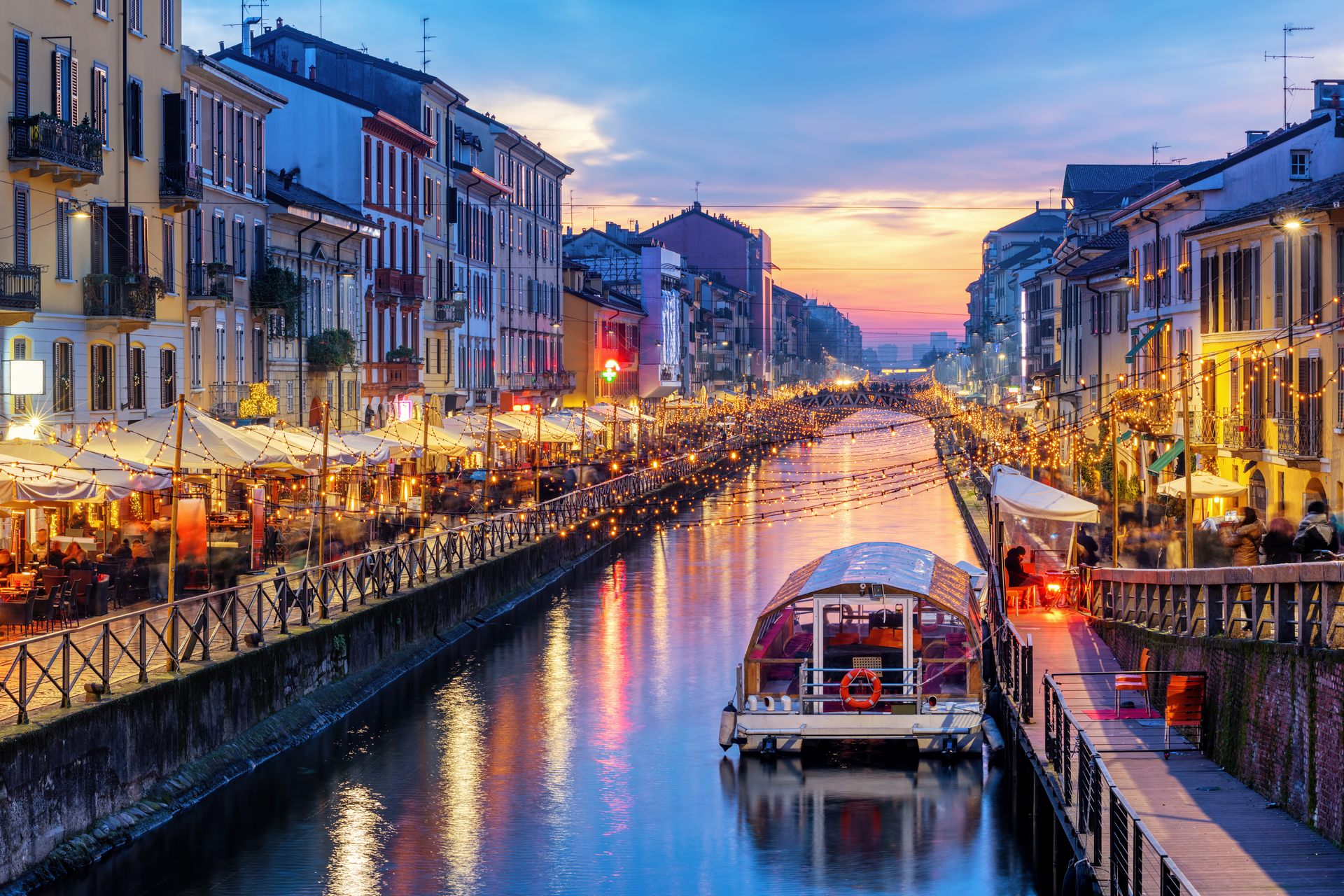
Photo by Boris Stroujko on Shutterstock
Porta Nuova and the modern city
Best for: Business travellers and long-stay clients who want convenient transport.
Milan’s most architecturally impressive modern district. Home to the Bosco Verticale towers and Piazza Gae Aulenti, making it an immersive walk for admirers of architecture. Major international hotel brands are established here. The best base for business travel and long-stay clients who want modern hotel infrastructure with easy metro access to the historic centre.
Top things to do in Milan: Must-see attractions
1. The Duomo di Milano: Italy’s most ambitious cathedral
The Milan Duomo (Cattedrale di Santa Maria Nascente) is the most extraordinary Gothic cathedral in Italy. Its white Candoglia marble facade carries over 3,400 statues, 135 spires, and the golden Madonnina at 108 metres. The interior is immense: 157 metres long, 92 metres wide, lined with 52 individually carved columns.
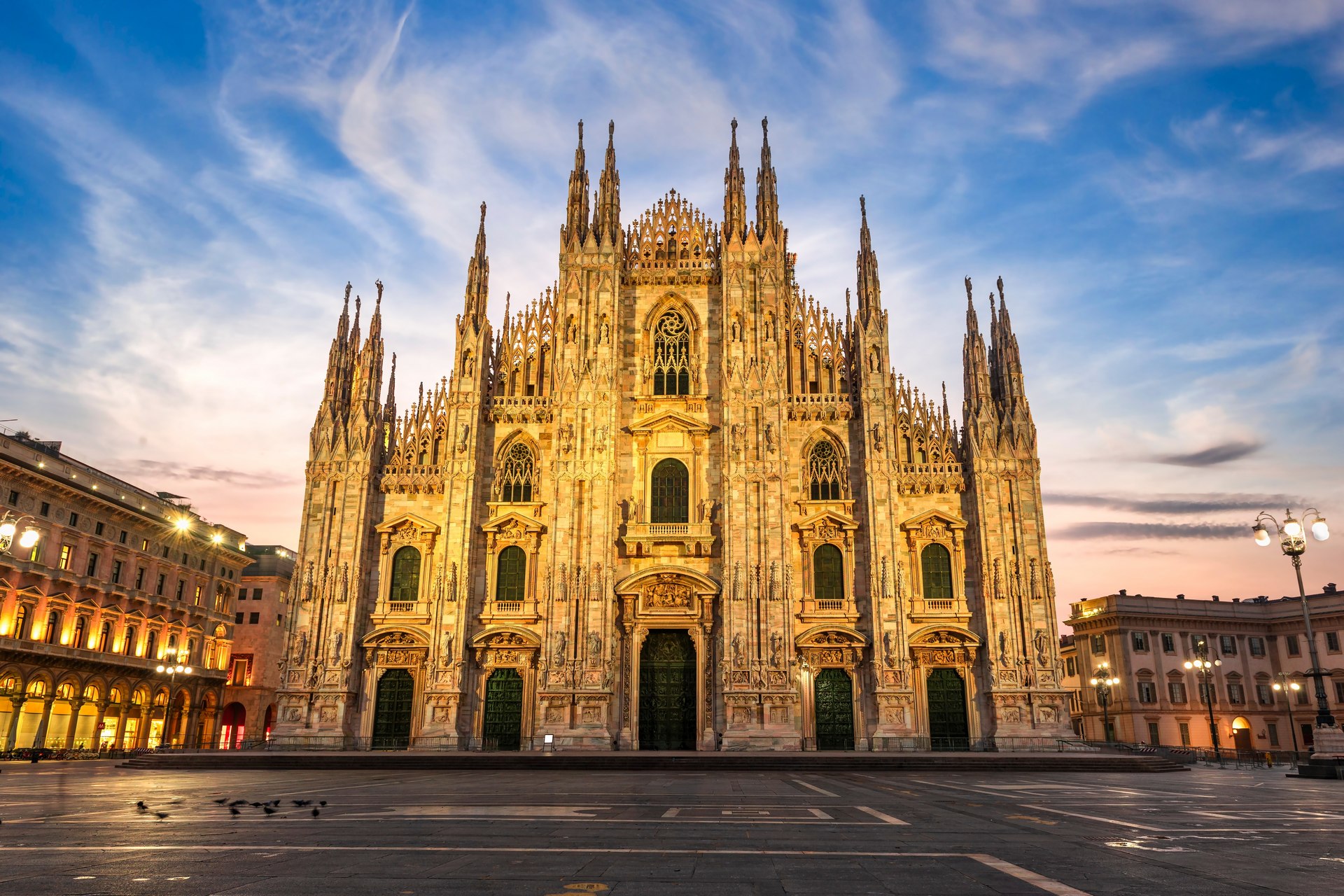
Photo by zevana on Shutterstock
The rooftop terraces are accessible by staircase (919 steps) or lift, and it is essential to get the full experience. The sight over Milan from the forest of Gothic spires, with the Alps visible on clear days, is the finest panoramic view in the city.
Book Duomo cathedral tickets online in advance; rooftop and interior tickets are sold separately, and demand is high year-round.
2. Da Vinci’s Last Supper at Santa Maria delle Grazie
Leonardo da Vinci’s ‘Il Cenacolo’ (The Last Supper), painted on the north refectory wall of Santa Maria delle Grazie between 1495 and 1498, is one of the most significant works of art ever created. This 460 cm × 880 cm mural has a psychological intensity and compositional innovation that defined Western art for centuries.
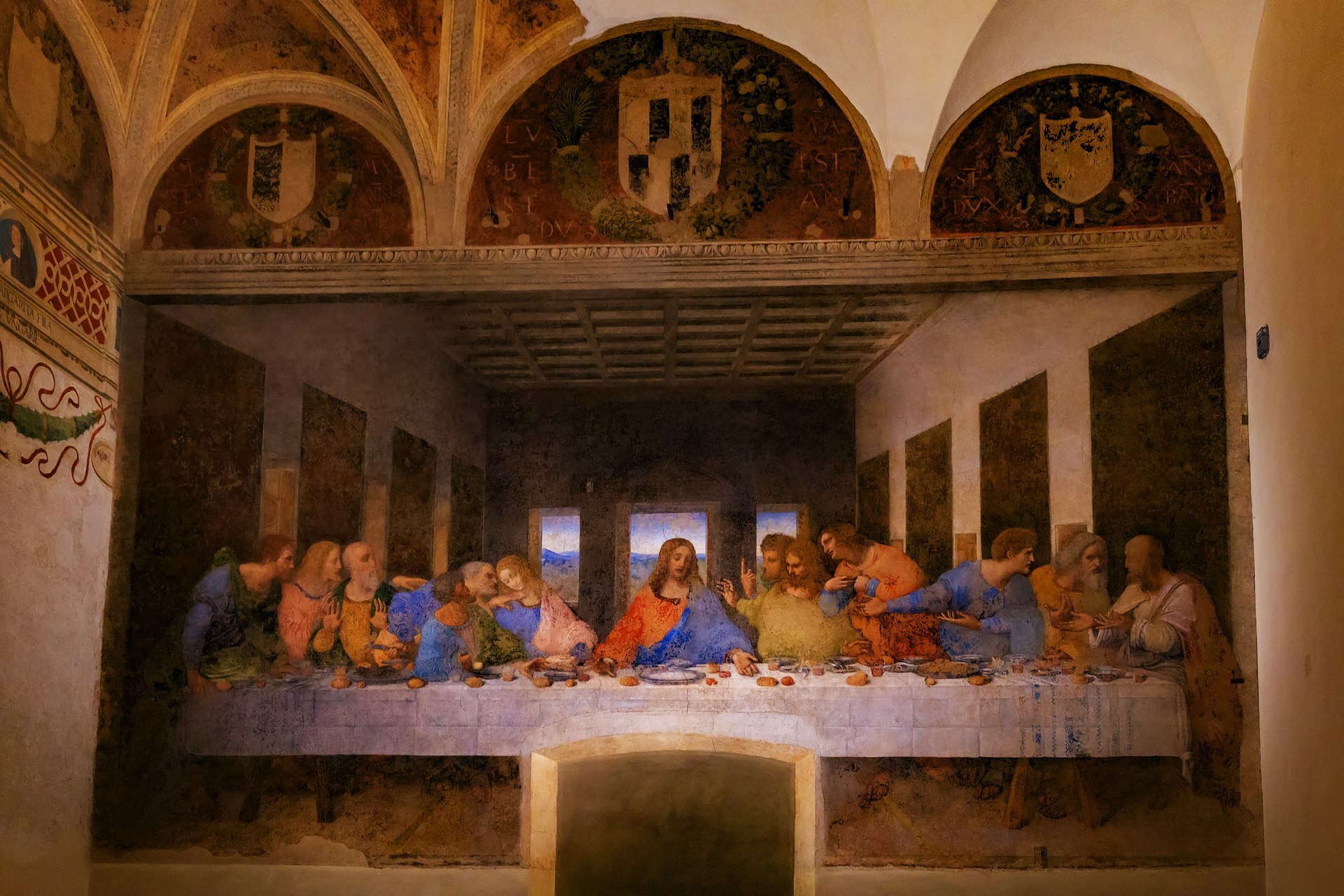
Photo by Ungvari Attila on Shutterstock
Only 25 visitors are admitted per 15-minute time slot. Tickets are frequently sold out weeks or months in advance, making pre-booking essential. Santa Maria delle Grazie itself, the church that houses the refectory, is a UNESCO World Heritage Site and worth viewing from the piazza in its own right.
3. Brera Art Gallery and the Brera District
The Pinacoteca di Brera, housed in a 17th-century palazzo in Milan’s most beautiful neighbourhood, is the finest art museum in the city. Its collection covers eight centuries of Northern Italian painting: Mantegna’s Dead Christ, Raphael’s Marriage of the Virgin, Caravaggio’s Supper at Emmaus, and major Titian and Veronese works are among the highlights. Entry is free on the first Sunday of each month.
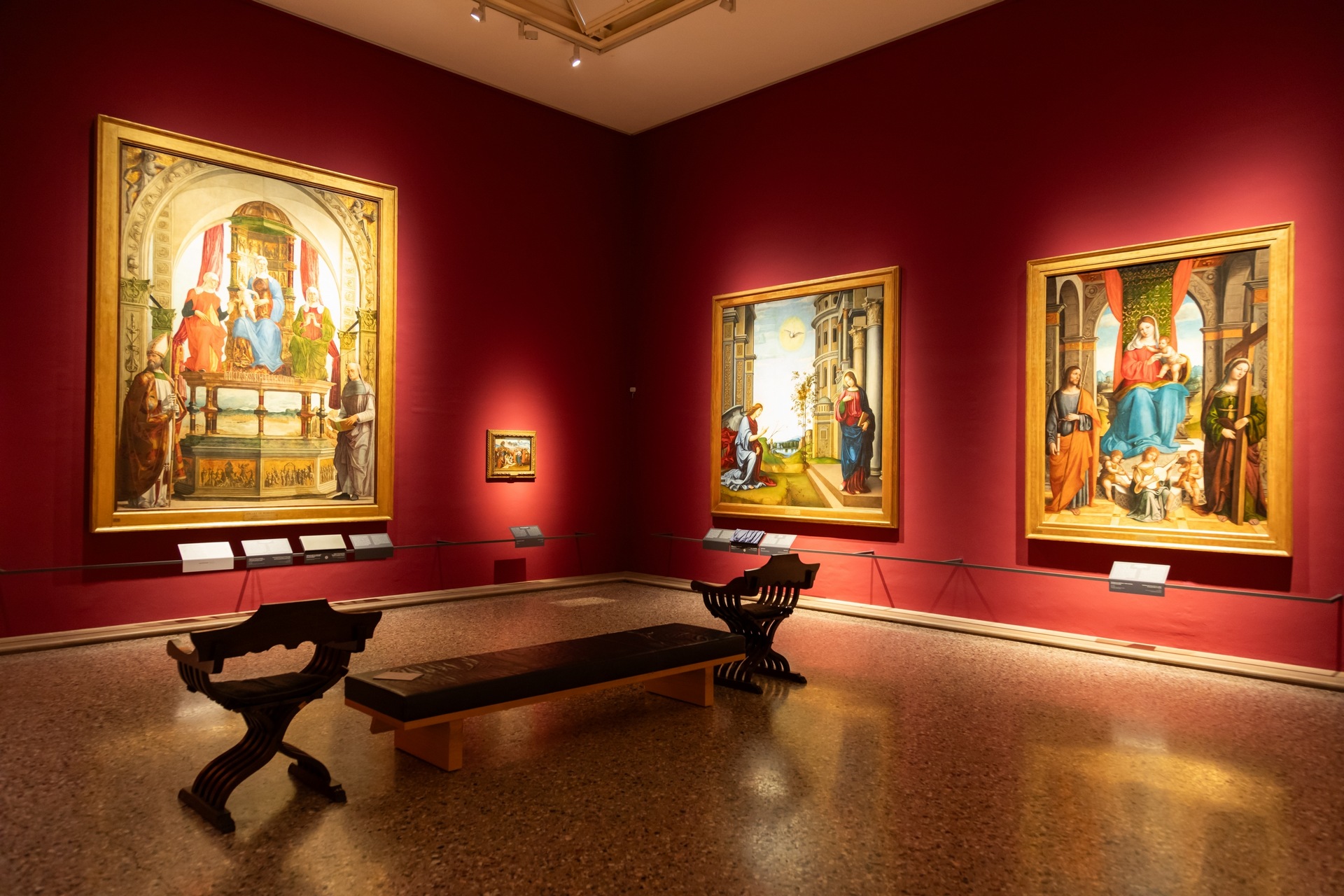
Photo by Paolo Gallo on Shutterstock
The Brera district surrounding the gallery, with its Via Fiori Chiari wine bars, Via Madonnina antique dealers, and the small botanical garden inside the palazzo courtyard, is best explored over an entire afternoon.
4. The Navigli Canal District and aperitivo culture
The Navigli canal district is the most social and distinctively Milanese part of the city. The Naviglio Grande and Naviglio Pavese canals are lined with restaurants, bars, and independent shops.
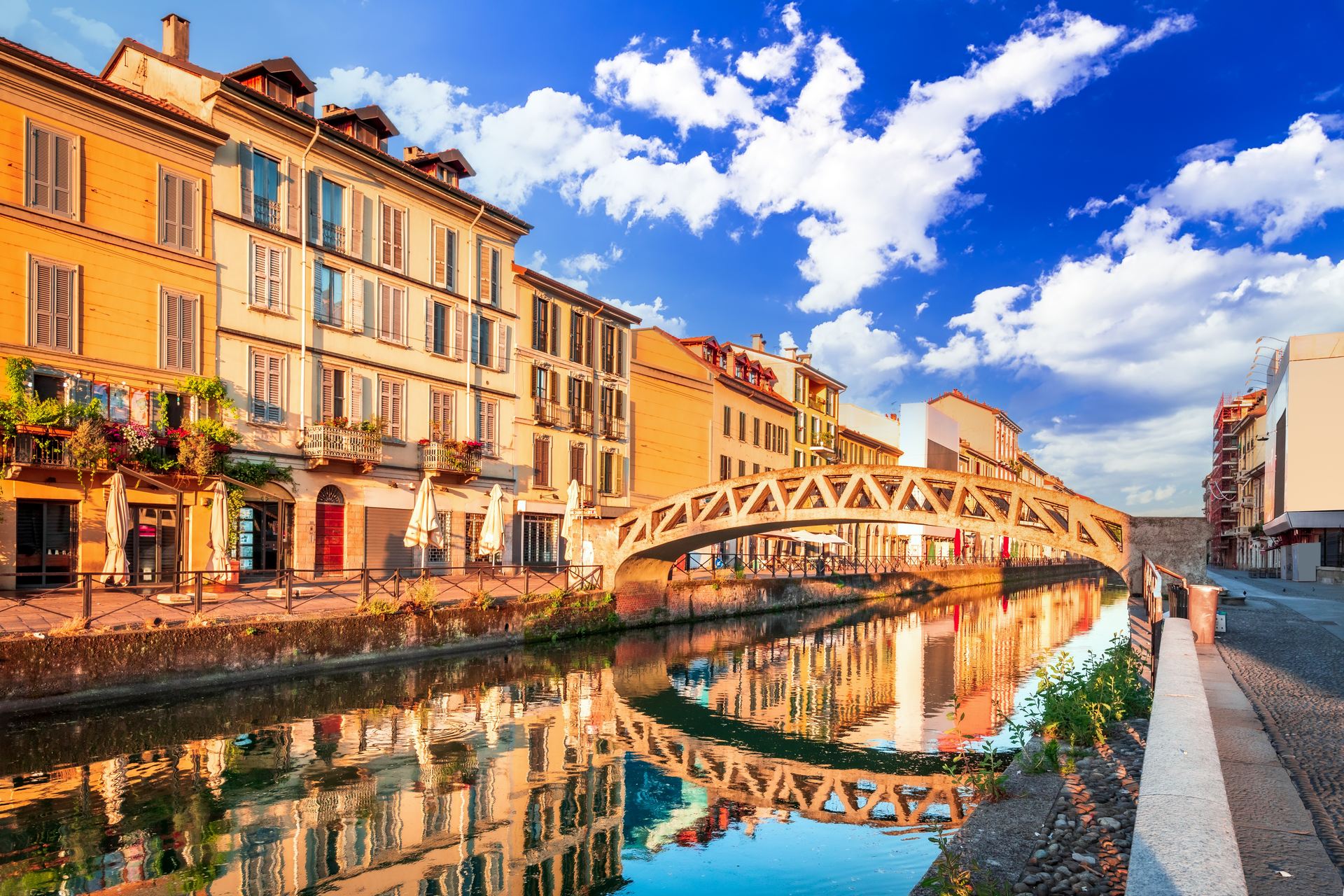
Photo by cgst26 on Shutterstock
From 6 PM onward, the Milanese aperitivo hour fills every outdoor terrace with tourists and locals alike drinking Campari Spritz or Negroni. Drinks are typically accompanied by snacks or aperitivo offerings, though formats vary by venue.
A walking tour of the district, covering the canal banks, the Vicolo dei Lavandai (the last remaining wash house on the Naviglio Grande, dating to 1753), and the antique market along the Naviglio Grande (which runs on the last Sunday of each month) is one of the best things to do in Milan for any client who wants the city beyond its monuments.
5. Castello Sforzesco and Parco Sempione
The Castello Sforzesco is the great red-brick castle on the northwestern edge of Milan’s historic centre, built by Francesco Sforza in the 15th century. It houses seven museums and civic collections, including Michelangelo’s Pietà Rondanini, the last sculpture he worked on before his death in 1564.
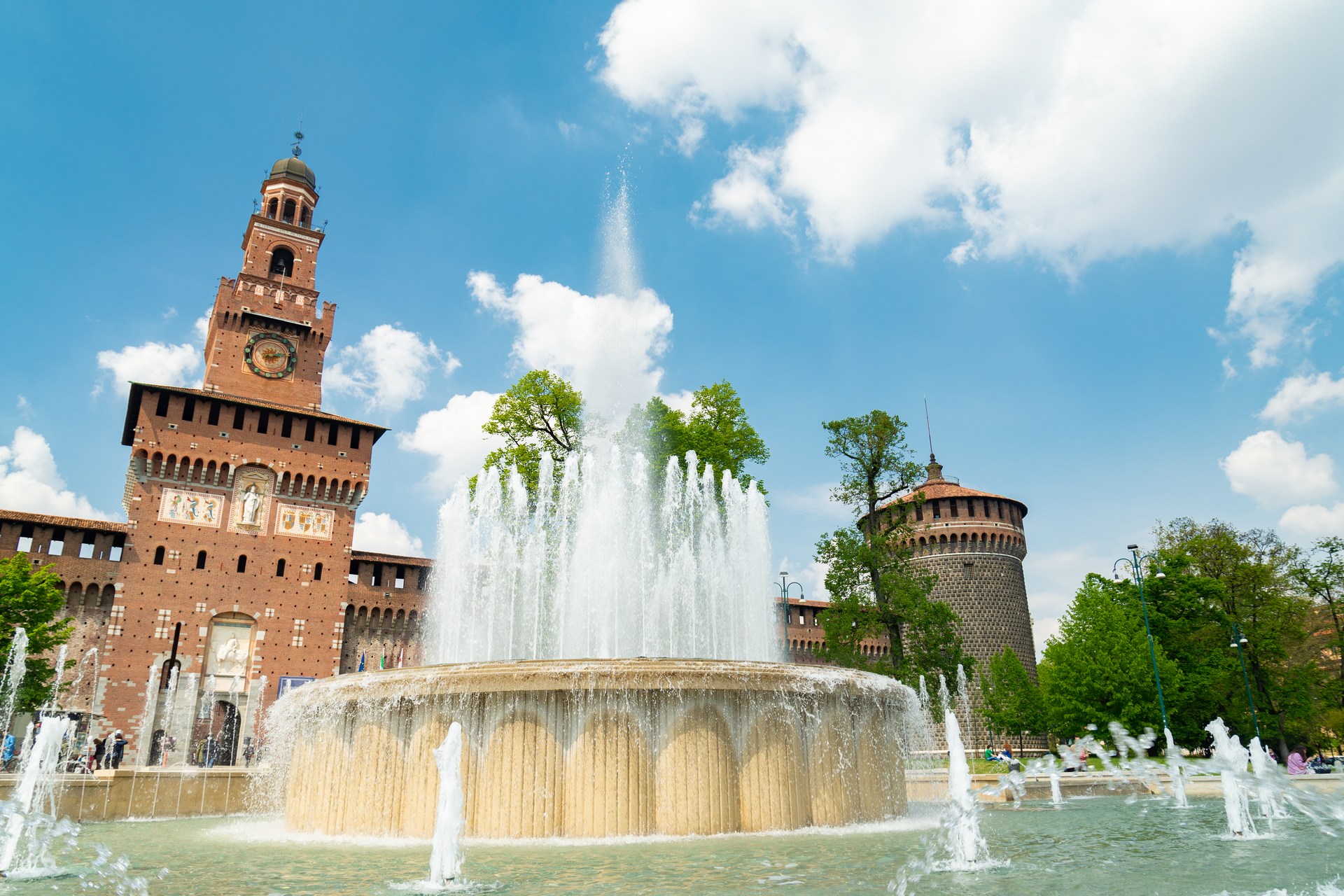
Photo by Travelling Jack on Shutterstock
Access to the castle courtyards is free; museums require separate tickets. Behind the castle is Parco Sempione, Milan’s main city park with 47 hectares and the Torre Branca viewing tower (108 metres, accessible by lift), which offers panoramic views over the Castello. The park is the most pleasant free space in central Milan.
Milan activities by travel type
City breaks and cultural tours
- Galleria Vittorio Emanuele II and La Scala: The spectacular 19th-century iron-and-glass arcade connecting the Duomo to La Scala is one of the most beautiful public spaces in Italy; the historic Camparino bar (founded 1867) inside the Galleria is the best place for a Campari Spritz with a view of the Piazza del Duomo; a guided La Scala tour covers the museum and auditorium.
- Leonardo da Vinci trail: Beyond the Last Supper, the Museo Nazionale della Scienza e della Tecnologia Leonardo da Vinci in Sant’Ambrogio holds the world’s largest collection of models made from da Vinci’s drawings; a half-day combining Santa Maria delle Grazie and the science museum makes a compelling cultural itinerary.
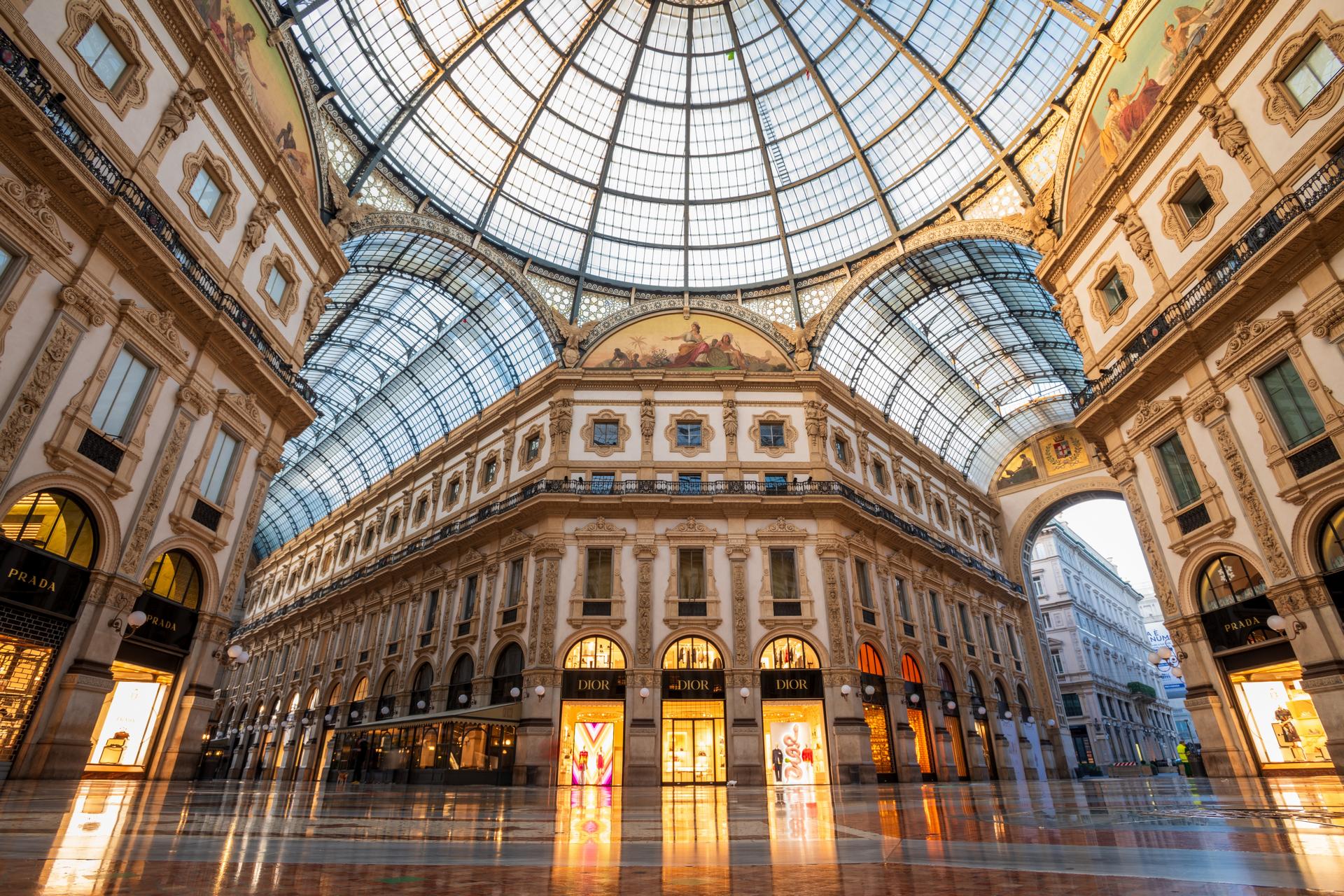
Photo by Chris Howey on Shutterstock
Fashion and design
- Quadrilatero della Moda tour: Via Montenapoleone, Via della Spiga, Corso Venezia, and Via Manzoni form the most prestigious luxury shopping district in Italy; a morning walk through the quadrilateral is one of the great fashion city experiences in Europe, regardless of budget.
- Salone del Mobile and Fuorisalone (April): The world’s premier furniture and design fair, accompanied by the Fuorisalone, with hundreds of design events and showroom openings across Milan; the most important week in the global design calendar and a major driver of April hotel demand.
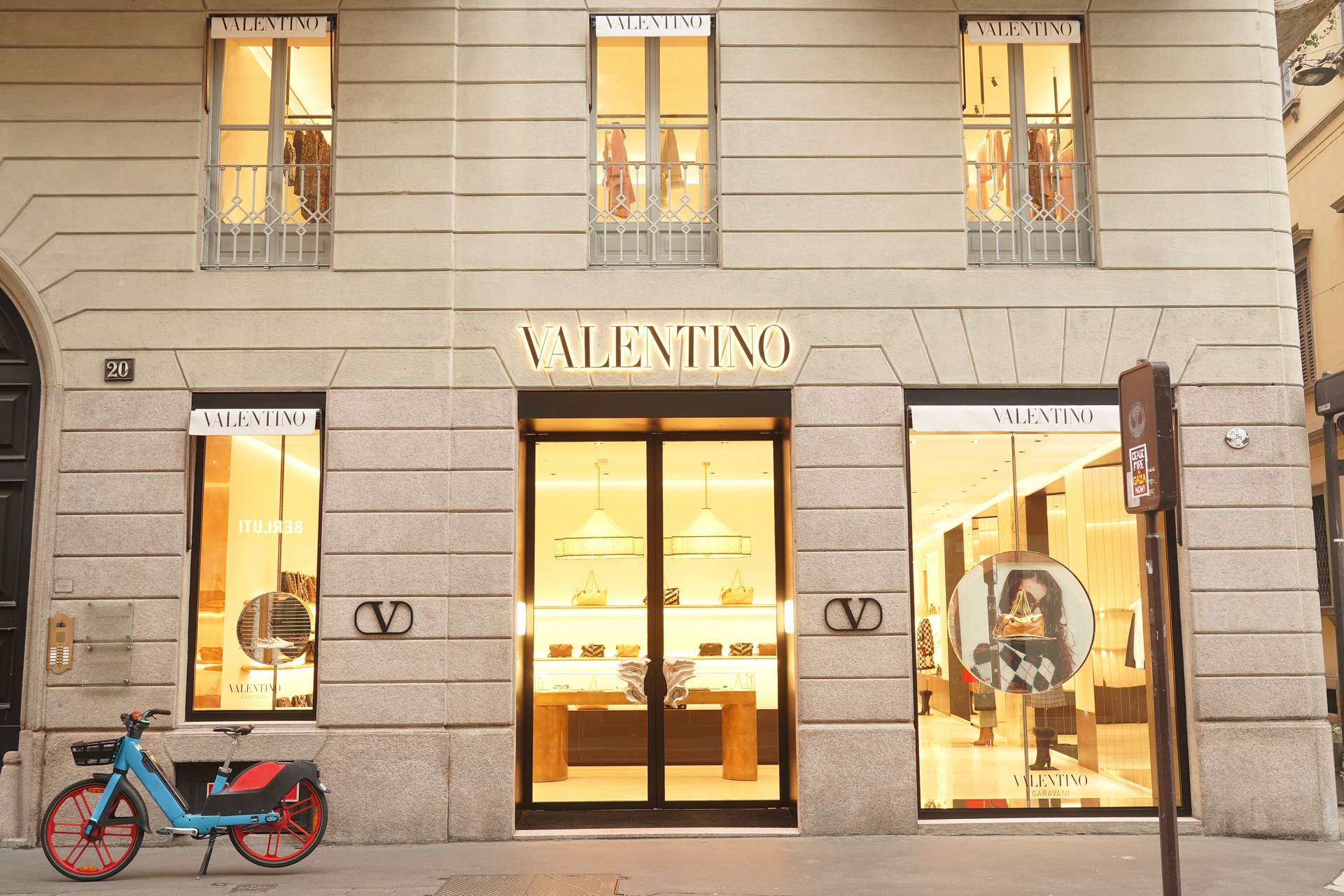
Photo by lucianode on Shutterstock
Family holidays
- Museo Nazionale della Scienza e della Tecnologia: The largest science museum in Italy; interactive exhibits, a real submarine (the Enrico Toti, open for visits), full-size trains and aircraft, and the Leonardo gallery; an excellent full-day family attraction.
- Parco Sempione and the Torre Branca: The city’s main park with the viewing tower, Arena Civica, and a children’s playground; the best free family afternoon activity in central Milan.
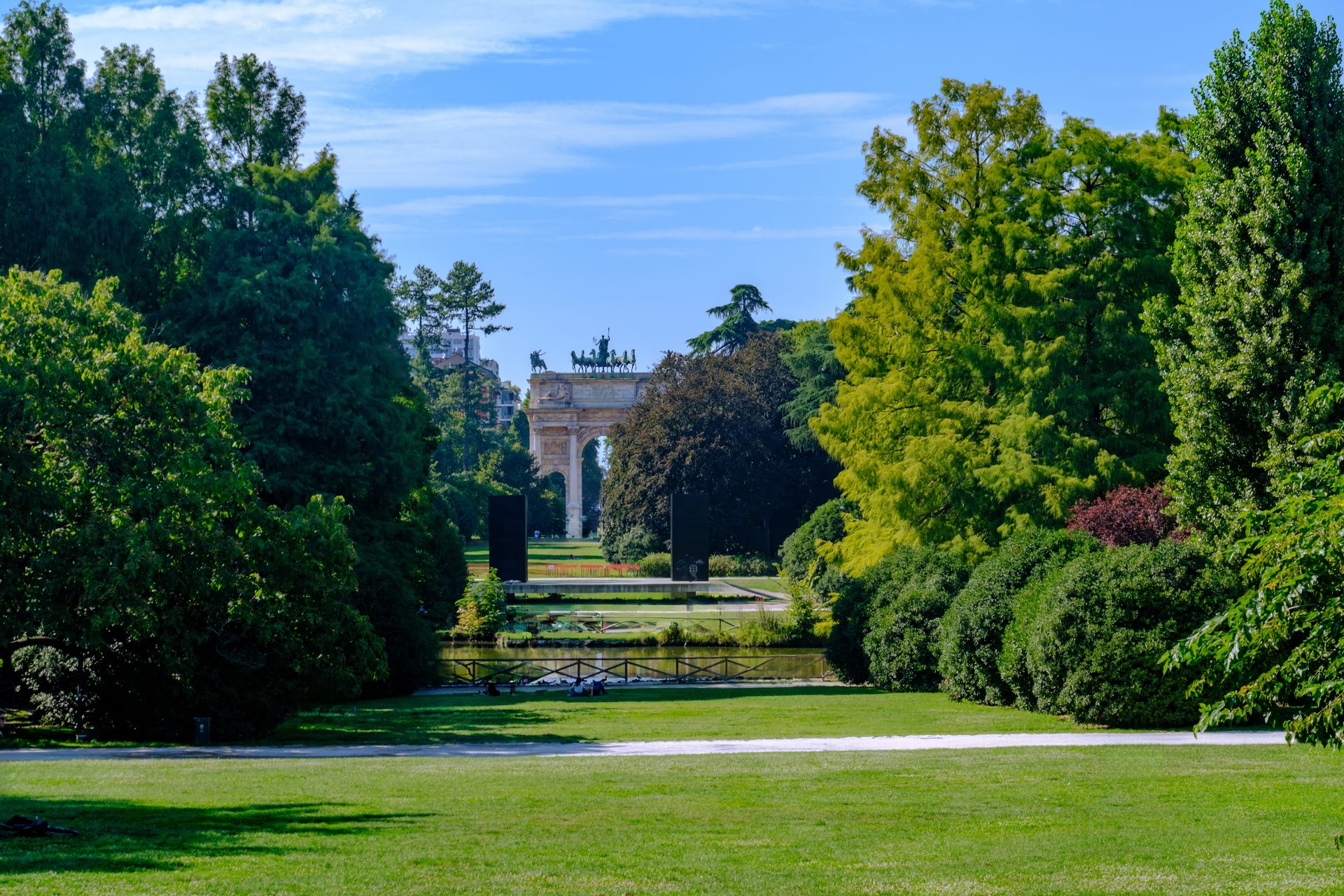
Photo by Claudio Giovanni Colombo on Shutterstock
Luxury escapes
- Stay in the Quadrilatero: A suite at the Four Seasons, Mandarin Oriental, or Bulgari Hotel gives immediate access to the finest luxury shopping in Italy alongside the best concierge service in Milan.
- Michelin-starred dinner: Seta at the Mandarin Oriental, Il Luogo di Aimo e Nadia, and Enrico Bartolini at the Mudec are Milan’s most consistently celebrated restaurants; reservations required months in advance.
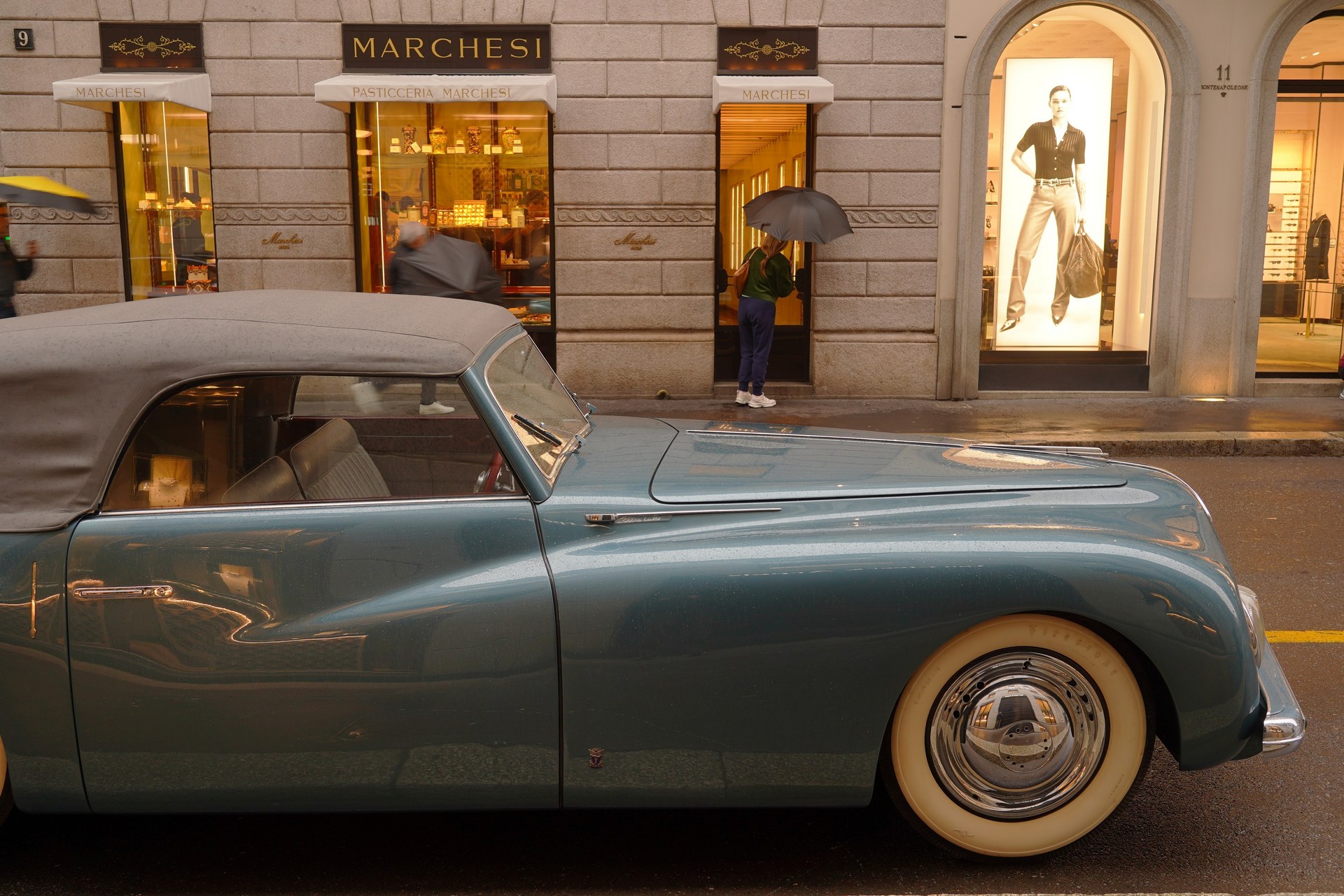
Photo by lucianode on Shutterstock
Nearby destinations: Day trips from Milan
Lake Como
Lake Como is 35–70 minutes from Milano Centrale by train, depending on the destination (Como, Varenna, Lecco). It is one of the most beautiful lakes in the world and the most popular day trip from Milan.
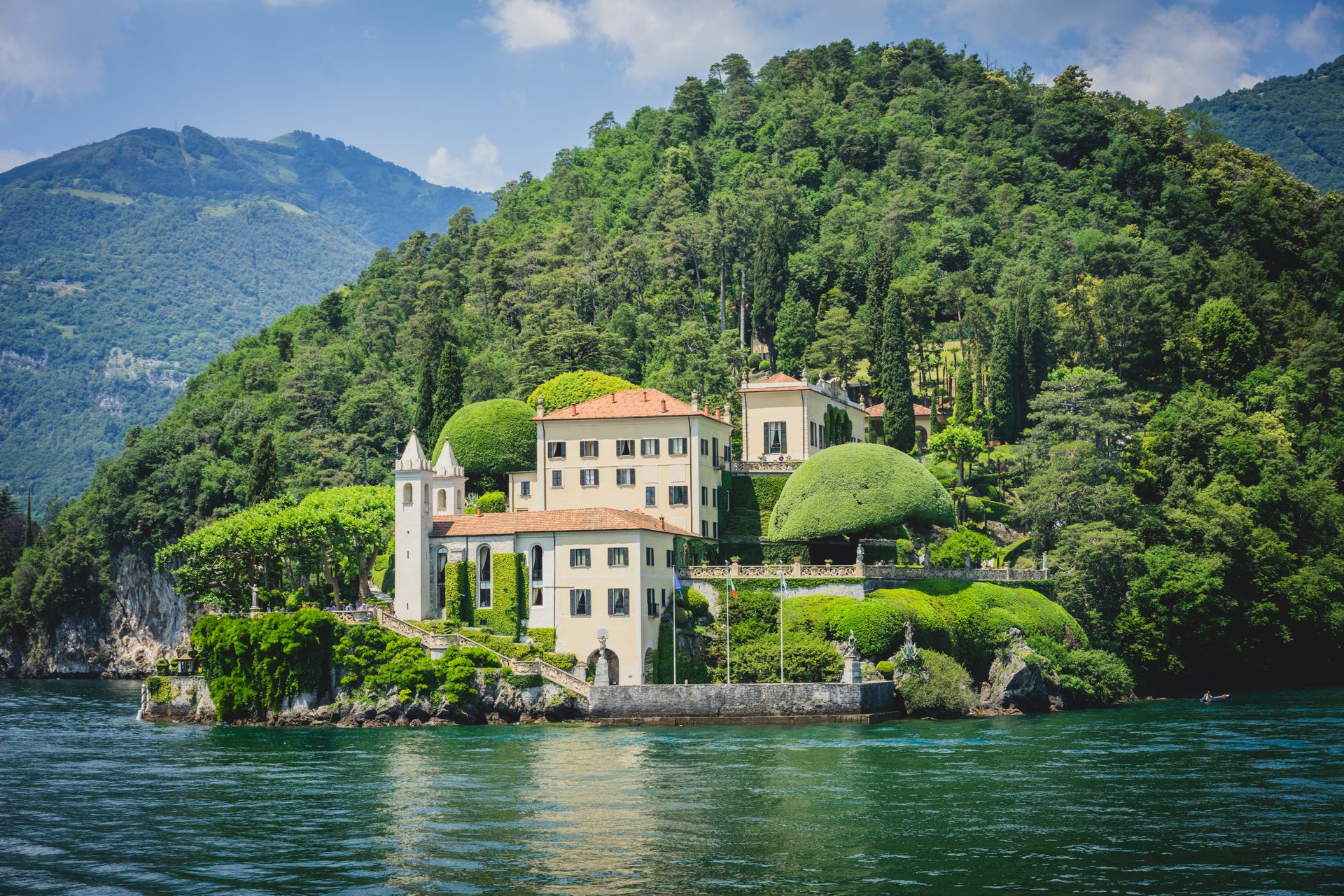
Photo by Caroline Roose on Unsplash
Ferry-hopping between Bellagio, Varenna, and Menaggio, visiting the Villa del Balbianello gardens (location for Casino Royale and the Star Wars prequels), and eating at a lakefront restaurant in Varenna makes for one of the most beautiful day trips in all of Italy.
Bergamo
Bergamo is 45km east of Milan and a 50-minute journey by train. It is one of the most beautiful small cities in northern Italy. The medieval upper city (Città Alta), reached by funicular within Venetian walls, contains the Piazza Vecchia, the Romanesque Basilica di Santa Maria Maggiore, and views over the Po Valley and the Alps that make it an extraordinary half-day or full-day trip from Milan.
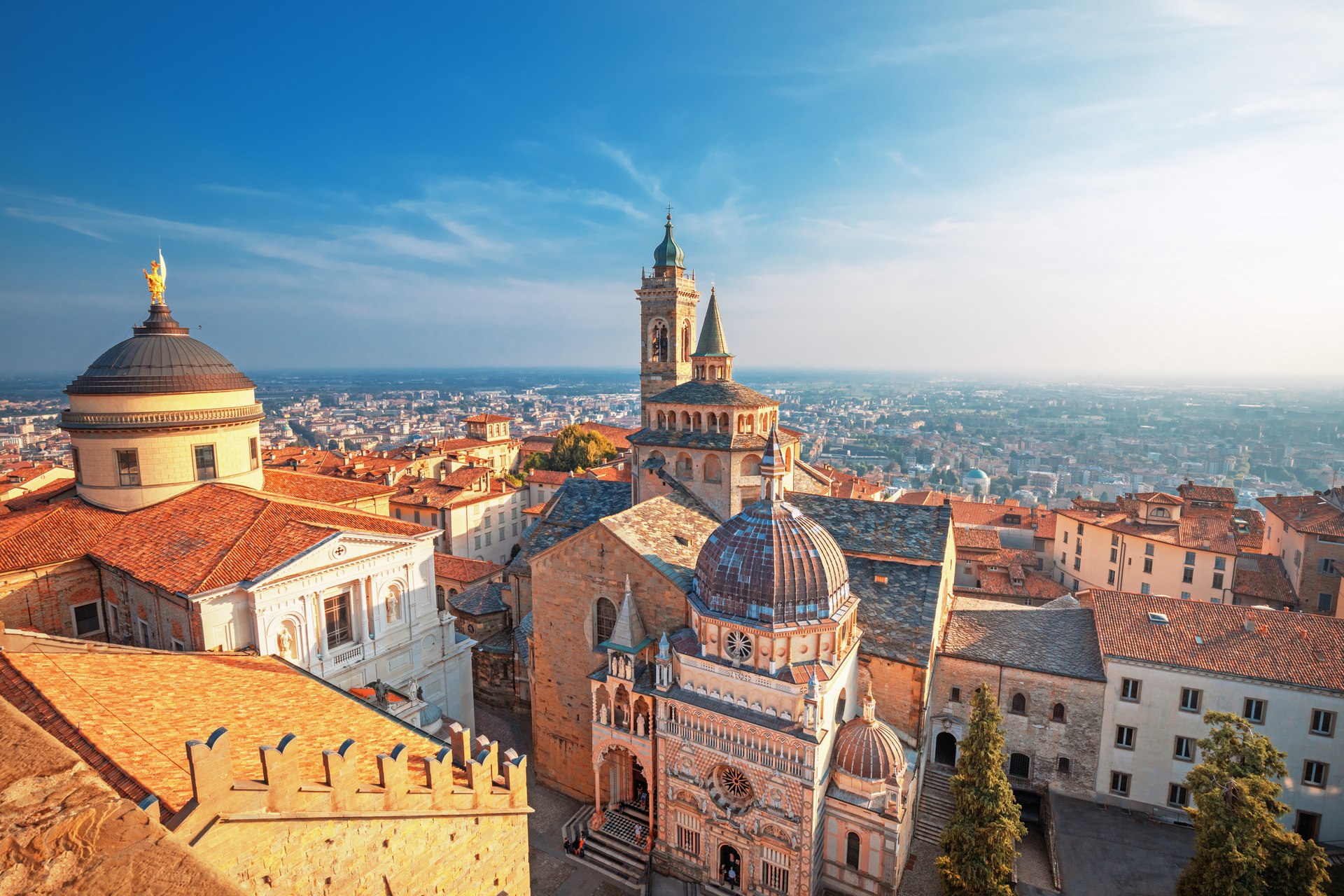
Photo by Rasto SK on Shutterstock
Turin
Turin is one hour by high-speed train and one of Italy’s most underrated cities. It is the most compelling full-day or overnight extension for Milan-based clients. The Egyptian Museum (one of the world’s most important Egyptian collections outside Egypt), the Museo del Cinema in the Mole Antonelliana tower, and a food and aperitivo culture that rivals Milan’s make Turin an outstanding addition to any Northern Italy itinerary.
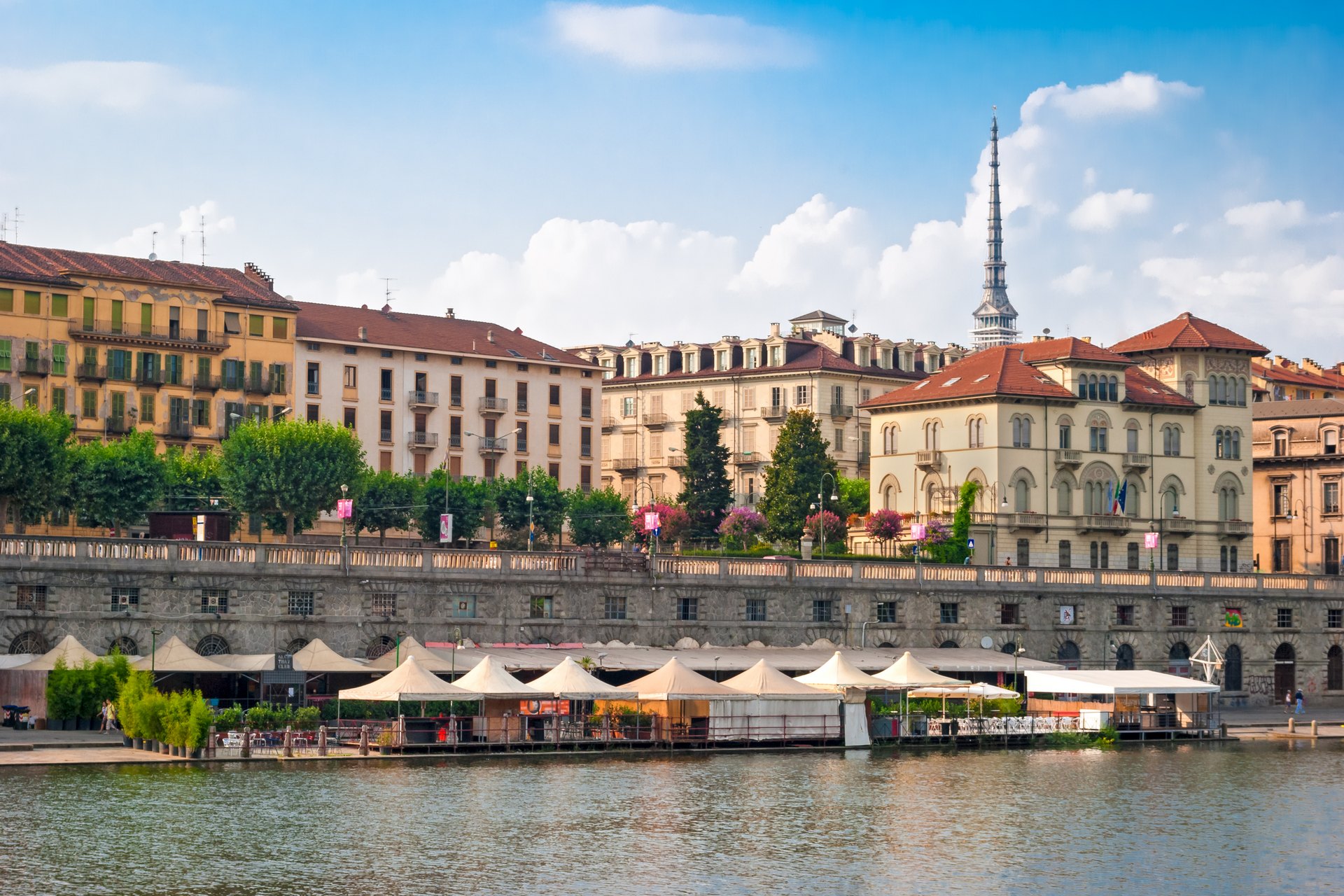
Photo by Marco Saracco on Shutterstock
Milanese food: What your clients should try
- Risotto alla Milanese: The city’s signature dish: saffron-infused risotto with bone marrow and Parmigiano Reggiano, a vivid golden yellow and one of the most technically demanding risottos in Italian cooking; notable versions can be found at traditional Milanese restaurants, including Trattoria del Nuovo Macello.
- Cotoletta alla Milanese: Milan’s bone-in breaded veal cutlet, fried in clarified butter until golden; a dish the Milanese are fiercely proud of and quick to distinguish from its Austrian counterpart.
- Aperitivo on the Navigli: A drink at a Navigli canal bar is often accompanied by snacks or aperitivo offerings, though the format varies by venue; the defining social ritual of Milanese daily life.
- Panettone from Pasticceria Marchesi: The iconic Milanese sweet bread originated in the city; Marchesi (founded 1824, with a location inside the Prada store in the Galleria Vittorio Emanuele II) makes arguably the finest version in Milan.
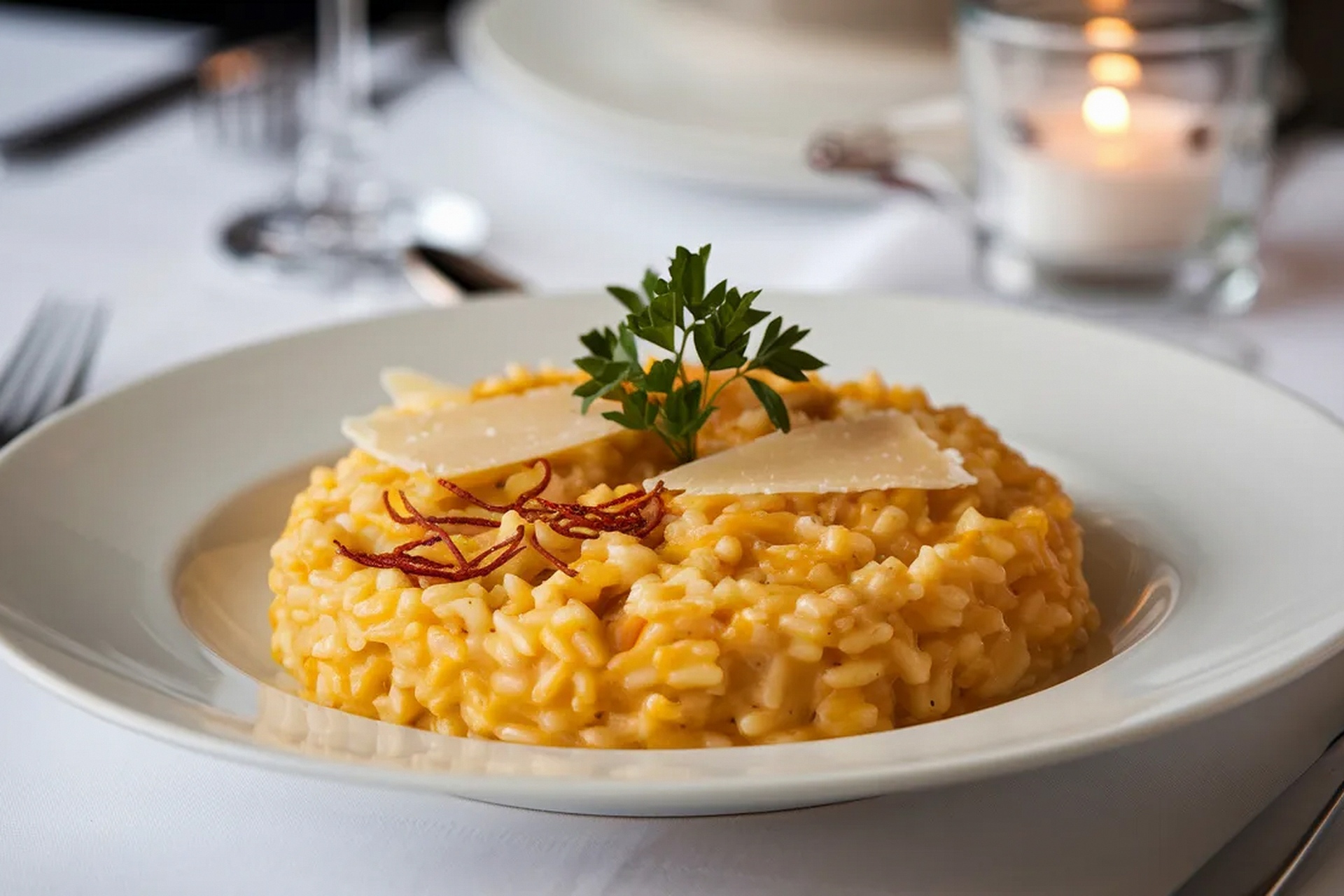
Photo by Scarlett Anne on Shutterstock
Insider tips for Milan
Souvenirs worth buying
- Campari products: Invented in Milan in 1860 by Gaspare Campari, still headquartered here; a bottle of Campari or the barrel-aged Campari Cask Tales is a genuinely Milanese gift available at any enoteca or airport duty-free.
- Design objects from Brera studios: The independent design studios of Brera and Tortona sell limited-edition homewares, jewellery, and accessories unavailable in any chain store; one of the most distinctive Milan souvenirs.
- Panettone from a historic pasticceria: Marchesi, Cova, or Giovanni Galli; available year-round, travels well, and makes an outstanding gift that is specific to Milan.
- Vintage fashion from the Naviglio Grande market: The antique market on the last Sunday of each month includes extraordinary finds from Italian fashion archives at prices that make the Quadrilatero accessible even on a limited budget.
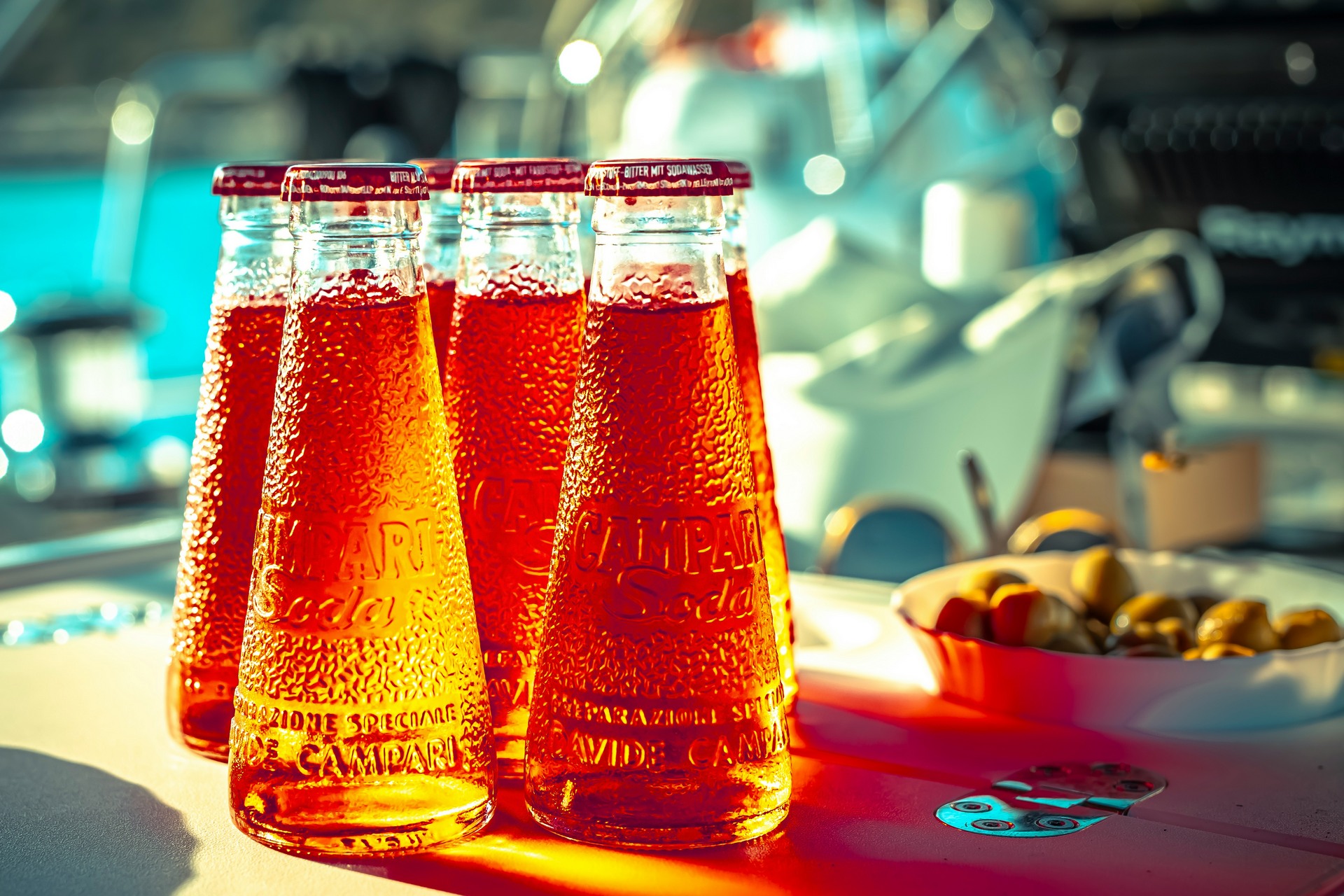
Photo by Markus Blüthner on Unsplash
Milan as a “Destination Next” recommendation
Milan is one of the most versatile Destination Next recommendations on the RateHawk platform for European city-break and cultural itineraries.
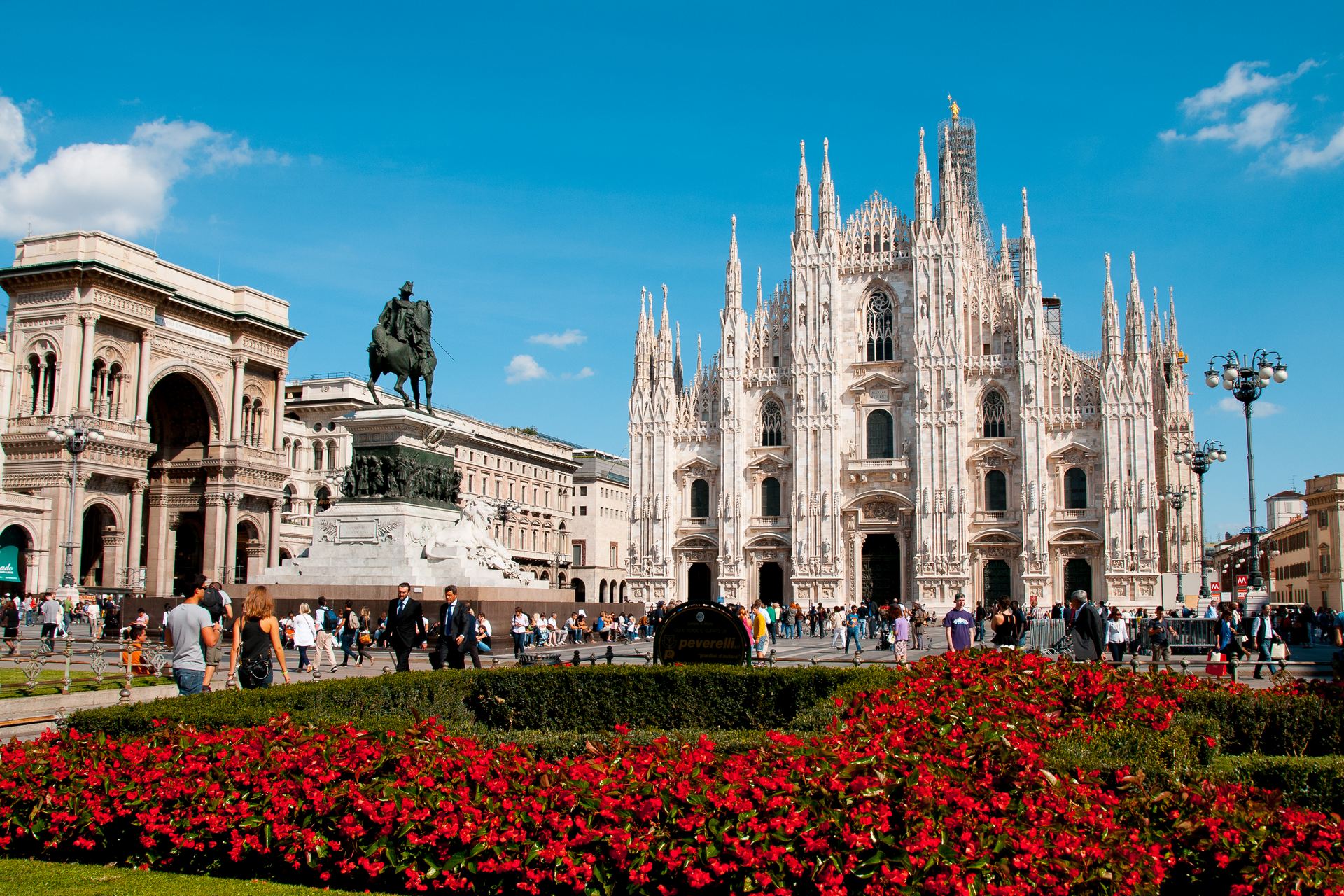
Photo by colores on Shutterstock
Here is when Milan appears as a destination recommendation:
- As an alternative to Florence, Milan’s key attractions rival Florence’s in cultural importance, yet see significantly fewer crowds outside September–October; the Navigli and Brera districts add a contemporary energy that has no equivalent in Florence.
- As the anchor of a Northern Italy itinerary, Milan, combined with Lake Como, Bergamo, and Turin by train, builds a compelling 7–10 day itinerary covering the full range of northern Italian culture, landscape, and food.
Ready to supercharge your Milan proposals?
Explore the full hotel inventory and start building your client’s next Milan or Italy itinerary on RateHawk.
This article is part of the Destination Next initiative by RateHawk — helping travel businesses find stronger destination alternatives when travel plans change.