

 1078
1078 17 minutes read
Contents
- Pacific Coast Highway: California’s coastal road trip
- Route 66: The ultimate American road trip
- The Grand Circle: Utah and Arizona’s national parks
- Blue Ridge Parkway and the Great Smoky Mountains
- New England: Autumn scenery and fall foliage
- Miami to Key West: The Florida Keys
- The Northern Rockies: Glacier, Yellowstone, and Grand Teton
- Oregon Coast Highway
- The Great River Road: Following the Mississippi
- Texas Hill Country
- The Olympic Peninsula and North Cascades
- Road to Hana: Hawaii’s short road trip
- How to build a US road trip itinerary that your clients will actually enjoy
- The best time of year for a US road trip
- How agents can use RateHawk to plan a US road trip
- Common US road trip mistakes and how to avoid them
- Frequently asked questions about US road trips
The 12 best road trips in the USA
1. Pacific Coast Highway: California’s coastal road trip
The Pacific Coast Highway is a 7 to 10-night road trip that starts in San Francisco, traveling through Monterey/Carmel, Big Sur, San Simeon/Cambria, Santa Barbara, and Los Angeles. The San Francisco to Los Angeles route, via Highway 1, is just under 500 miles with 12 hours of pure driving with no stops.
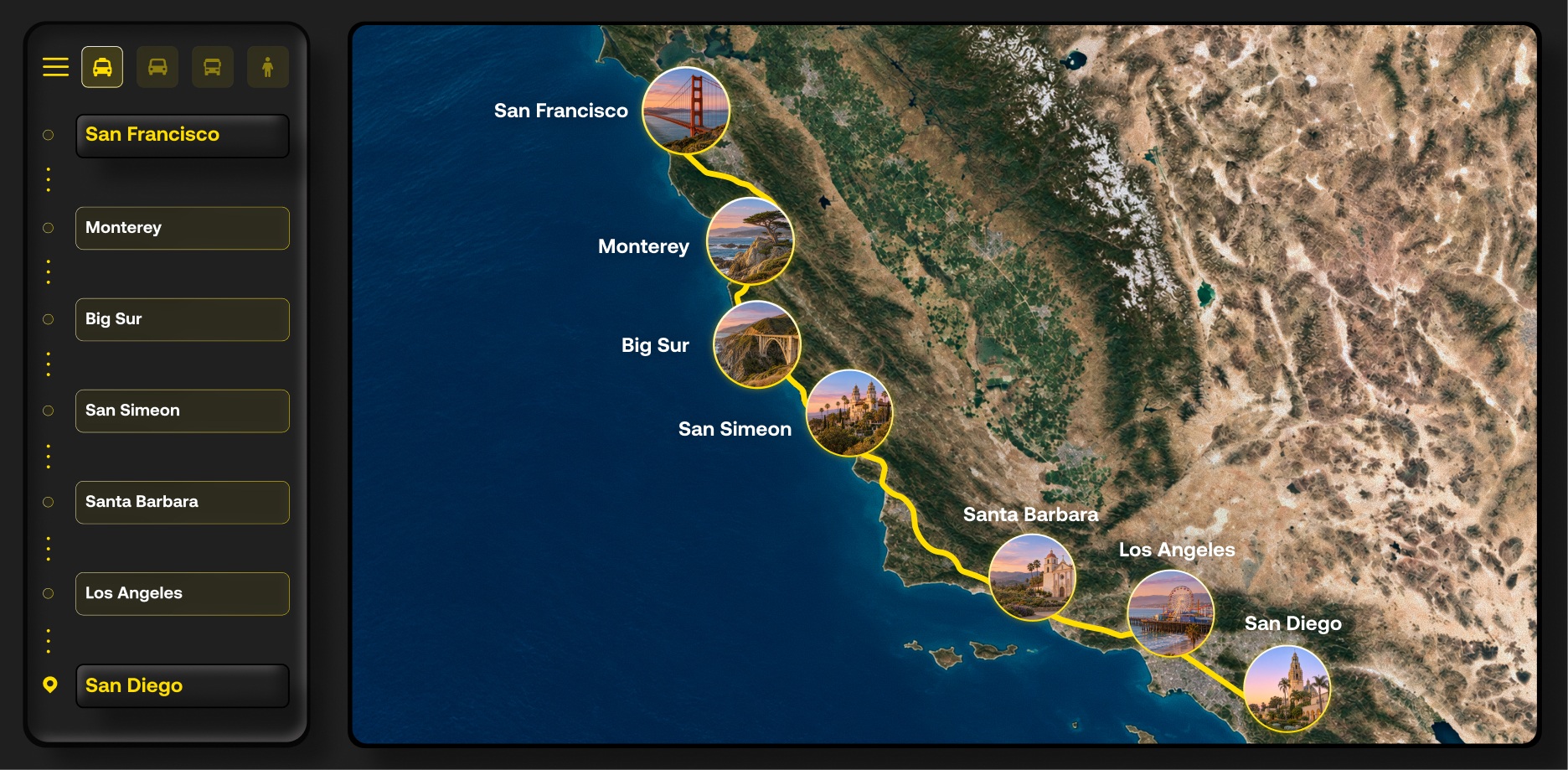
This itinerary can also be extended with an overnight stay in San Diego and is an ideal option for first-time visitors to California, including couples on their honeymoon and those who want to explore both nature and the cities of the West Coast.
What to know: Expect limited inventory when booking accommodation in Big Sur and be aware of dynamic pricing at weekends. Travelers on a budget should decide whether they’re able to pay more for accommodation on the route or if it’s worth driving further inland for cheaper hotel options. Late summer itineraries should be mindful of potential wildfire and smoke disruption, and it’s crucial to check local authority websites for potential road closures.
RateHawk insight: How to sell
This road trip is an iconic California itinerary that delivers a taste of the classic American lifestyle without the pressure or added expense of a cross-country itinerary. The best version of this road trip will prioritize scenic driving days with two-night stays in popular stops like San Francisco and Los Angeles.
2. Route 66: The ultimate American road trip
Route 66 is the most iconic road trip in the world. Stretching across 2,400 miles, Route 66 takes travelers from Chicago to Santa Monica and across 8 states and multiple time zones. Most drivers will dedicate at least 2 weeks to fully experience Route 66, but some itineraries can last for up to 3 weeks.
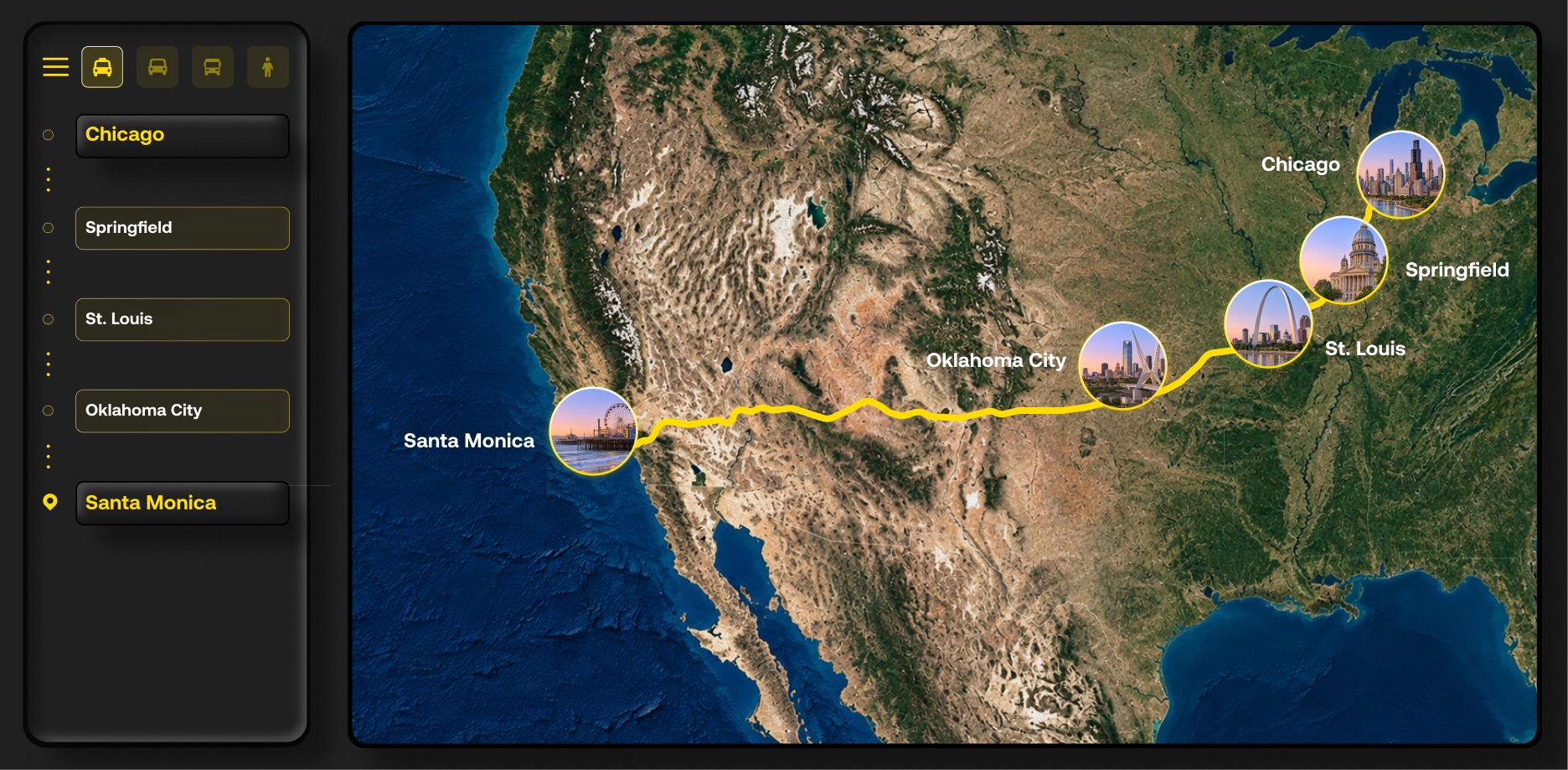
2026 is the 100th anniversary of Route 66 with year-long celebrations, including special events and commemorative maps. November 11th marks the route’s birthday with an influx of travelers expected to mark this milestone, leading to higher demand for accommodation, especially in the small towns along the route. It’s more important than ever to book early and prepare for crowds.
What to know: Route 66 isn’t comparable to a modern highway, and it’s crucial to have a route guide or a navigation plan before starting. Some of the historic sections are very fragmented and can be difficult to navigate. Rental cars will typically incur a one-way rental fee, which can increase package costs, and small-town accommodation typically sells out early.
RateHawk insight: How to sell
There’s so much more to Route 66 than just the driving. What makes this road trip so famous is that it delivers a taste of the classic Americana lifestyle. The diners, museums, and motels along the route offer an immersive experience and are the main selling point of this route.
3. The Grand Circle: Utah and Arizona’s national parks
There are 3 ways to explore the Grand Circle: the Las Vegas loop, the Salt Lake City Loop, or by taking a one-way route from Las Vegas to Salt Lake City. These routes allow travelers to tick off several major national parks and areas of interest, including:
- The Grand Canyon
- Zion National Park
- Monument Valley
- Capitol Reef
- Bryce Canyon
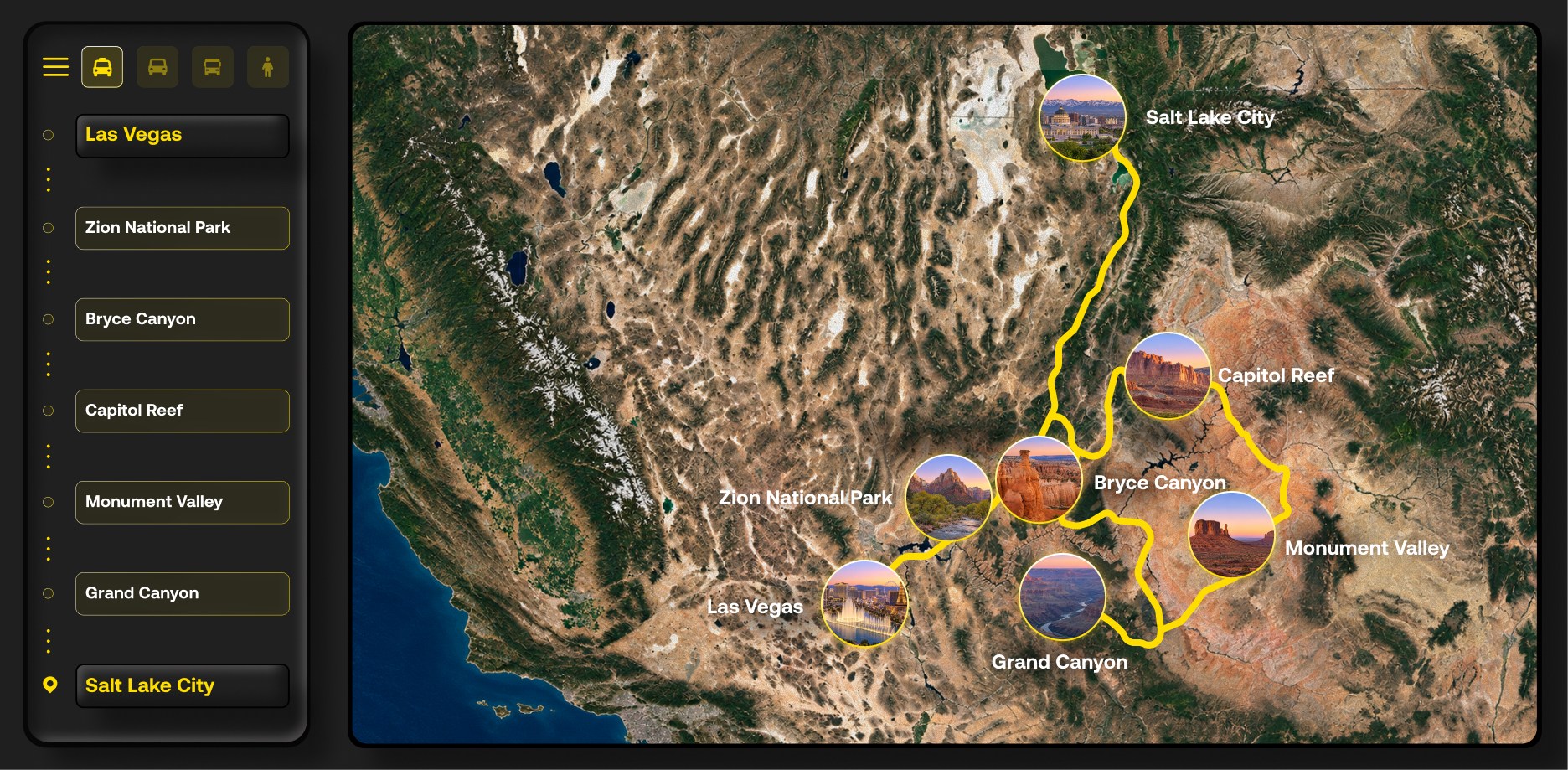
Most Grand Circle itineraries will be for at least 10 nights with overnight stops in destinations like Springdale, Torrey, Moab, Page, Las Vegas, and Grand Canyon gateway towns.
What to know: Accommodation can be tricky to book for this route. Gateway towns have limited inventory, and many hotels impose a minimum stay policy during peak season. Some clients may want to splurge on in-park accommodation, but gateway towns can be a more practical option. Prioritize booking accommodation for these stops before moving on to city hotels.
National park rules and accessibility are always changing. Check current official information before booking any itinerary, including checking for applicable reservations, permits, or seasonal restrictions.
RateHawk insight: How to sell
What makes this road trip unique is that it allows travelers to discover a different landscape almost every day, while visiting multiple national parks. The best itineraries will give travelers plenty of time to visit the parks themselves.
4. Blue Ridge Parkway and the Great Smoky Mountains
If your client wants a slower itinerary that focuses on scenery, rather than mileage, then this road trip is ideal for them. Starting in the Shenandoah region, this road trip covers the Blue Ridge Parkway, Asheville, and the Great Smoky Mountains.
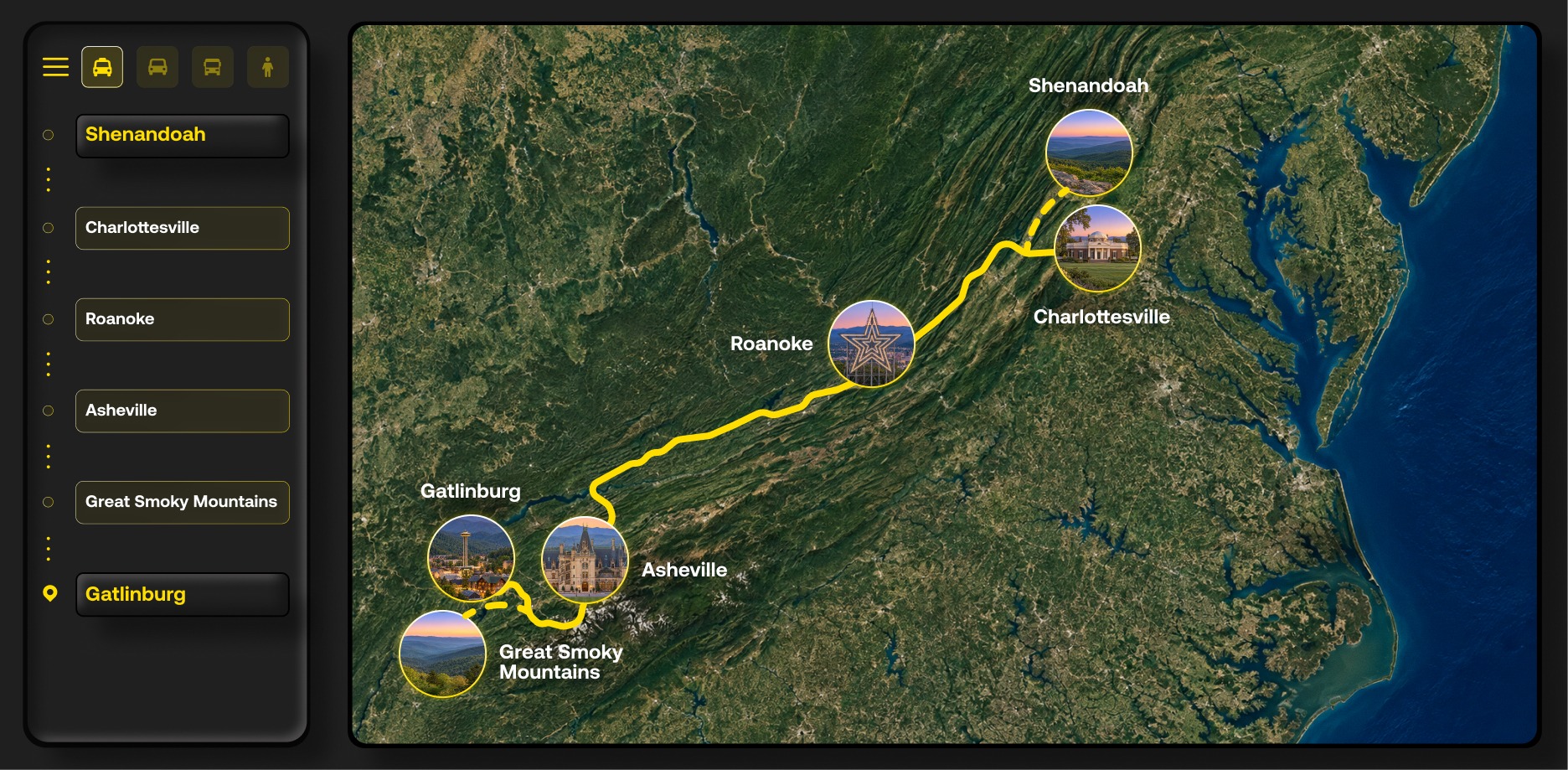
Most itineraries will range from 7 to 10 nights, offering visitors a chance to explore the Appalachian landscape and mountain towns. Asheville, Gatlinburg, Charlottesville, and Roanoke are natural overnight stops and add flexibility for clients who want to extend their road trip with a longer itinerary.
What to know: Blue Ridge Parkway access can change due to temporary closures. Always advise your clients to check for current and scheduled maintenance, including during their road trip.
RateHawk insight: How to sell
This road trip is a slower scenic drive, making it ideal for older travelers, returning visitors to the US, and those who want to avoid longer highway drives. Fall is the busiest time for this route, but spring is a great alternative, although the weather can be unpredictable.
5. New England: Autumn scenery and fall foliage
New England is one of the most popular destinations on the East Coast and ideal for a 7- to 10-night road trip, especially during fall for tourists who want to visit the historic towns and see the fall foliage.
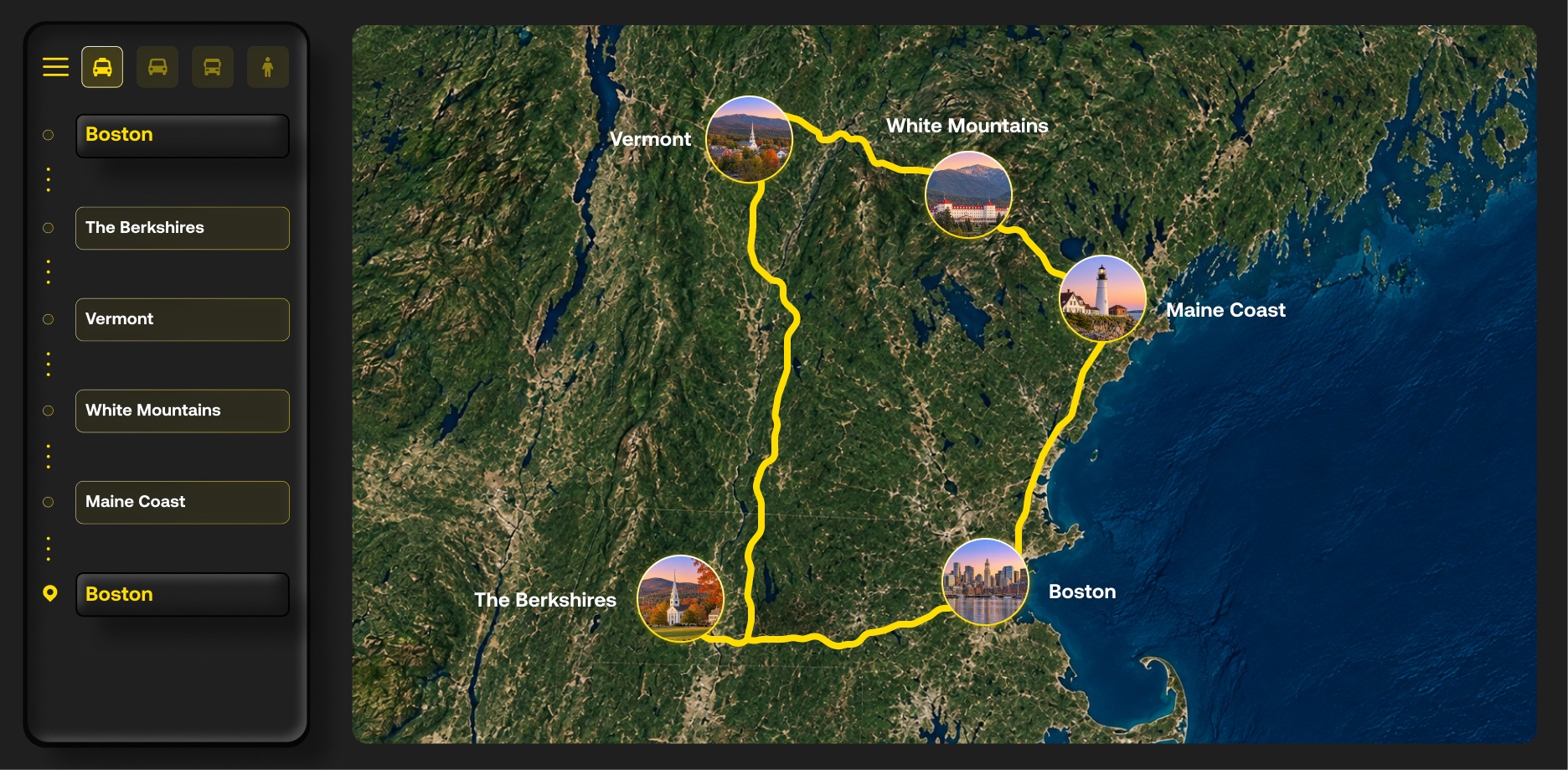
Most New England road trips will start in Boston and cover the Berkshires, Vermont, the White Mountains, and the Maine coast before returning to Boston. Natural overnight stops on this route include:
- Lenox
- Stowe
- North Conway
- Portland
What to know: Fall foliage season is the busiest time of year for New England, so expect dynamic pricing for accommodation, especially during weekends. Central locations can help reduce daily driving, and doing a Boston-to-Boston loop can help avoid one-way car rental fees.
RateHawk insight: How to sell
The timing for fall foliage can change annually, so keep the itinerary as flexible as possible. Avoid guaranteeing “peak foliage” and focus instead on the coastal scenery and heritage of the region. Most itineraries can be adjusted north-to-south to get the best seasonal conditions.
6. Miami to Key West: The Florida Keys
Not all road trips in the US are week-long itineraries. Tourists love the popular Miami to Key West route as a shorter itinerary that’s easy to follow with limited driving time, offering both beach and city destinations. Beginning in Miami, this route takes just 3-5 nights and covers Key Largo, Islamorada, Marathon, and Key West.
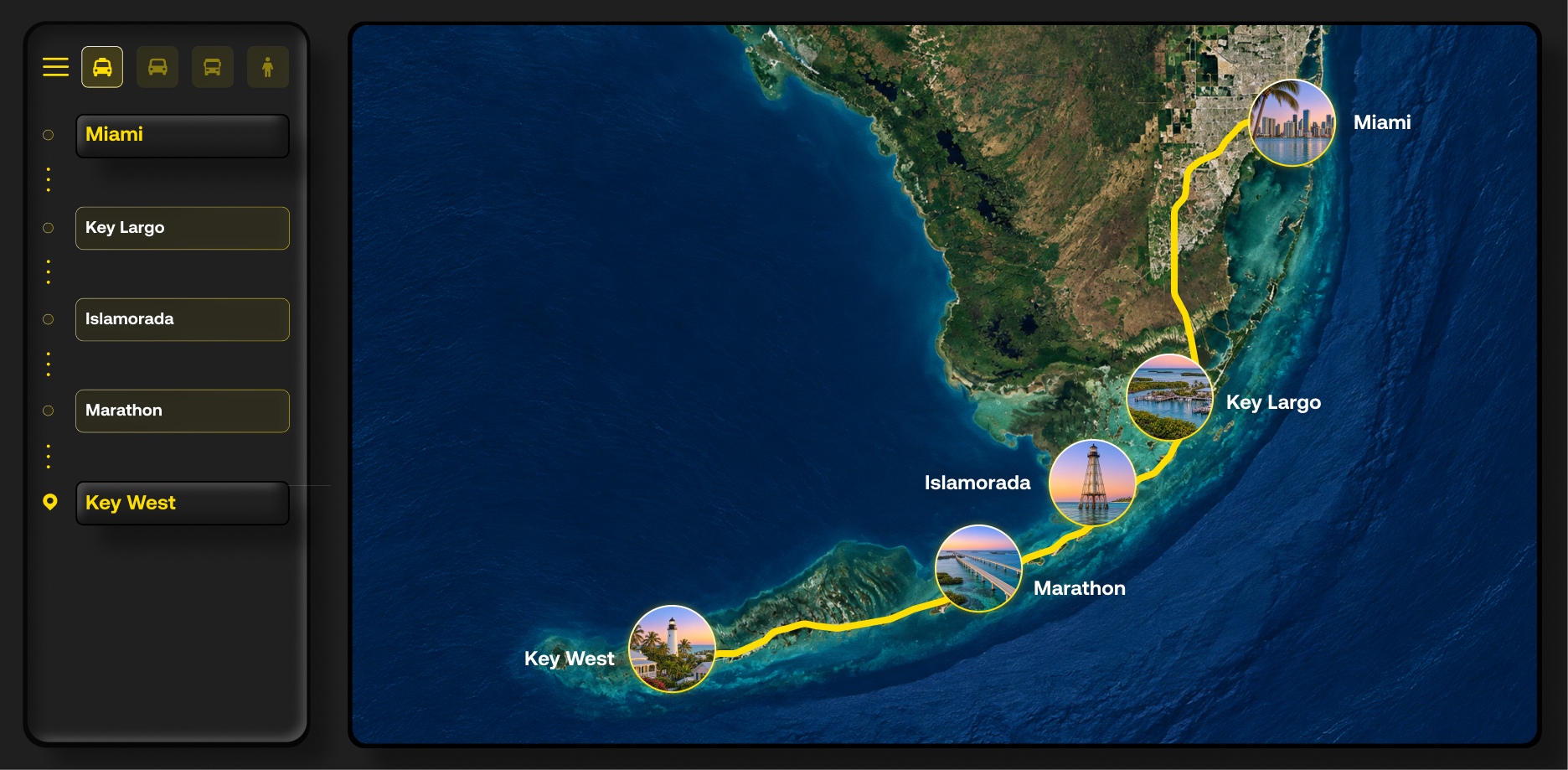
Most itineraries will be structured as:
- Miami: 1-2 nights
- Islamorada or Marathon: 1-2 nights to make the itinerary feel less rushed
- Key West: 2 nights
What to know: Consider hurricane season when planning logistics and ensure that clients are aware of parking costs and resort fees to help them stay within budget.
RateHawk insight: How to sell
Best sold as an add-on to clients who are visiting Florida and want a self-drive package that doesn’t feel like a traditional road trip.
7. The Northern Rockies: Glacier, Yellowstone, and Grand Teton
The Northern Rockies can be a difficult itinerary to book as there’s a relatively narrow seasonal window. Starting in Glacier National Park, this route takes travelers from Yellowstone to Grand Teton and Jackson, usually over the course of 10 to 14 nights.
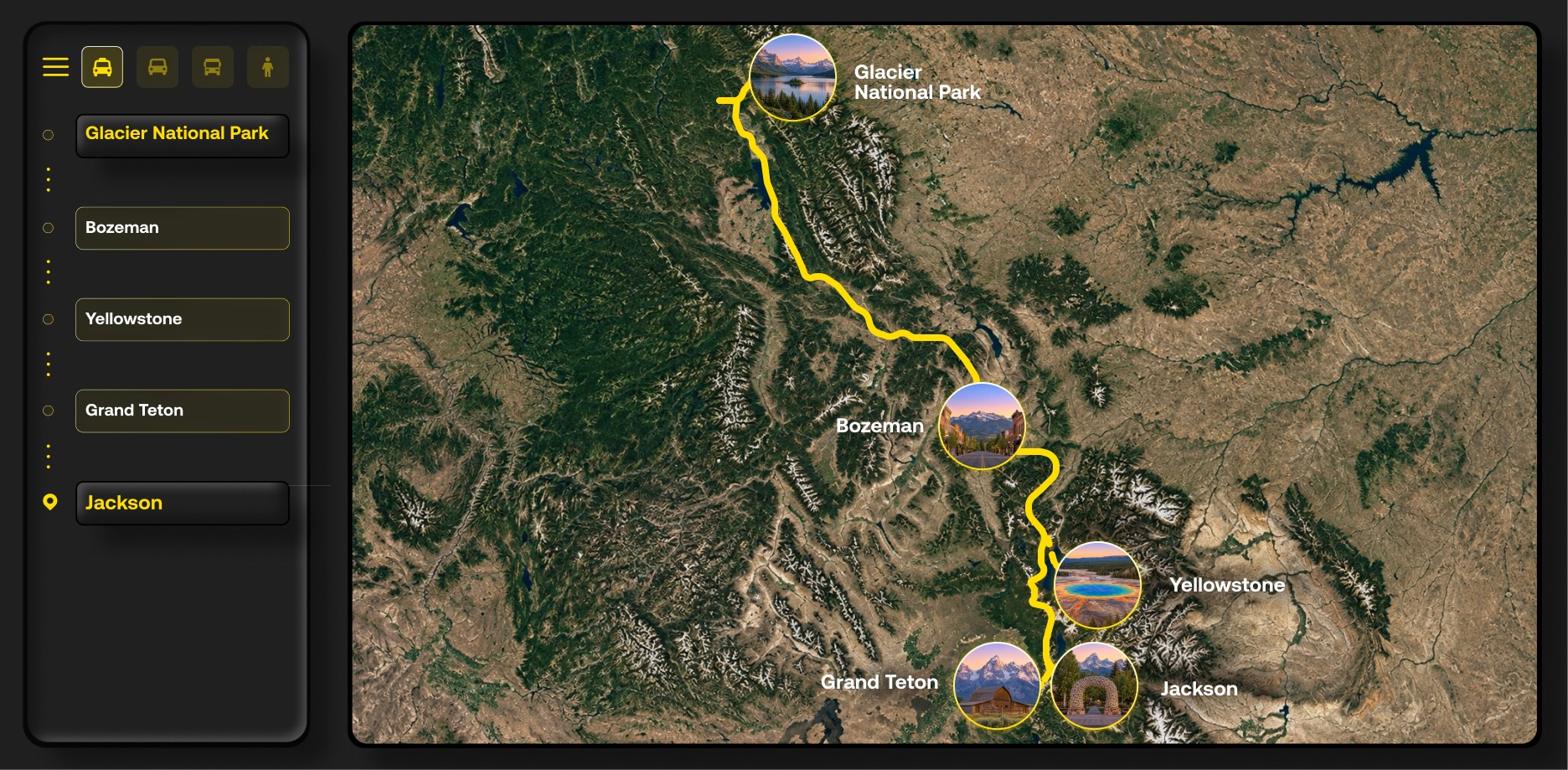
This route involves longer driving distances between stops, with Whitefish, the Glacier gateway area, and Bozeman being natural overnight stops. Demand for in-park lodging is high, and it’s best to book this itinerary as early as possible.
What to know: Snowpack determines when roads can be safely cleared, so opening dates are not guaranteed. Always check the current rules and advice for Glacier, Yellowstone, and Grand Teton on their official websites before booking.
RateHawk insight: How to sell
An unforgettable experience for clients who are willing to work with a shorter operating season for the beautiful scenery and one-of-a-kind wildlife opportunities.
8. Oregon Coast Highway
The Oregon Coast Highway is a great alternative to California for clients who want to see the dramatic Pacific coastline with a greater focus on small towns. This route usually starts in Portland and takes travelers through Cannon Beach, Newport, Florence, and Bandon to Southern Oregon.
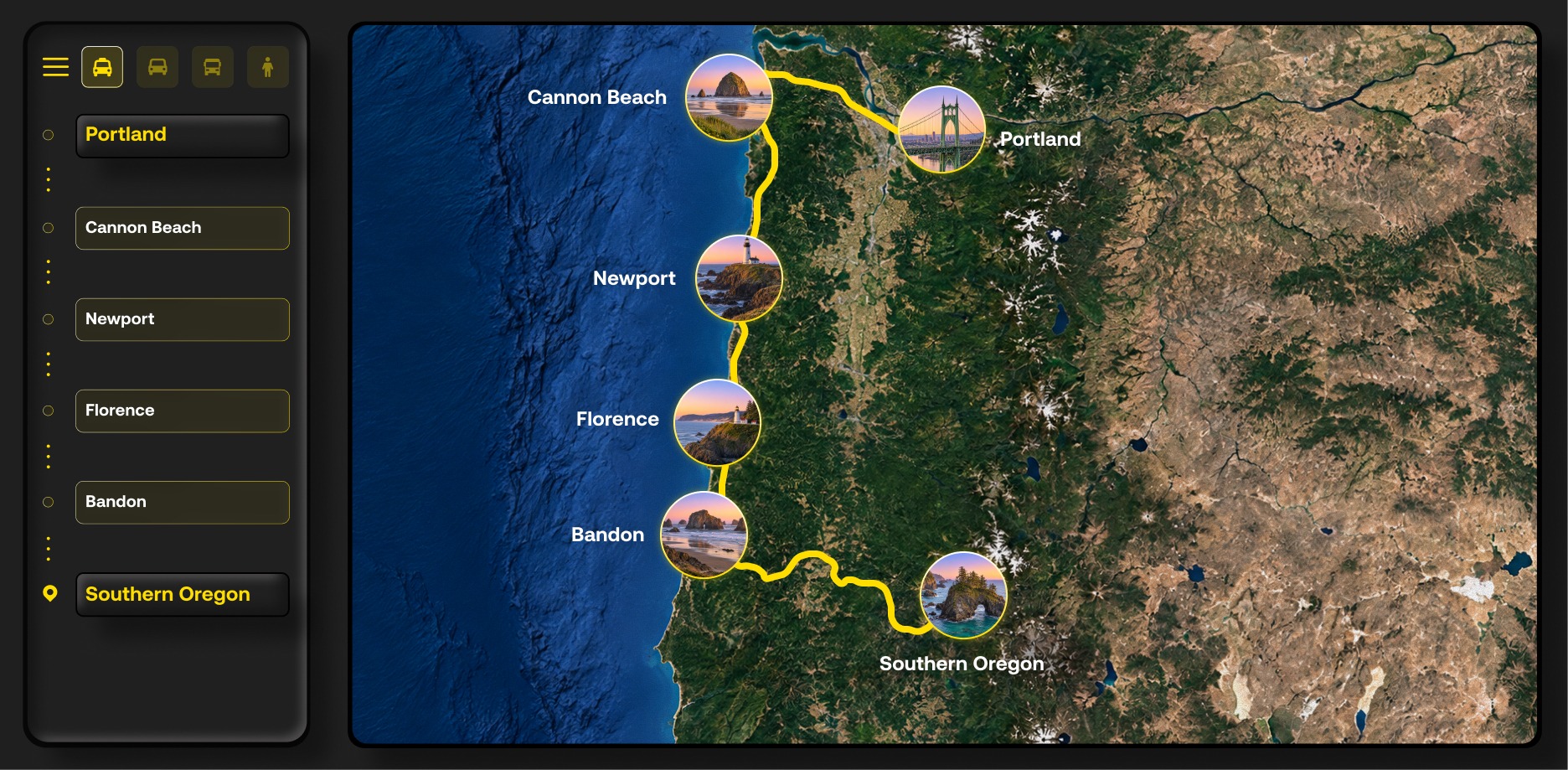
What to know: Best suited for late spring to early fall itineraries, but coastal weather can be unpredictable even in the summer. There’s limited accommodation inventory in the small coastal towns, so book these immediately after confirming your client’s preferred route.
RateHawk insight: How to sell
Recommend it as an alternative to clients who want a quieter route and more scenery than they’ll get with a California-focused itinerary.
9. The Great River Road: Following the Mississippi
Unlike other routes on this list, the Great River Road isn’t one that can be driven end-to-end. It’s best to focus on either the northern section of the route or treat it as a Minneapolis-to-New-Orleans road trip.
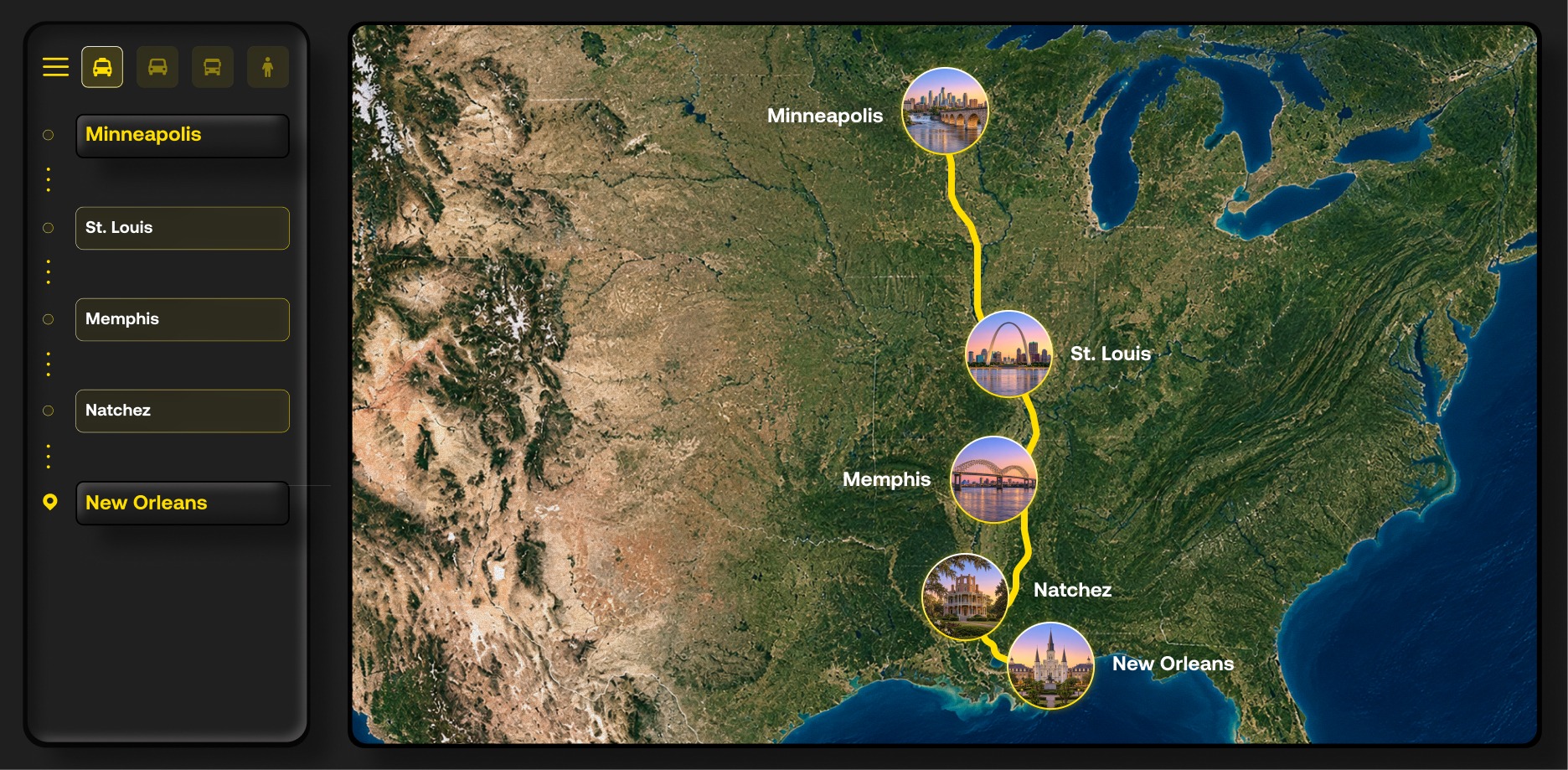
Most travelers will start in Minneapolis before heading to St. Louis, Memphis, and Vicksburg/Natchez, before finishing in New Orleans. This route allows visitors to learn about American history, including the American Civil War, and visit areas famous for their music, food, and culture.
What to know: Build the itinerary around city stays, using smaller river towns for longer itineraries with clients who want to take things slower or add rest days to their journey.
RateHawk insight: How to sell
The ultimate road trip for clients who want to immerse themselves in American history and culture, rather than exploring national parks.
10. Texas Hill Country
Clients who want a shorter road trip that is easier to navigate can focus on Texas Hill Country. This route is best explored over 4 to 7 nights and starts in Austin with travelers driving through Fredericksburg, the wine country, and Kerrville before ending in San Antonio.
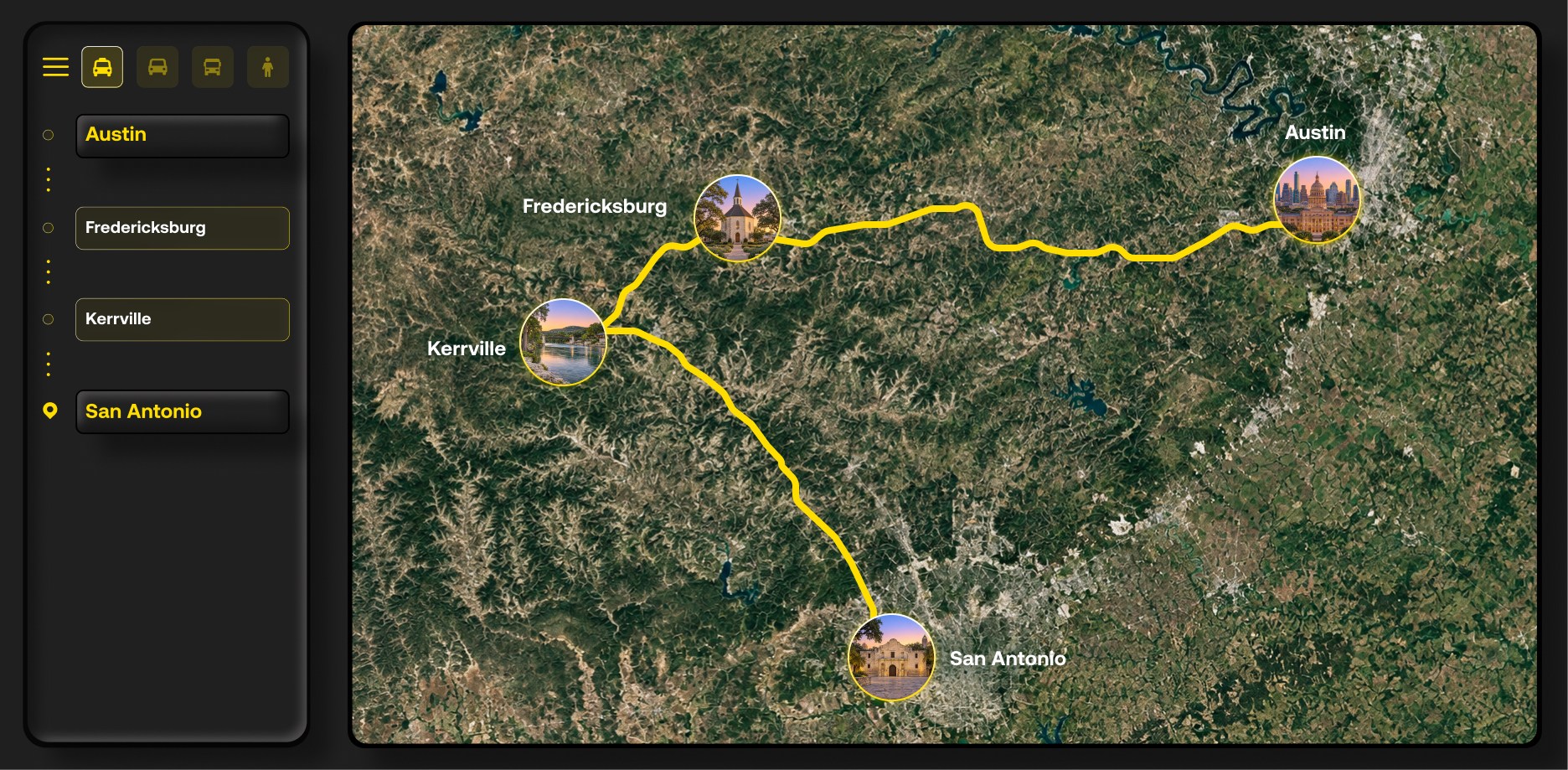
What to know: Austin and Fredericksburg are natural overnight stops for this itinerary, but it’s important to check local event calendars to avoid dynamic pricing. This road trip gives plenty of opportunities for indulging in barbecue food, live music, and visiting wineries across the ranch country.
RateHawk insight: How to sell
This road trip offers a whistlestop tour of American culture and cuisine in just one week, making it more accessible than most routes on this list.
11. The Olympic Peninsula and North Cascades
The Seattle loop of the Olympic Peninsula and North Cascades typically takes 7 to 10 nights and covers Olympic National Park, the Pacific coast, and North Cascades with plenty of mountain landscape along the way. This road trip focuses on Washington state and its diverse landscapes, from its alpine scenery to its coastline and rainforests.
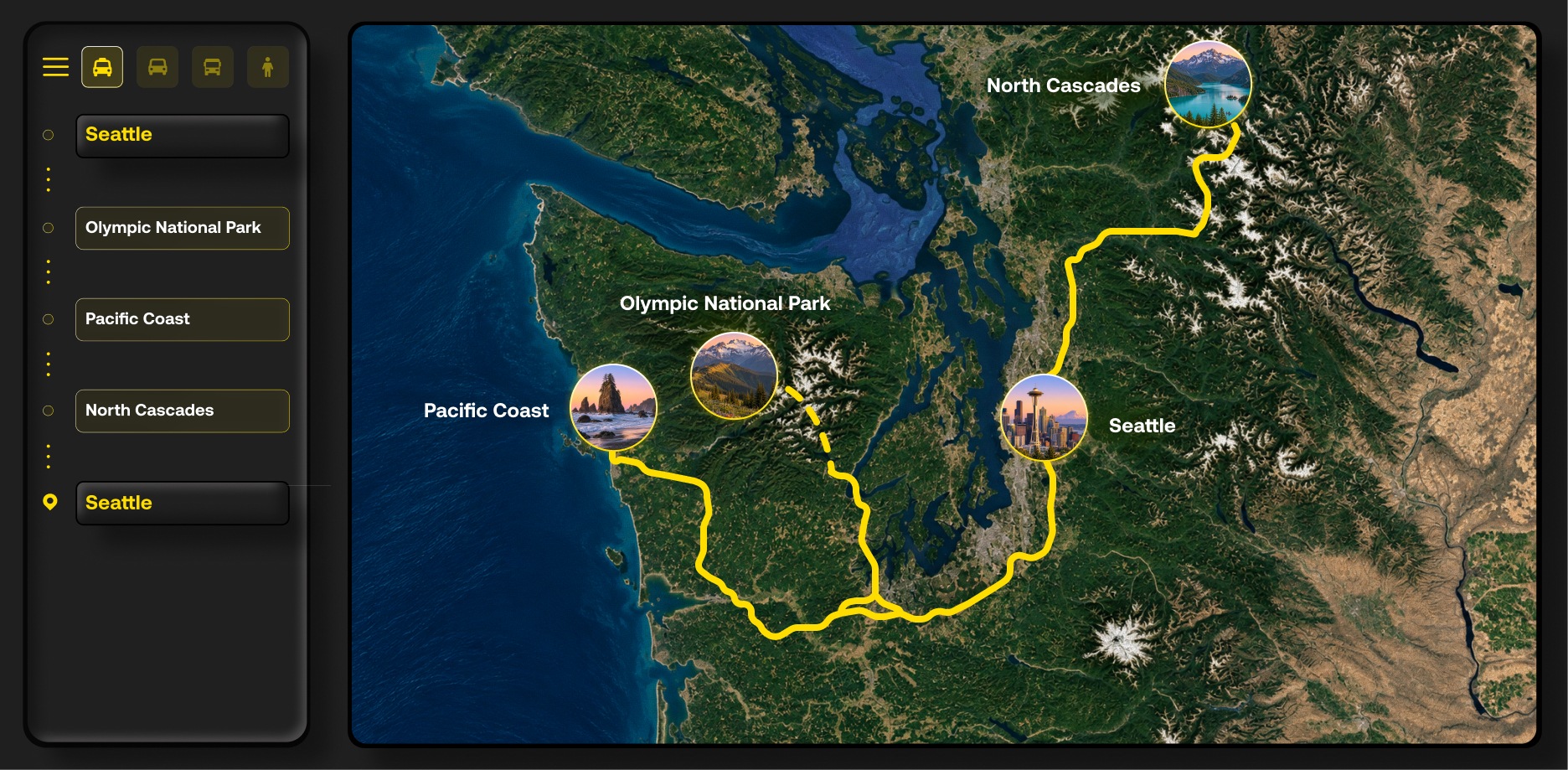
What to know: Many mountain roads are only open seasonally, and it’s important to consider how wildfires and smoke can impact the itinerary. There can also be long gaps between service stations and rest stops in some areas, while ferry schedules can also be limited during shoulder seasons.
RateHawk insight: How to sell
A more manageable road trip that allows visitors to discover different landscapes without visiting multiple states.
12. Road to Hana: Hawaii’s short road trip
Road trips are the best way to explore a new destination like a local, even in bucket list states like Hawaii. The short road trip from Kahului to Hana is an ideal addition to any Hawaii getaway, turning what could have been a rushed day trip into a more enjoyable overnight experience.
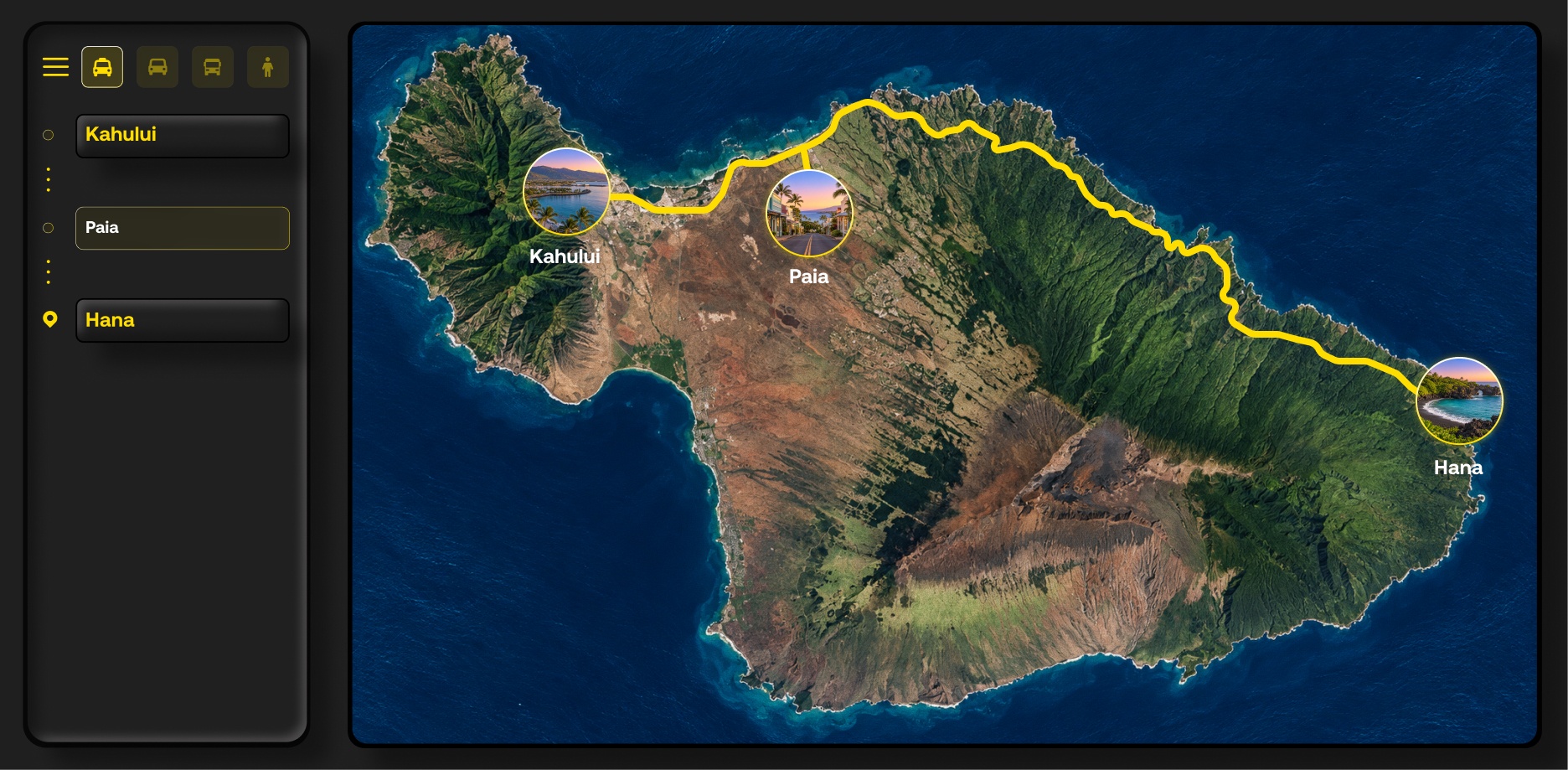
What to know: Accommodation availability in Hana can be limited, and it’s important to check road conditions, weather, and parking in advance.
RateHawk insight: How to sell
A practical way for clients to visit Hana and get a more immersive experience than typical day trippers, including exploring the area later in the evening.
How to build a US road trip itinerary that your clients will actually enjoy
Whether it’s your client’s first or fifth road trip, these are steps that you can take as a travel agent to make their experience more enjoyable:
- Try to limit driving to three hours per day to allow plenty of time for sightseeing. Don’t forget that park roads can be slower and scenic drives can take longer than expected.
- Add buffer days into itineraries on the West Coast, especially during times of inclement weather when road closures and wildlife smoke can cause delays. Buffer days are ideal for any itinerary over 7+ days to help combat fatigue.
- Two-night stays are a non-negotiable for larger destinations like San Francisco, Moab, Yellowstone, Key West, and Boston. While they’ll reduce your client’s overall mileage, they’re places that your clients will always remember and that deserve extra time.
The best time of year for a US road trip
How agents can use RateHawk to plan a US road trip
RateHawk streamlines the process of road trip planning with our map view features and accommodation filters. Our recent RateHawk Pro Series takes you through the step-by-step process on how to choose the perfect hotel for every client. It’s easy to match hotels to your client’s specific needs, whether they’re traveling with young children or want to book a luxury hotel for each stop.
Don’t forget to use our map feature to find accommodation close to your client’s driving route and to see the distance to nearby attractions or national parks. You can also use our live map feature to identify parking options and compare accommodation prices by neighborhood.
Common US road trip mistakes and how to avoid them
A road trip is a different type of vacation, and it’s easy to overload an itinerary. As a travel agent, you want to consider these pain points early and put options in place to mitigate them.
Here are 10 of the most common US road trip mistakes and how to avoid them:
- Planning too many miles per day: Limit driving to 3 hours per day
- Booking hotels before finalizing the route: Prioritize the route, then book hotels in order of availability
- Treating driving time as sightseeing time: Take regular breaks
- Leaving national park access too late: Book when confirming hotels
- Assuming mountain roads will be open on a fixed date: Always verify by using the local authority’s website
- Ignoring one-way rental fees: Consider the cost of a one-way car rental in your budget when planning a road trip that isn’t a loop route
- Booking gateway towns last: These sell out first, so book them early
- Underestimating resort and parking fees: Use hotel and national park websites to estimate potential daily costs and add them to your budget
- Forgetting buffer days: Take a day off driving at least every 3-4 days
- Choosing an EV without checking rural charging gaps: Consider charging options when planning the route or book hotels with on-site chargers
How much does a US road trip cost?
There’s no real estimate for how much a US road trip might cost. Factors like accommodation, car rental, fuel, and food will set the baseline, while park passes, attraction tickets, parking, tolls, and resort fees can increase this anywhere from a few hundred to several thousand dollars.
Some factors can drastically increase the cost of a US road trip, with July and August itineraries that include visits to national parks being among the most expensive, along with visits to New England during the fall foliage. One-way car rentals and in-park lodging are also expensive, while Hawaii and coastal California have a high price tag year-round.
However, there are ways to reduce the cost of a US road trip. The shoulder seasons are the most affordable time to do any itinerary, and midweek travel can reduce hotel costs, while some accommodation options may provide reduced rates for longer stays.

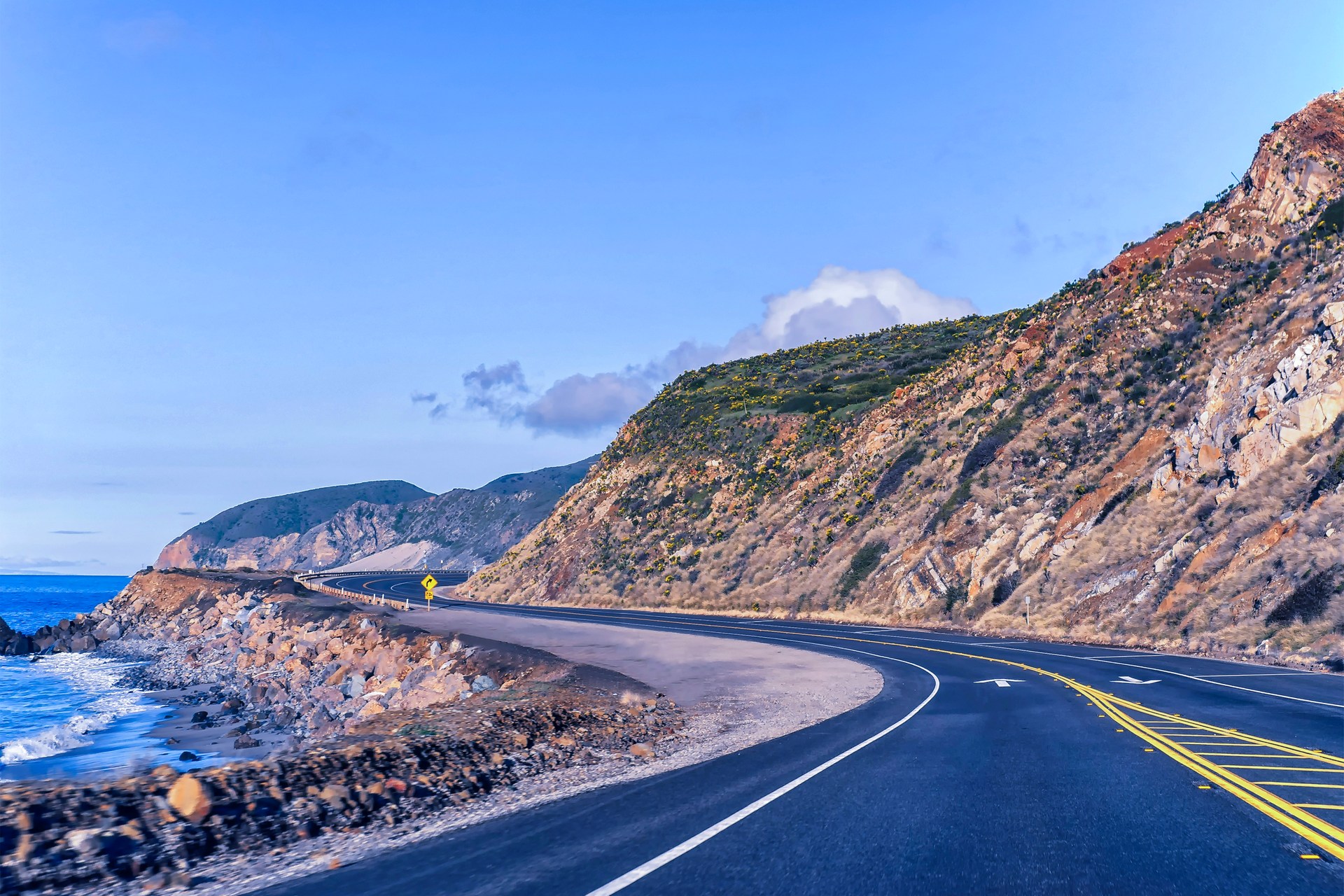
Hawaii and coastal California have a high price tag year-round.
Photo by Hari Nandakumar on Unsplash
Travel agents can help reduce the cost of accommodation by choosing towns and areas that are slightly further away, while still being within easy driving distance of parks and attractions.
Frequently asked questions about US road trips
Plan the ultimate American road trip and book hotels in the USA with RateHawk
The secret to planning the best USA road trip is to choose a longer itinerary with fewer stops. Ultimately, the route that you choose should determine which accommodation you book, rather than the other way around. Always start by booking the stops with the most limited inventory, including national parks and getaway towns, before moving on to more flexible city stays.
The secret to planning the best USA road trip is to choose a longer itinerary with fewer stops.
Photo by Zain Creations on Unsplash
With RateHawk, you have everything you need to curate an unforgettable USA road trip, from booking car rentals to choosing family-friendly hotels and accommodation close to national parks and key attractions. Get started with RateHawk today to get access to extensive inventory with exclusive rates for accommodation and travel packages.
Cover image: Photo by Wes Tindel on Unsplash