

 526
526 21 minutes read
Content
- Why travel agents should be selling Bangkok right now
- Practical information for travel agents
- Where to stay in Bangkok: Neighbourhoods and hotel options
- Top things to do in Bangkok: Must-see attractions
- Bangkok activities by travel type
- Nearby destinations: Day trips from Bangkok
- Thai food in Bangkok: What your clients should try
- Insider tips for Bangkok
- Bangkok as a “Destination Next” Recommendation
Why travel agents should be selling Bangkok right now
Bangkok is one of the most inexhaustible city destinations in the world. Here’s why Bangkok consistently sells, including for returning visitors:
- The Grand Palace and Wat Arun are as arresting on the fifth visit as on the first, with one of the world’s richest collections of Buddhist temples.
- The street food of Chinatown and the boat noodles of Victory Monument remain global benchmarks.
- For agents building Southeast Asia programmes, Bangkok’s position as the region’s aviation hub makes it the natural anchor of any Thailand or multi-country itinerary.
- The city’s hotel market covers every price point and style: from the legendary Mandarin Oriental to boutique heritage properties in Charoen Krung and the BTS-convenient towers of Sukhumvit.
- One of Southeast Asia’s most developed urban rail networks, making it the most complete single-city destination in the region.
The Destination Next tool’s Bangkok recommendation gives you real hotel inventory across every neighbourhood at exactly the moment your client wants to book, making it easy to find the perfect match for their travel style and budget.
Capture demand with a curated hotel selection
View the full collection of recommended Bangkok accommodations with the best available rates.

Prawat Siriboonyasuk,
Country Manager Thailand, Vietnam & Cambodia
“Bangkok continues to see strong demand this year.The city benefits from a mix of leisure travelers, business travelers, MICE (Meetings, Incentives, Conferences, and Exhibitions) events, and medical tourism. We are seeing growing demand from India, the Middle East, Europe, and neighboring ASEAN markets, while Chinese tourism is gradually recovering.
The most common traveler profiles I see split fairly clearly between the two destinations.
Bangkok tends to draw couples, solo travelers, and business travelers, while Pattaya leans more towards couples and families, especially during holiday periods and over weekends.”

Aranyarat Kungwarn,
Business Development Manager Direct Supply Thailand
“The rapid growth of mobile booking platforms is driving significant demand in the market,particularly from Russia and the CIS, where our key partners are based. In addition, the strength of our brand, RateHawk, is helping us capture long‑haul European and Middle East markets on the platform. Booking patterns show a mix of last‑minute and advance purchases, reflecting the current market uncertainty.
Solo travelers are booking more often in Thailand, especially during peak periods such as Songkran. Millennials lead this trend, booking short, spontaneous trips through mobile apps. The rise of hybrid and remote work is also boosting longer stays and workation bookings, where travelers combine remote work with leisure stays.”
Practical information for travel agents
Travel guidelines
Weather and best time to visit Bangkok
- Cool Season (November–February): The best time to visit Bangkok. Temperatures drop to 25–32°Cand humidity falls with minimal rainfall. December–January is peak tourist season; book accommodation in advance for Christmas–New Year. The most comfortable time for temple visits, market exploration, and Chao Phraya river trips.
- Hot Season (March–May): Temperatures regularly exceed 35–38°C. The city’s air-conditioned malls (MBK, Siam Paragon, ICONSIAM) become a practical part of the Bangkok day. Songkran (Thai New Year water festival, mid-April) is one of Southeast Asia’s most exuberant street celebrations.
- Wet Season (June–October): Heavy daily rainfall, typically in afternoon bursts. Hotel rates are significantly lower; the Grand Palace and temples are less crowded. The Chao Phraya River takes on a dramatic, fast-moving character. Some flooding in low-lying areas in September–October; advise clients to monitor conditions.
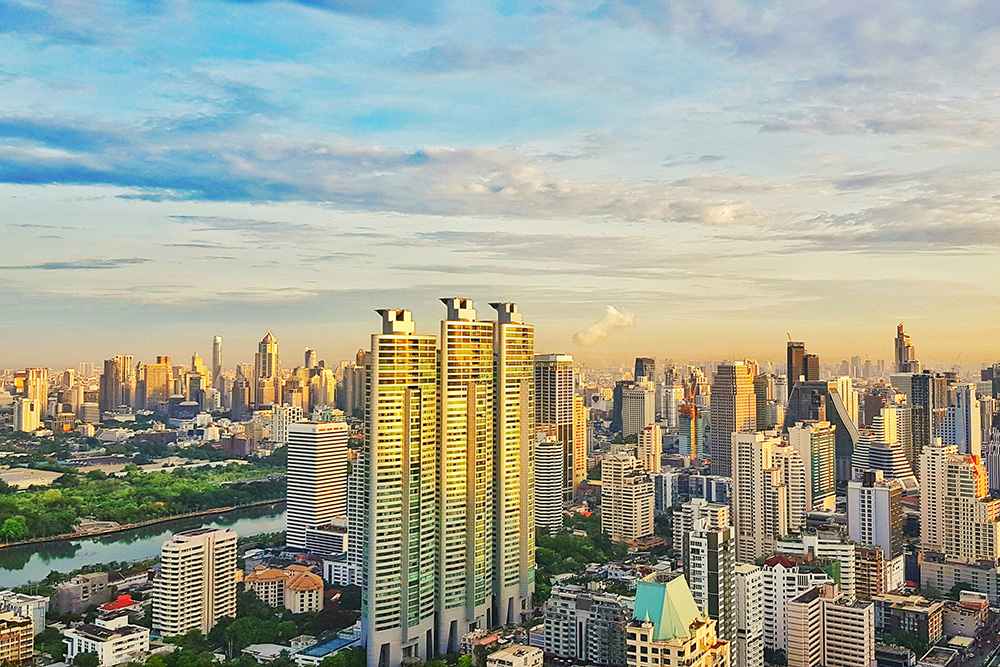
Photo by Sua Truong on Unsplash
Bangkok fun facts
- Bangkok’s ceremonial Thai name is among the longest place names in the world and is widely cited as the longest city name in common use. It features 168 characters, covering the city’s founding mythology and auspicious attributes.
- Bangkok has more than 400 Buddhist temples (wat) within the city limits. Chinatown (Yaowarat), dating to the late 18th century when King Rama I relocated the Chinese community to make way for the Grand Palace, is one of the most densely layered Chinatown districts in Asia.
- The Chao Phraya Express Boat ferry system remains one of the most efficient and atmospheric ways to navigate the city — connecting the Grand Palace, Wat Arun, Chinatown, and the Bang Rak riverside in a route that bypasses Bangkok’s famous traffic entirely.
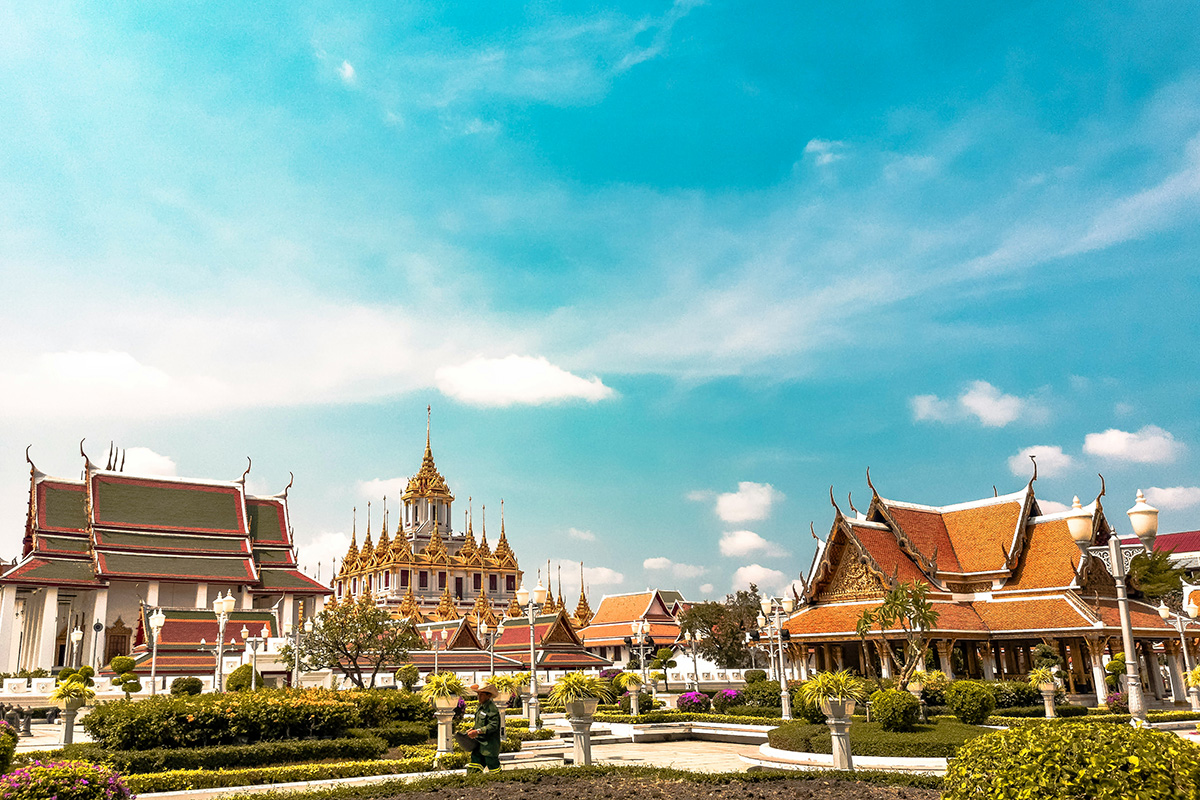
Photo by Sua Truong on Unsplash
Getting around Bangkok
Bangkok’s famous traffic is best avoided during peak hours (7–9 AM and 5–8 PM). The BTS Skytrain, MRT metro, and Chao Phraya river boat system make navigation surprisingly efficient for visitors who use them.
- BTS Skytrain: The elevated rail network covering Sukhumvit, Silom, and Siam is the fastest way through central Bangkok. The Rabbit Card remains the standard BTS payment option, while MRT services use separate ticketing and increasingly support contactless bank card payments. Most central Bangkok hotels and attractions are within a short walk of a BTS or MRT station.
- MRT Metro: Bangkok’s expanding metro network includes the Blue, Purple, Yellow, and Pink lines, complementing the BTS Skytrain network. The Blue Line extension to Wat Mangkon station (2019) transformed access to Chinatown. It’s turned a previously traffic-intensive journey into a 20-minute metro ride from the Sukhumvit hotel corridor.
- Chao Phraya Express Boat: Public ferry serving many of Bangkok’s major riverside attractions — Old City temples, Chinatown, the Asiatique night market, and the riverside luxury hotels. The short cross-river ferry between Tha Tien Pier and Wat Arun is one of Bangkok’s cheapest and most scenic transport experiences.
- Grab: Transparent fixed pricing before booking; strongly recommended over negotiating with unmetered taxis or tuk-tuks for most journeys. Tuk-tuks are atmospheric for short distances, but always agree on the fare in advance.
RateHawk insight
Agents can streamline travel itineraries by offering transport alongside accommodation as part of their Bangkok packages. As an all-in-one platform, RateHawk makes it easy to add on airport transfers and onward travel for multi-stop itineraries, including flights to other destinations in Southeast Asia, such as Singapore and Manila.
Where to stay in Bangkok: Neighbourhoods and hotel options
Bangkok’s accommodation market is one of the most diverse in Southeast Asia, from legendary riverside luxury to boutique heritage guesthouses and budget options near the BTS.
The Old City: Rattanakosin and Banglamphu
Best for: Culture-focused guests who want to discover the city’s heritage
The Rattanakosin historic island, home to the Grand Palace, Wat Pho, and the National Museum, and the adjacent Banglamphu neighbourhood (Khao San Road and its now more nuanced surrounding streets) are where Bangkok began.
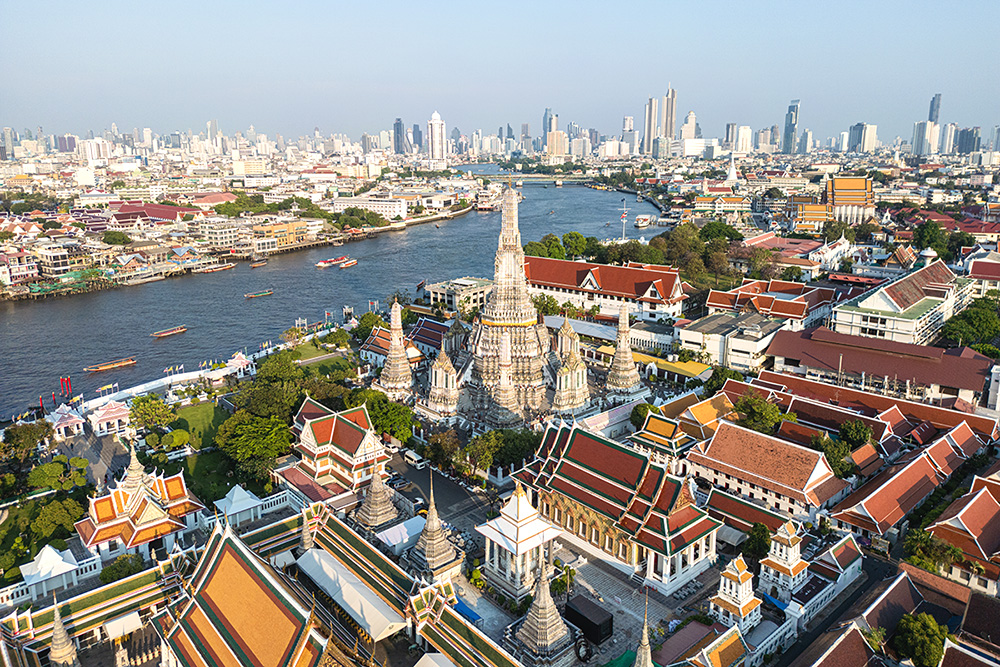
Photo: Makhh / Shutterstock.com
Staying here gives clients early-morning temple access before the tour groups arrive and direct proximity to the Chao Phraya River. Accommodation runs from small heritage guesthouses to river-view boutique properties.
Riverside Bangkok: Bang Rak and Charoen Krung
Best for: Luxury itineraries and design-forward clients
The riverside neighbourhoods south of the Old City, once Bangkok’s colonial commercial quarter, have become the city’s most design-forward district. TCDC (Thailand Creative and Design Centre), independent restaurants, coffee roasters, and galleries in old shophouses along Charoen Krung Road make this the most interesting neighbourhood in contemporary Bangkok.
The Mandarin Oriental (founded in 1876, the most legendary hotel in Southeast Asia) anchors the luxury riverside hotel corridor.
Sukhumvit
Best for: First-time visitors who want diverse hotel choices with convenient metro links
Sukhumvit Road is Bangkok’s main international hotel and restaurant corridor, running east from the city centre with BTS Skytrain service overhead. Lower Sukhumvit (Sois 1–21) is the densest international hotel zone. Thong Lo and Ekkamai (Sois 55 and 63) are the city’s most sophisticated neighbourhood dining districts. An excellent base for first-time visitors who want BTS convenience and maximum hotel choice.
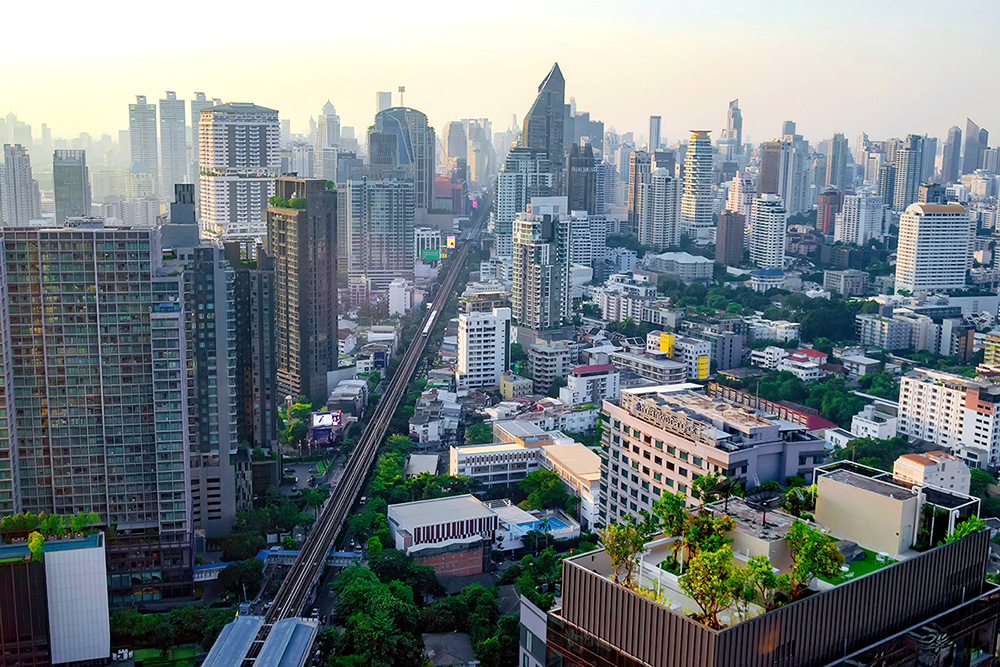
Photo: Denis Costille / Shutterstock.com
Silom and Sathorn
Best for: Business travel and clients who want proximity to the financial district and rooftop bars
Bangkok’s central business district, with a concentrated luxury hotel zone and the city’s most famous rooftop bar (Sky Bar at Lebua State Tower, used in Hangover Part II). The adjacent Sathorn neighbourhood is more residential and upmarket, with boutique hotels in converted Thai houses. The best base for business travel and clients prioritising rooftop bar access and proximity to the financial district.
Top things to do in Bangkok: Must-see attractions
1. The Grand Palace and Wat Phra Kaew
The Grand Palace, built when Bangkok was founded as the Siamese capital in 1782, is the single most important tourist attraction in Thailand. Wat Phra Kaew (the Temple of the Emerald Buddha) is the holiest Buddhist temple in the country, enclosed by 218,400 square metres of buildings and courtyards on the Chao Phraya riverfront.
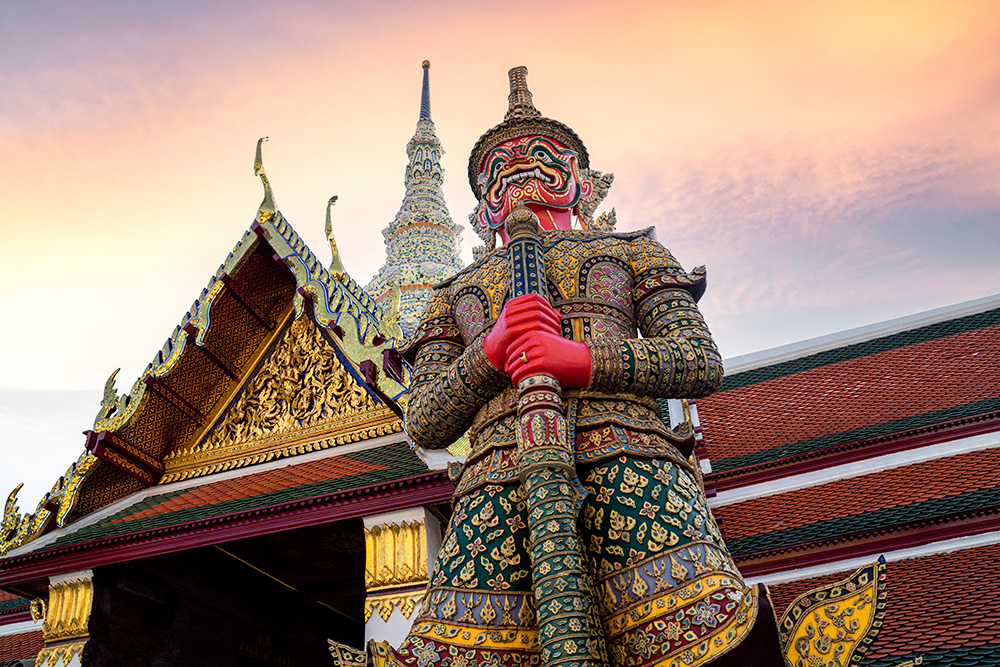
Photo: anek.soowannaphoom / Shutterstock.com
The Emerald Buddha (actually carved from nephrite jade) sits in a gilded shrine; its ceremonial costume is changed three times a year during royal ceremonies, marking Thailand’s seasonal transitions. The surrounding cloisters are decorated with a continuous mural of the Ramakien, the Thai version of the Hindu Ramayana, in extraordinary detail.
Dress code strictly enforced: covered shoulders and knees required, with sarongs available at the entrance. Arrive before 9 AM to beat tour groups and the midday heat.
2. Wat Arun: The Temple of Dawn
Wat Arun rises approximately 70 metres above the west bank of the Chao Phraya. It’s the most visually distinctive temple in Bangkok, with a towering Khmer-style prang covered in a mosaic of broken Chinese porcelain that catches the light differently at every hour of the day. The central prang can be climbed via steep, narrow stairs to a terrace with river views over the Grand Palace complex and the Bangkok skyline.
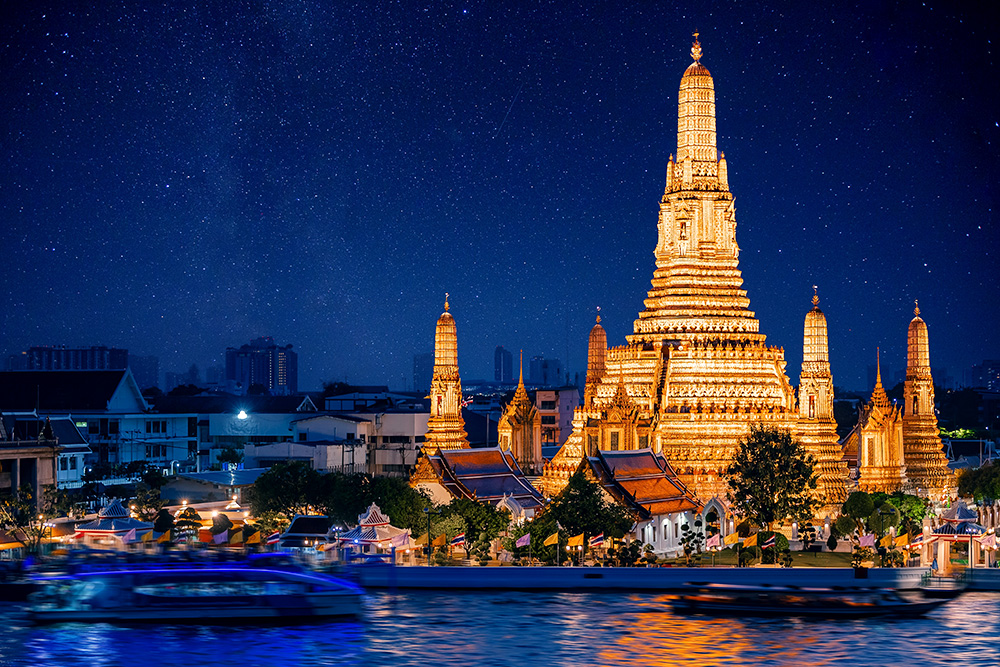
Photo: Parilov / Shutterstock.com
Best viewed at sunset from the opposite bank. The inexpensive cross-river ferry from Tha Tien pier is one of the most scenic short journeys in the city, crossing a stretch of the Chao Phraya where the river traffic — rice barges, longtail boats, and the orange-flag express ferry — gives a vivid sense of the river still functioning as Bangkok’s working artery. Combine with Wat Pho directly across the river for the essential Bangkok temple morning.
3. Wat Pho and the Reclining Buddha
Wat Pho is one of Bangkok’s oldest and most important temple complexes, rebuilt and expanded shortly after Bangkok became the capital in 1782. It is home to the Reclining Buddha, a 46-metre-long gilded statue of the Buddha entering nirvana. It’s so large that the building was constructed around it, rather than the statue being installed inside. The soles of the feet are decorated in mother-of-pearl with 108 auspicious characteristics of the Buddha in extraordinary detail.
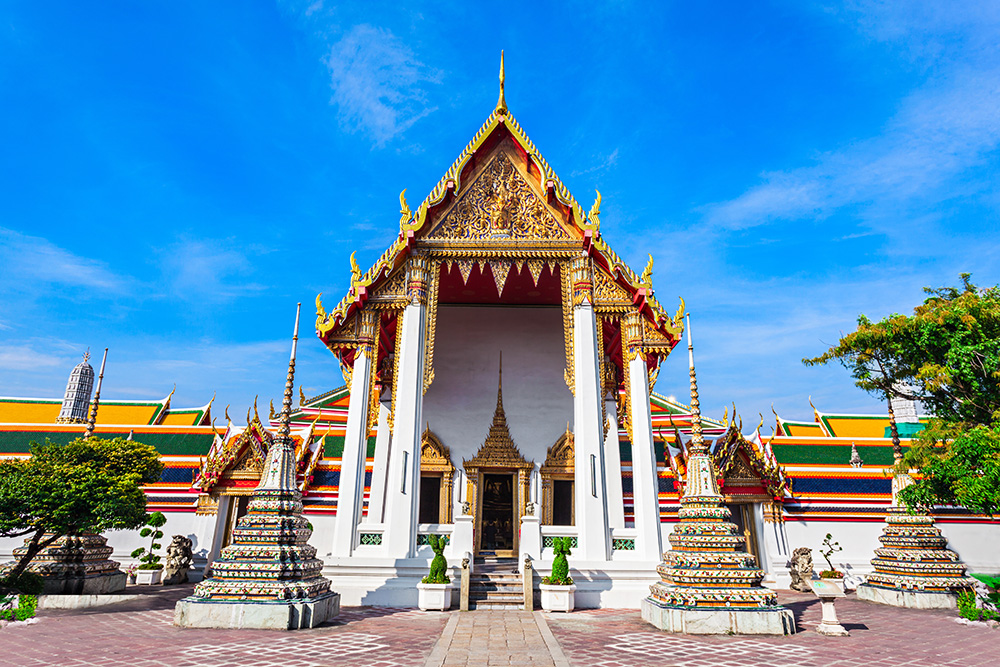
Photo: saiko3p / Shutterstock.com
Wat Pho is also the national centre of traditional Thai massage. The temple’s massage school (Samnak Nuad Wat Pho) is the most reputable training institution in Thailand, and the massage pavilions within the grounds offer authentic traditional Thai massage at rates that remain affordable by international standards. Enter from Sanam Chai Road, not the Grand Palace side, for the most logical temple circuit.
4. Chinatown Bangkok (Yaowarat)
Bangkok’s Chinatown — Yaowarat Road and the surrounding streets of the Yaowarat district — is one of the most sensory and historically layered neighbourhoods in Asia. Visitors are treated to gold shops selling jewellery by weight, traditional Chinese herb markets, old clan association buildings, and the extraordinary evening street food culture that fills the pavements from approximately 6 PM.
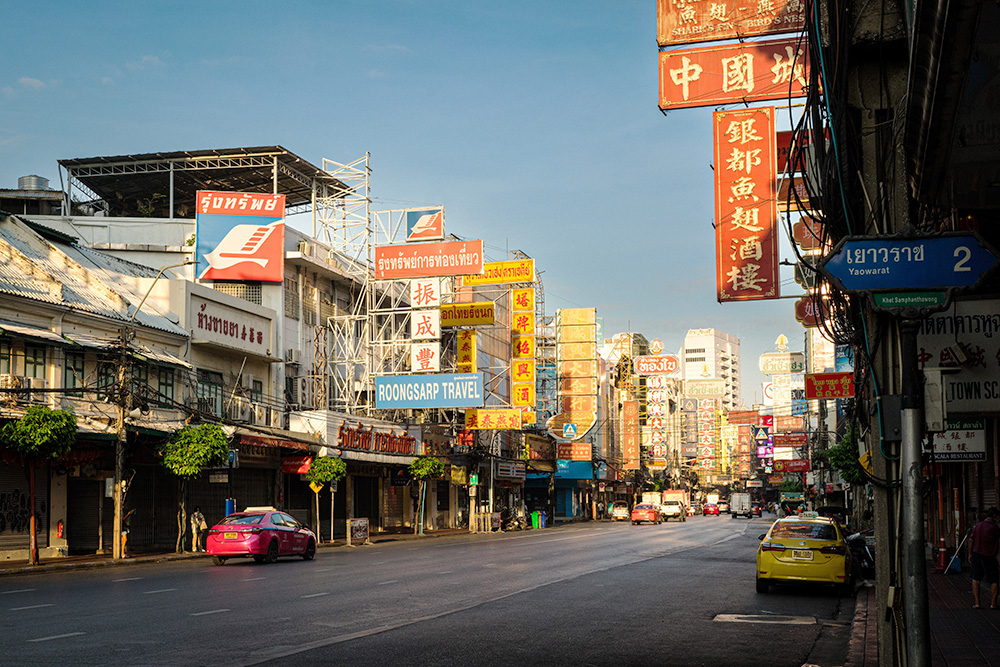
Photo: Sinseeho / Shutterstock.com
The MRT Blue Line to Wat Mangkon station now puts Chinatown within easy reach of all central Bangkok hotels. Highlights of the street food on Yaowarat Road include seafood from T&K Seafood, roast duck over rice, freshly pressed sugarcane juice, and mango sticky rice from the specialist carts near Talad Noi.
The Talad Noi sub-neighbourhood south of the main Chinatown street, with its old warehouses converted into antique shops and independent cafés, is the most atmospheric area for daytime exploration.
5. The Chao Phraya River and Bangkok’s floating markets
The Chao Phraya, the ‘River of Kings’ on which Bangkok was founded in 1782, is best experienced from the water. The Chao Phraya Express Boat public ferry connects all major riverside attractions (Old City temples, the Pak Khlong Talat flower market, the Asiatique night market, the luxury riverside hotels) in a route that bypasses the city’s traffic entirely.
A full-length river journey provides an excellent overview of Bangkok’s waterfront, with views of the Grand Palace and Wat Arun at river level.
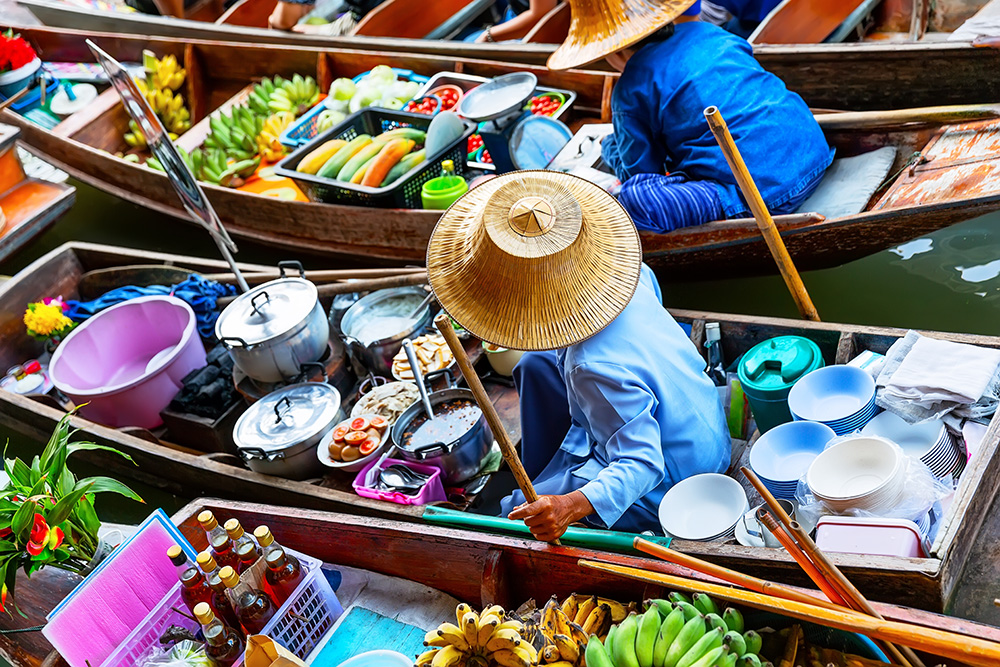
Photo: Preto Perola / Shutterstock.com
Beyond the public ferry, the Taling Chan Floating Market near Thonburi is reachable by canal boat and open on weekends from 8 AM – 3 PM. It offers one of the most accessible floating-market experiences near central Bangkok with fresh produce and seafood cooked from boats moored on the khlong.
Longtail boat hire for private canal exploration through the Thonburi network is available from multiple riverside piers and is one of the finest ways to see a Bangkok that most visitors never reach.
Bangkok activities by travel type
City breaks and cultural tours
- Temple circuit morning: Early entry to the Grand Palace and Wat Phra Kaew (open from 8:30 AM, arrive shortly before opening), then walk south to Wat Pho for the Reclining Buddha and a traditional Thai massage. Follow up with the short river-cross ferry to Wat Arun and climb up the central prang; finish at a Tha Tien pier riverside restaurant for a late lunch. Best itinerary for covering the three most important temple sites in Thailand in a single morning.
- Jim Thompson House: The museum-home of American silk entrepreneur Jim Thompson (disappeared 1967) is the finest traditional Thai house accessible to visitors in Bangkok. These six joined historic houses are filled with Asian art on the Saen Saep canal. Calls for a 90-minute visit and offers a strong contrast to the temple circuit.
- Chinatown evening food walk: Yaowarat Road comes alive from 6 PM. Culinary highlights include T&K Seafood stalls, dim sum shops, freshly pressed sugarcane juice, and mango sticky rice from the specialist carts near Talad Noi. Finish at a plastic-table street restaurant with a cold Singha beer to indulge in people watching.
- Damnoen Saduak or Amphawa Floating Market: Damnoen Saduak (100 km west) is the most famous floating market in Thailand, though also the most commercialised; Amphawa (90 km southwest and open on weekends from 3 PM – 9 PM) is more atmospheric; both combine naturally with a longtail boat trip through the canal network.
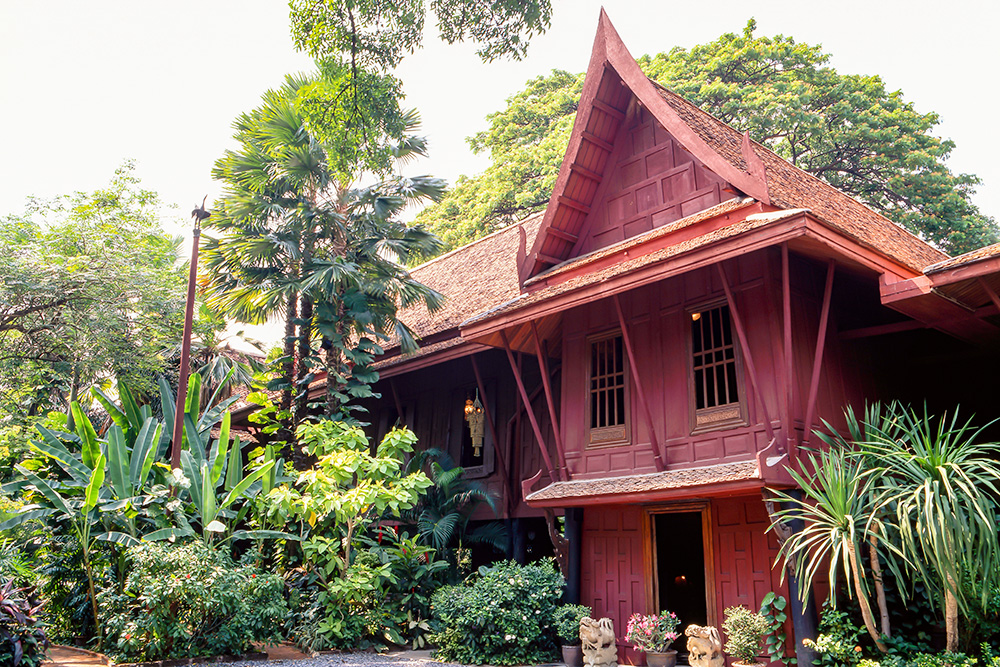
Photo: Kasbah / Shutterstock.com
Food and market exploration
- Or Tor Kor Market (Chatuchak): The finest fresh produce market in Bangkok, adjacent to the Chatuchak weekend market and reachable by MRT or BTS to Mo Chit. Serves the best mangosteen, rambutan, and tropical fruit in the city, alongside prepared Thai foods.
- Chatuchak Weekend Market: One of the world’s largest weekend markets, with more than 8,000 stalls across 35 acres. Open Saturday and Sunday mornings, selling clothing, antiques, plants, ceramics, street food, and handicrafts. Deserves at least a half-day visit.
- Rooftop bars at sunset: Best viewpoints include the Sky Bar at Lebua State Tower (Silom, 64 floors, dress code, reservations essential for sunset), Octave Rooftop Bar at the Marriott Sukhumvit 57 (floors 45–49, 360-degree Thong Lo views, more relaxed), or Above Eleven on Sukhumvit Soi 11 (independent, Peruvian-Japanese menu, younger crowd).
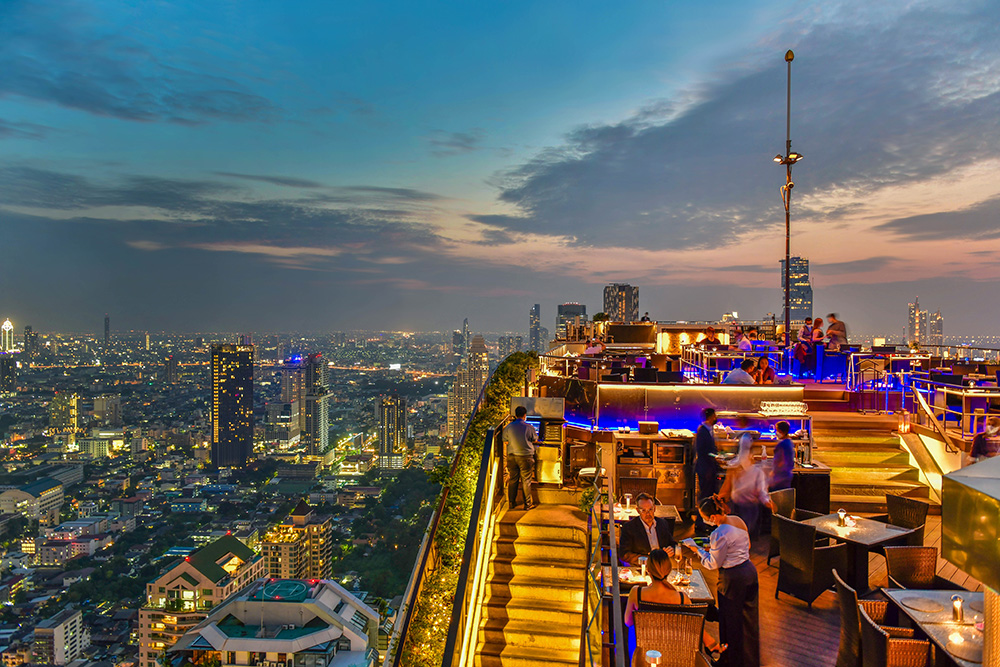
Photo: i viewfinder / Shutterstock.com
Family holidays in Bangkok
- ICONSIAM riverside mall and SookSiam: The largest mall in Thailand (525,000 square metres) on the Chao Phraya riverside. Its Sooksiam indoor floating market recreates traditional Thai riverside culture with live cooking and craft demonstrations in a way that feels equally extraordinary and accessible for families.
- SEA LIFE Bangkok Ocean World (Siam Paragon): One of Southeast Asia’s largest aquariums, located in the basement of Siam Paragon mall. It’s home to over 30,000 aquatic animals, including sharks, rays, and penguins; it offers glass-bottom boat rides through the main tank.
- Chatuchak Weekend Market with children: The plant and exotic animal sections, the street food circuit, and the handicraft stalls make Chatuchak excellent for families; arrive early (8 AM) for the most comfortable temperature and least congested aisles.
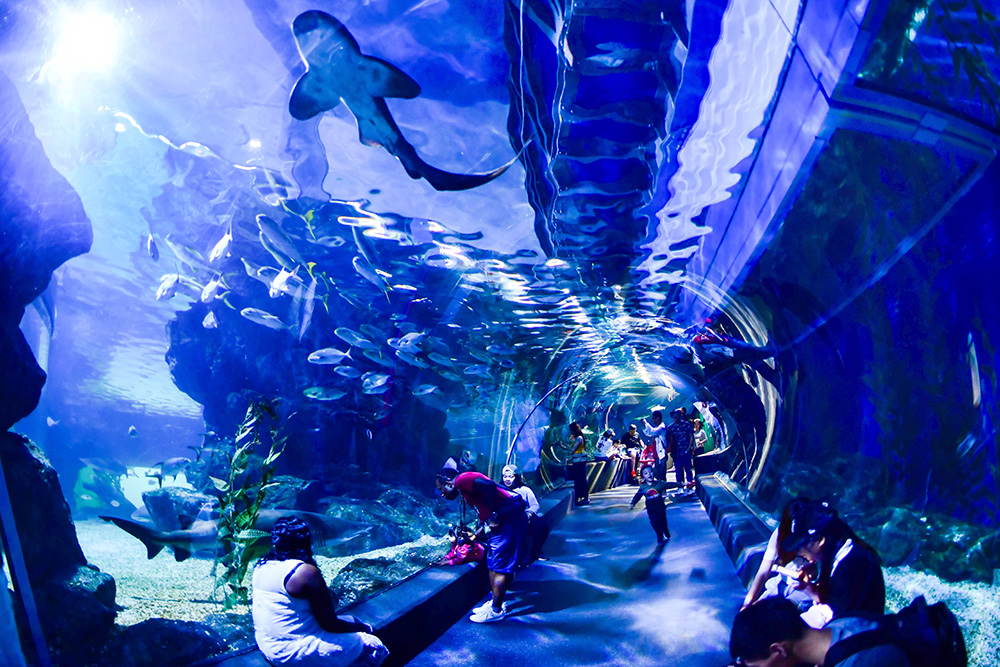
Photo: i viewfinder / Shutterstock.com
Luxury escapes
- Mandarin Oriental Bangkok: Founded in 1876, it is the most legendary hotel in Southeast Asia. The Authors’ Suite (where Somerset Maugham, Joseph Conrad, and Noël Coward all stayed) and the Bamboo Bar are amongst the best offerings in Asian luxury travel. Afternoon tea at the Oriental Hotel is the most civilised afternoon in Bangkok and is worth the splurge.
- Private long-tail boat tour of the Thonburi canals: A chartered long-tail from Taling Chan or the Chao Phraya riverside for 1–2 hours through the khlong network. Highlights include the Royal Barges National Museum, canal-side temples, traditional wooden houses, and floating orchid farms that have thrived in the city’s quieter waterways.
- Fine dining: Restaurant highlights include Sorn, Gaggan Anand, Le Du, or Nahm. Bangkok’s Michelin-starred Thai restaurant tier (Sorn regularly appears in Asia’s 50 Best) expresses the full complexity and regional diversity of Thai cooking at a level, often at significantly lower prices than comparable fine-dining experiences in major global cities.
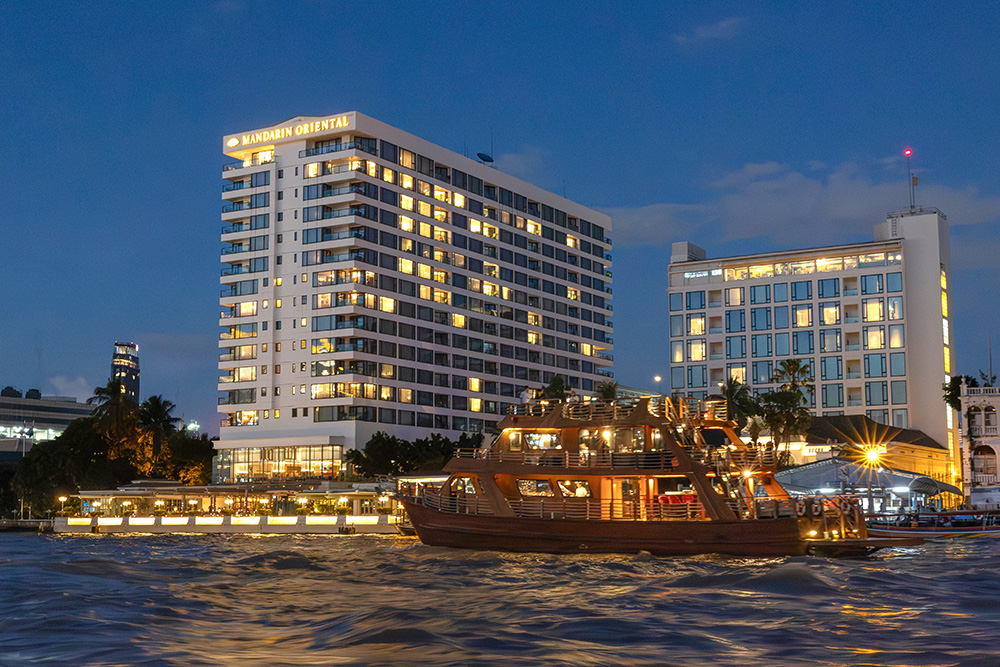
Photo: Andy Tait / Shutterstock.com
Nearby destinations: Day trips from Bangkok
Ayutthaya
Ayutthaya is 80 km north of Bangkok and 1.5-2 hours by train from Hua Lamphong or Krung Thep Aphiwat Central Terminal. This UNESCO World Heritage Site is the former capital of the Kingdom of Siam, founded in 1350. The massive brick temples, headless Buddha statues, and vast prangs slowly reclaimed by tree roots after the city’s destruction by Burmese forces in 1767 are extraordinarily evocative of both its former grandeur and violent end.
The famous Buddha head entwined in banyan tree roots at Wat Mahathat is one of the most recognised images in Thailand. The best way to explore is by bicycle, which can be hired near the train station; the main temple sites are spread across the river island and easily covered in a full day with a return train journey at sunset.
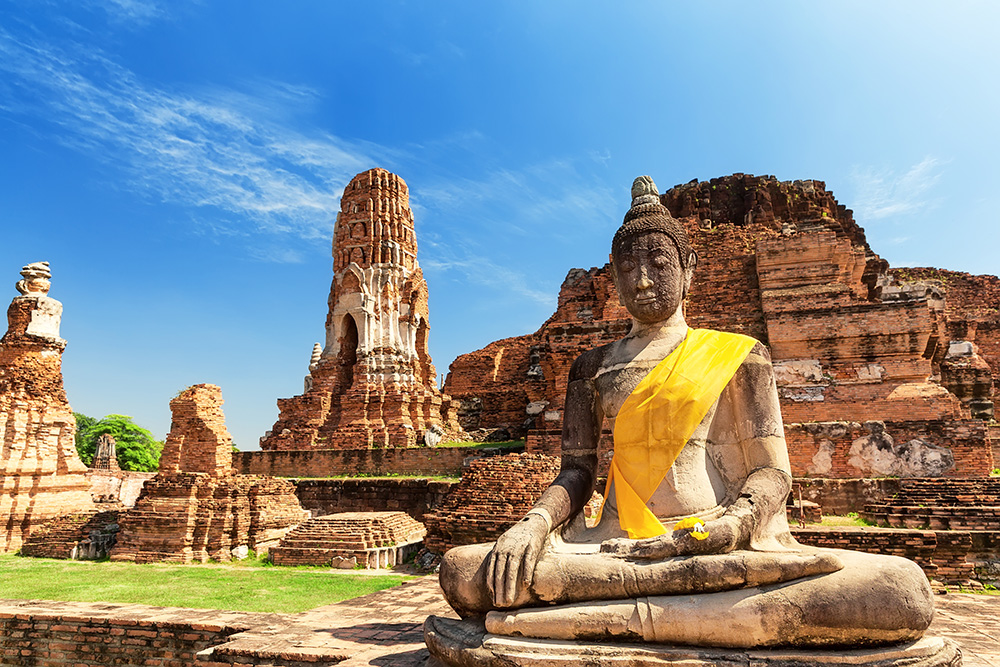
Photo: Preto Perola / Shutterstock.com
Kanchanaburi and the River Kwai
Kanchanaburi is 130 km northwest of Bangkok and 2–3 hours by bus or train from Thonburi station. It’s the site of the Death Railway, built by Allied prisoners of war and Asian forced labourers under Japanese occupation in World War II. The Bridge on the River Kwai, the JEATH War Museum, and the Kanchanaburi War Cemetery (where nearly 7,000 Allied prisoners of war are buried) are deeply moving historical sites.
The Erawan National Park, 1.5 hours from Kanchanaburi town, has seven emerald-green tiered pools, including some of the most beautiful natural swimming in Thailand. It is one of the finest nature day trips available within reach of Bangkok.
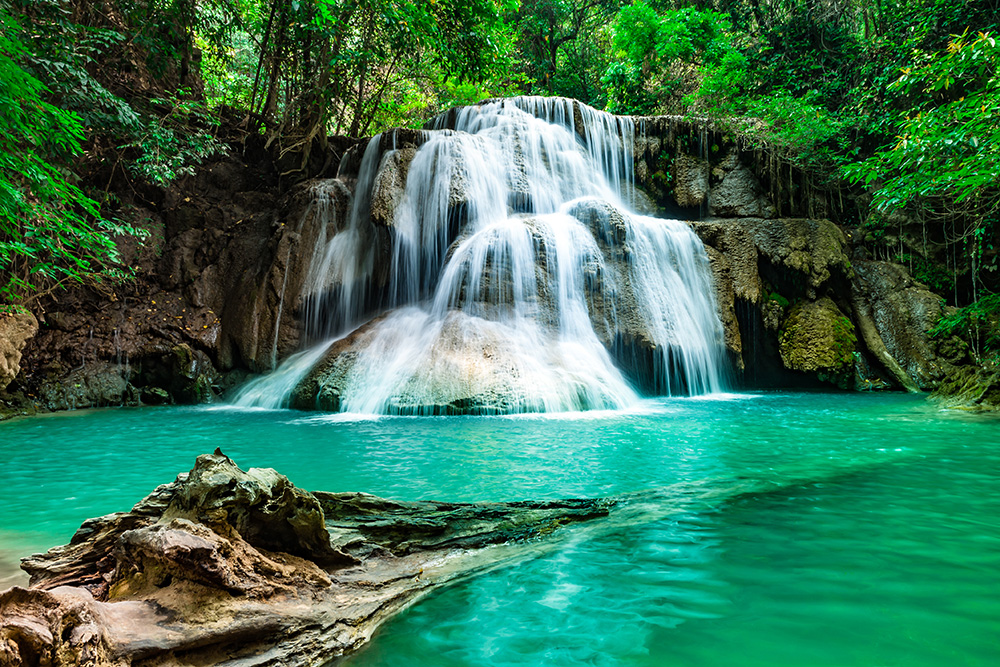
Photo: ZeroOne_Th / Shutterstock.com
Pattaya and Koh Samet
Pattaya is 150 km south of Bangkok on the Gulf of Thailand and 2 hours by bus from the Eastern Bus Terminal (Ekkamai). It has evolved from its earlier reputation into a more genuinely multi-faceted coastal destination. Jomtien Beach is family-friendly and significantly calmer than the main Pattaya Beach strip. Ko Larn island (45-minute ferry from Bali Hai pier) has clearer water and accessible beaches.
The Sanctuary of Truth, a vast wooden temple-castle covered in hand-carved Hindu-Buddhist mythology, under construction since 1981, is one of the most extraordinary wooden structures in Asia and a strong standalone reason to make the trip.
For clients wanting genuinely excellent Thai beach quality as an extension to a Bangkok city break, Koh Samet (2.5 hours from Bangkok by bus and ferry from Ban Phe) is the stronger beach recommendation.
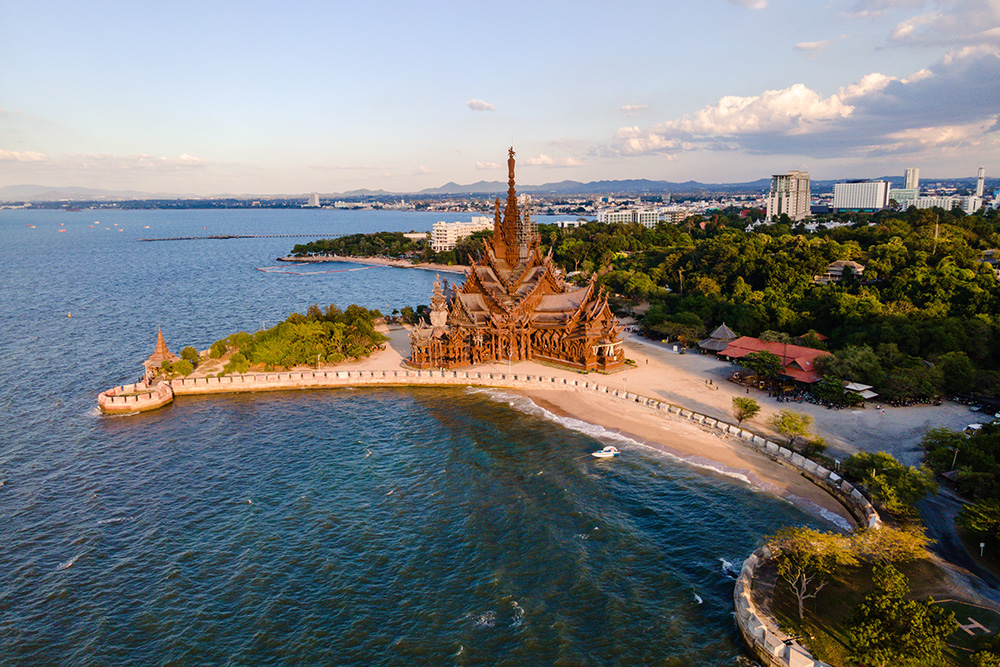
Photo: fokke baarssen / Shutterstock.com
Thai food in Bangkok: What your clients should try
Bangkok is one of the great food cities in the world, from a 40-baht bowl of boat noodles on a canal to a multi-course tasting menu at a Michelin-starred restaurant. Here’s what your clients should try:
- Pad Thai: Best from a street wok rather than a tourist restaurant; Thip Samai on Mahachai Road near Chinatown (operating since 1966) is widely considered to make the finest pad Thai in Bangkok. Best to arrive before 8 PM to avoid the queue,
- Boat noodles (kuay teow reua): Small, intense bowls of dark broth with rice noodles, pork or beef, and blood thickening the soup. Order five or six per person as they are small by design. The Victory Monument area remains Bangkok’s most famous concentration of boat noodle restaurants.
- Mango sticky rice (khao niao mamuang): Fresh mango with glutinous sweet rice and coconut cream. Best eaten between April and June at the peak of the Nam Dok Mai mango variety. The street cart versions near Chinatown and Siam Square consistently outperform any air-conditioned restaurant version.
- Tom yum goong: The flavour profile that most defines Thai cooking: lemongrass, kaffir lime, galangal, chilli, and lime in a clear or creamy prawn broth. The balance of sour, spicy, and savoury is most precisely maintained in traditional Thai restaurants rather than tourist-facing menus.
- Chinatown roast duck: Yaowarat Road’s roast duck over rice is one of Bangkok’s most satisfying street meals. The best stalls hang gleaming lacquered ducks in the window from mid-morning; order with Chinese broccoli and jasmine rice and eat at a plastic table on the street.
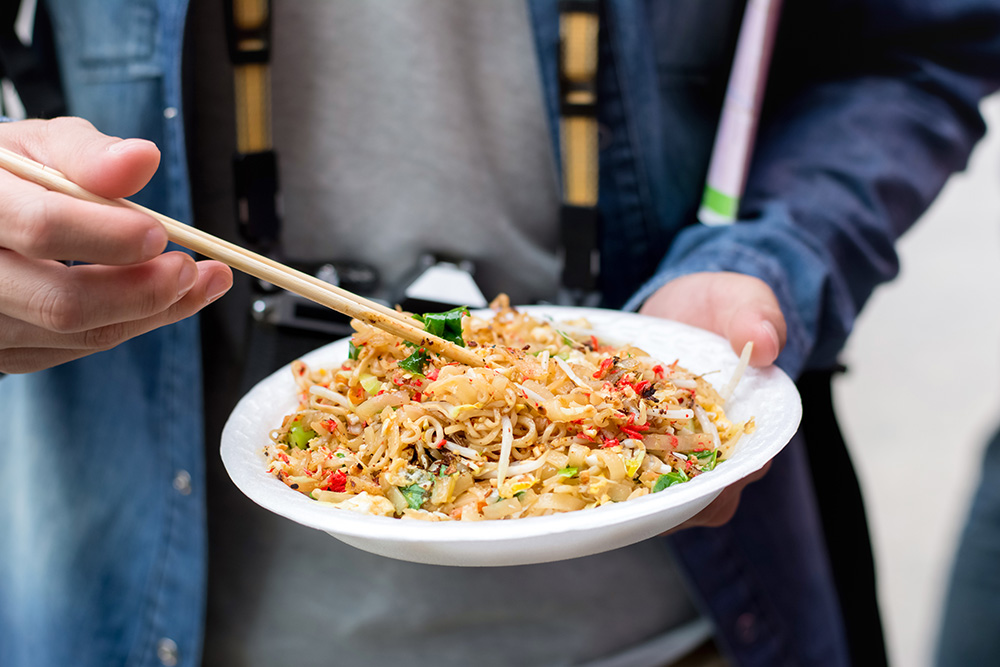
Photo: Atstock Productions / Shutterstock.com
Insider tips for Bangkok
Souvenirs worth buying
- Thai silk from Jim Thompson: The most internationally recognised Thai luxury textile product. Silk scarves, ties, and small accessories from the Jim Thompson shops (Surawong Road and major malls) guarantee quality and provenance.
- Thai spices and curry pastes: Vacuum-packed Maesri or Lobo brand curry pastes, dried kaffir lime leaves, and palm sugar from a Big C or Villa Market supermarket; vastly superior to imported versions and easy to carry in checked luggage.
- Bespoke tailoring: Bangkok’s Sukhumvit corridor is known for affordable made-to-measure tailoring, though quality varies significantly between establishments. A suit or shirt made to measure in Thai or Italian fabric takes 24–48 hours at a fraction of London or Hong Kong prices; use a reputable tailor with a fixed address and allow time for a fitting.
- Traditional Thai massage oil and herbal products: Phlai oil (traditional warming massage oil), Tiger Balm, and herbal compresses from pharmacies and markets; compact, genuinely useful, and distinctly Thai.
- Benjarong ceramics: Thailand’s traditional five-coloured porcelain from quality shops in Sukhumvit and the Chatuchak antique section. Look for handmade pieces with the maker’s mark rather than factory-produced versions.
Prawat Siriboonyasuk,
Country Manager Thailand, Vietnam & Cambodia
“One of my favorite things about Bangkok is that the city always has something to offer, from world-class street food and shopping to nightlife and cultural events. The city has a unique mix of gleaming malls and sky trains, and the golden temples and floating markets that sit alongside them.”
Aranyarat Kungwarn,
Business Development Manager Direct Supply Thailand
“Under Bangkok’s current city administration, the lifestyle of the city has changed remarkably. Public services and activities are now more accessible and enjoyable in every corner of the city. So many events welcome both locals and travelers to join, often free of charge. A recent highlight was a large community aerobics event at Suan Lumphini Park, which drew crowds of locals and tourists alike.”
Bangkok as a “Destination Next” recommendation
Bangkok in Thailand is one of the most consistently recommended alternatives for disruption or indecision around Southeast Asian and Asia-Pacific itineraries. Here’s when Bangkok appears as a recommendation:
- As an alternative to Ho Chi Minh City or Hanoi, Bangkok offers comparable street food culture and architectural interest at a more developed infrastructure level, with significantly more hotel supply across all tiers and a BTS Skytrain that makes navigation far easier.
- As a substitute for Singapore when clients want maximum Southeast Asian cultural immersion, Bangkok’s temples, markets, floating markets, and the Chao Phraya river corridor deliver a more layered and unpredictable Southeast Asian experience at a significantly lower overall cost.
- As the gateway to a broader Thailand itinerary, Bangkok, combined with Chiang Mai (1-hour domestic flight) and a southern island (Koh Samui, Phuket, or Koh Lanta by flight), builds the classic Thailand programme that remains one of the most compelling two-week itineraries in the world for first-time visitors.
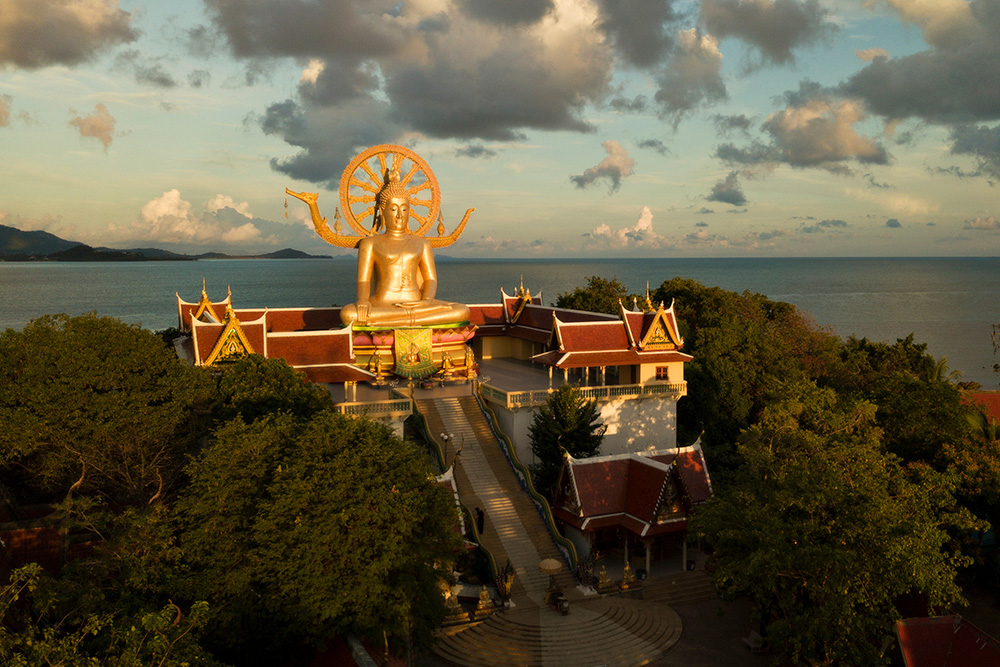
Photo: Elmer Laahne PHOTOGRAPHY / Shutterstock.com
Ready to supercharge your Bangkok proposals?
Explore the full hotel inventory and start building your client’s next Bangkok or Thailand itinerary on RateHawk.
This article is part of the Destination Next initiative by RateHawk — helping travel businesses find stronger destination alternatives when travel plans change.