

 516
516 20 minutes read
Contents
- Why travel agents should be selling Prague right now
- Practical information for travel agents
- Where to stay in Prague: Neighbourhoods and hotel options
- Top things to do in Prague: Must-see attraction
- Prague activities by travel type
- Nearby destinations: Day trips from Prague, Czech Republic
- Czech food and beer in Prague: What your clients should try
- Insider tips for Prague
- Prague as a “Destination Next” recommendation
Why travel agents should be selling Prague right now
Prague is one of the most enduring city-break destinations in the world. Here’s why:
- A city that continues to deliver one of Europe’s finest historic urban experiences with extraordinary historic architecture.
- The city’s food and beer scene has become more sophisticated in recent years.
- The Czech capital gives agents a product that works for every client profile and budget, with deep hotel supply across all price tiers and excellent air connectivity across Europe.
- A price level competitive against Western European alternatives, making it one of the most persuasive plan B destinations on the continent.
For agents building European city-break packages, cultural tour programmes, or Central European itineraries, Prague’s supply depth across the old town, Malá Strana, the new town, and the residential districts means it can absorb a wide range of client profiles without compromising the recommendation.
Whether your client needs a luxury boutique hotel in a converted Baroque palace in Malá Strana, a well-positioned mid-range hotel near Wenceslas Square, or a design apartment in Vinohrady, RateHawk’s hotel supply across Prague’s historic neighbourhoods and the Destination Next tool give you the intelligence to make the right proposal to suit every client’s travel style.
Practical information for travel agents
Travel guidelines
Weather and best time to visit Prague
- Spring (April–May): The best time to visit Prague for most clients. Mild temperatures of 12–20°C, the city’s parks and gardens in bloom, and manageable crowds before the summer peak. May in Prague, with chestnut trees flowering along the Vltava embankment, is one of the finest city-break experiences in Europe.
- Summer (June–August): Warm with temperatures of 22–28°C, lively, and extremely popular. The old town square, Charles Bridge, and Prague Castle are at their busiest; early morning visits to major attractions are essential. Beer gardens and rooftop bars are at their most appealing. Summer is the peak season for outdoor concerts, cultural events, beer gardens, and riverside festivals. Prague’s major classical music calendar extends throughout the year, with the internationally renowned Prague Spring festival taking place in May and early June.
- Autumn (September–October): An excellent alternative to spring. Temperatures remain pleasant at 12–20°C, summer crowds thin considerably, and the wooded hillsides around the castle and in Malá Strana take on beautiful autumn colour. Prague in October is quieter, more local, and very good value.
- Winter (November–March): The old town square hosts one of Central Europe’s best-known Christmas markets, which runs from late November through early January. Cold temperatures of 0–5°C, but rarely brutal; the possibility of snowfall on the medieval rooftops and Charles Bridge makes Prague one of the most photogenic cities in the world at this time of year.
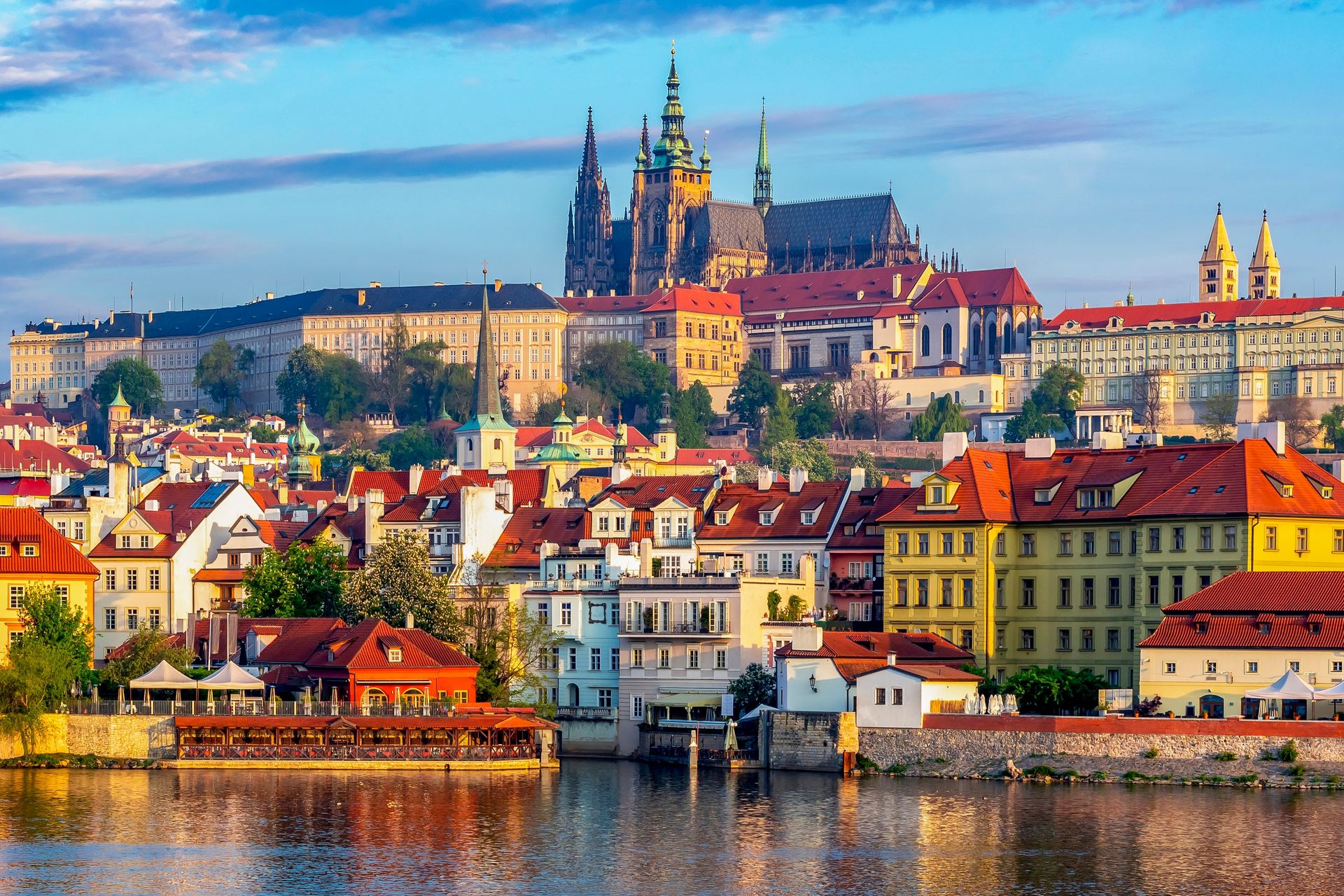
Photo by Mistervlad on Shutterstock
Prague fun facts
- Prague’s historic centre has been a UNESCO World Heritage Site since 1992. Prague escaped the large-scale wartime destruction experienced by many European capitals during both World Wars, allowing much of its historic urban fabric to survive intact.
- The Astronomical Clock on the Old Town Hall, the Prague Orloj, has been keeping time since 1410, making it one of the oldest working astronomical clocks in the world. The hourly mechanical display typically operates during daytime and evening visitor hours, usually from 9 AM to 11 PM, though operating times may occasionally vary during maintenance or restoration periods.
- Prague Castle is the largest ancient castle complex in the world by area — approximately 70,000 square metres of palaces, churches, galleries, and gardens spread across the hill above the Vltava river.
- Beer culture is a defining part of Czech national identity. The Czech Republic has the highest beer consumption per capita of any country in the world, and Prague’s traditional hospoda culture is as much a part of the city’s identity as its Gothic towers.
- Franz Kafka was born in Prague in 1883 and spent most of his life there. His birthplace and the apartment buildings associated with his family are all within a short walk of the old town square; the labyrinthine streets of the old town he wrote about are remarkably intact.
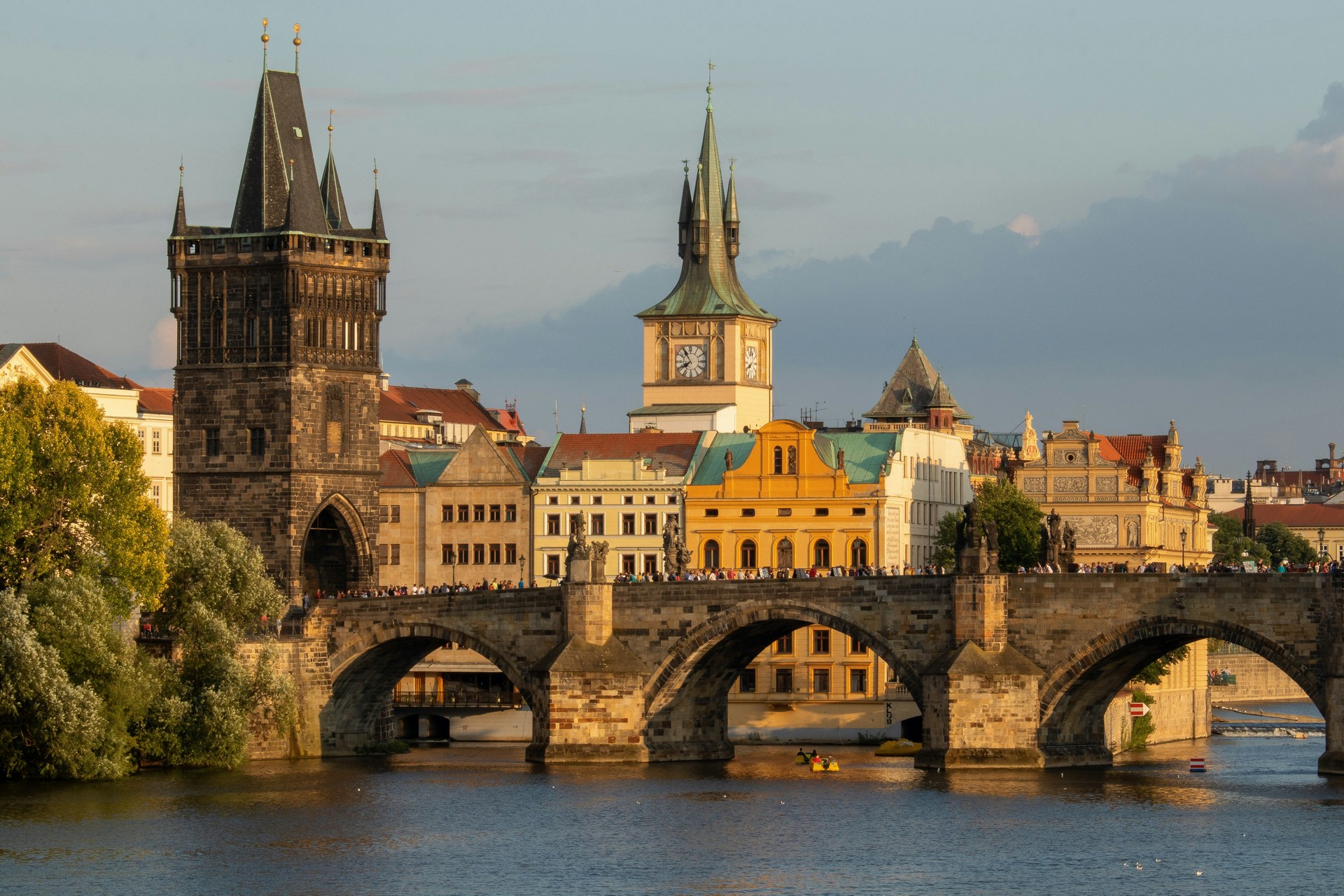
Photo by Martin Krchnacek on Unsplash
Getting around Prague
Prague’s historic centre is highly walkable — from the old town square to Charles Bridge takes five minutes; from the bridge to Malá Strana, three minutes; from the castle down Nerudova to the bridge, ten. Good walking shoes are essential on the cobbled streets.
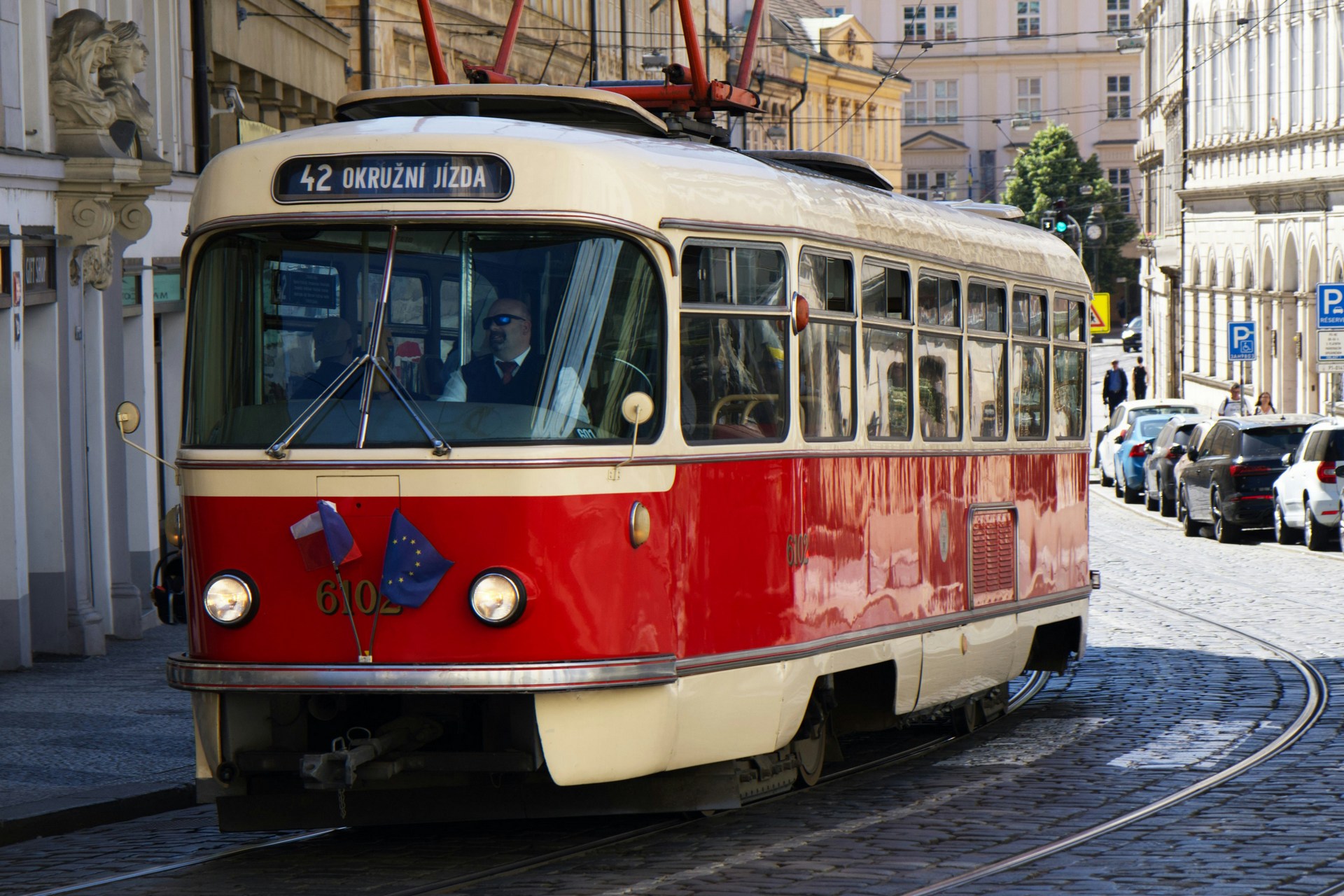
Photo by Stephen Tafra on Unsplash
For longer distances:
- Metro: Three lines (A, B, C) cover the city efficiently. The green A line connects the old town (Staroměstská), Malá Strana (Malostranská), and the castle area (Hradčanská). A 24-hour or 72-hour pass offers the best value for multiple trips. Apps like Citymapper make the metro more accessible for first-time visitors.
- Tram: The most pleasant way to cover a wider distance in Prague. Tram 22 runs through Malá Strana to the castle area and is an atmospheric way to see the city. Night trams run from midnight to 4 AM.
- Taxi and ride-hailing: Bolt and Uber operate across Prague with transparent fixed pricing, significantly more reliable than negotiating with street taxis. Pre-booked private transfers are the most convenient airport option.
RateHawk insight
Streamline your client’s Prague itinerary by adding transport to their vacation package to maximize its value. RateHawk’s booking platform makes it easy to expand travel packages with airport transfers and hired cars for clients planning to explore beyond the city centre.
Prague is part of a multi-city itinerary, travel agents can book train tickets to popular European destinations like Vienna, Budapest, and Berlin through RateHawk.
Where to stay in Prague: Neighbourhoods and hotel options
Staré Město: the old town
Best for: first-time visitors to the Czech Republic.
Staré Město is the historic heart of Prague and the most popular base for first-time visitors. Staying here puts clients within walking distance of the astronomical clock, the old town square, Charles Bridge, and the Jewish Quarter.
The old town’s medieval street plan is labyrinthine and atmospheric; boutique hotels in restored Gothic and Baroque buildings are the defining accommodation type. The neighbourhood is never entirely quiet in summer, but proximity to every major sight makes it the strongest base for clients with limited time.
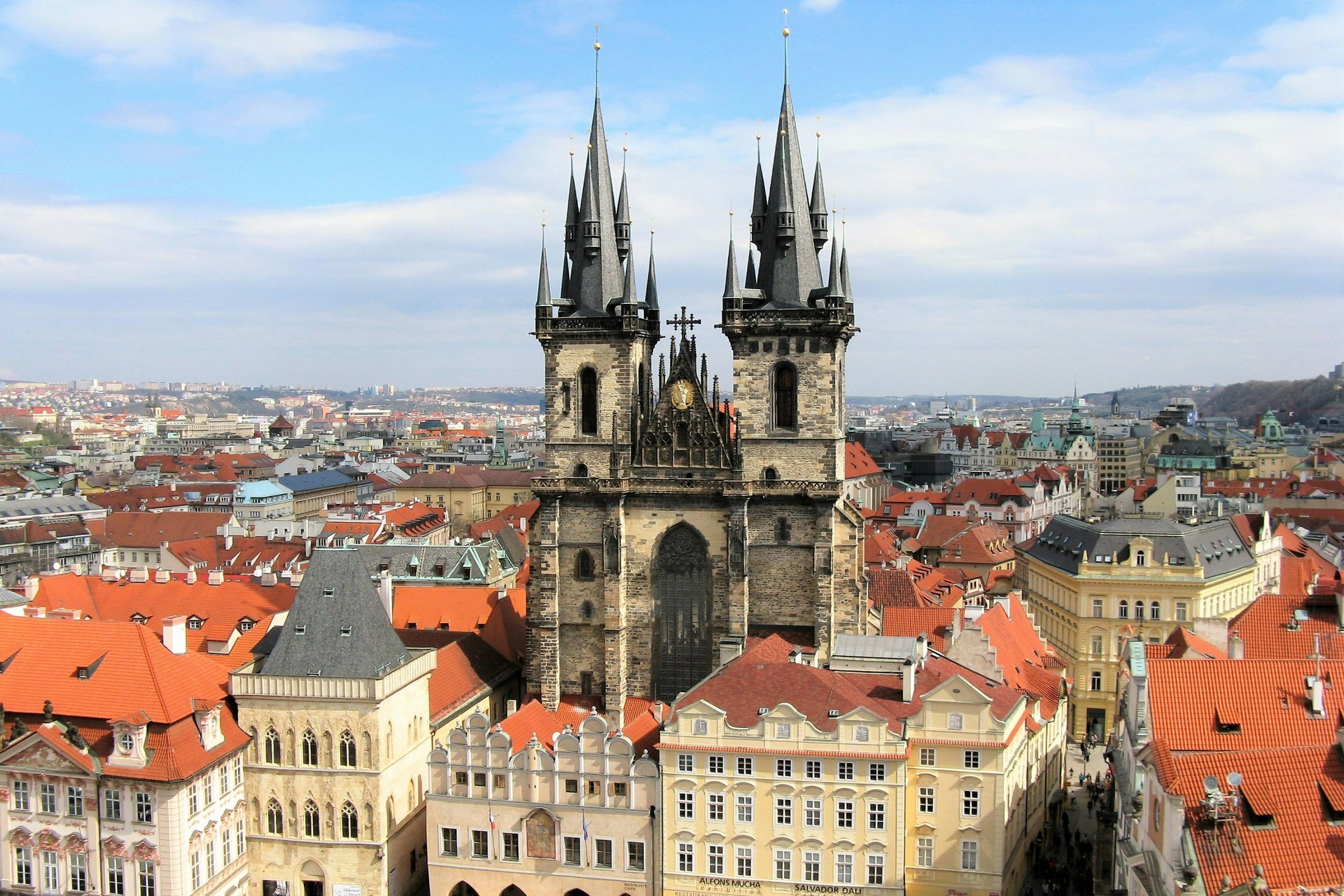
Photo by Chris Linnett on Unsplash
Malá Strana: the little quarter
Best for: cultural travelers, couples, and repeat visitors.
Malá Strana sits below Prague Castle on the left bank of the Vltava, connected to the old town by Charles Bridge. It is the most beautiful and intimate of Prague’s historic neighbourhoods: Baroque palaces, hidden garden courtyards, the domed Church of Saint Nicholas, and some of the finest restaurants in the Czech Republic.
The walk across Charles Bridge from the old town is so pleasant that the five-minute extra distance is rarely a consideration. The best base for cultural travellers, couples, and repeat visitors who value atmosphere over convenience.
Nové Město: the new town
Best for: business and solo travellers who want convenient transport options.
Nové Město surrounds the old town and is home to Wenceslas Square, the National Museum, and the National Theatre. Calling it the ‘new’ town is relative. Charles IV founded the new town in 1348, and its Gothic and Art Nouveau buildings are among Prague’s finest.
A practical and slightly more affordable base than the old town, well-connected by tram and metro, with an excellent restaurant and bar scene in the streets around Náměstí Míru. Well-suited to business travellers and independent clients who want good transport links without paying old town prices.
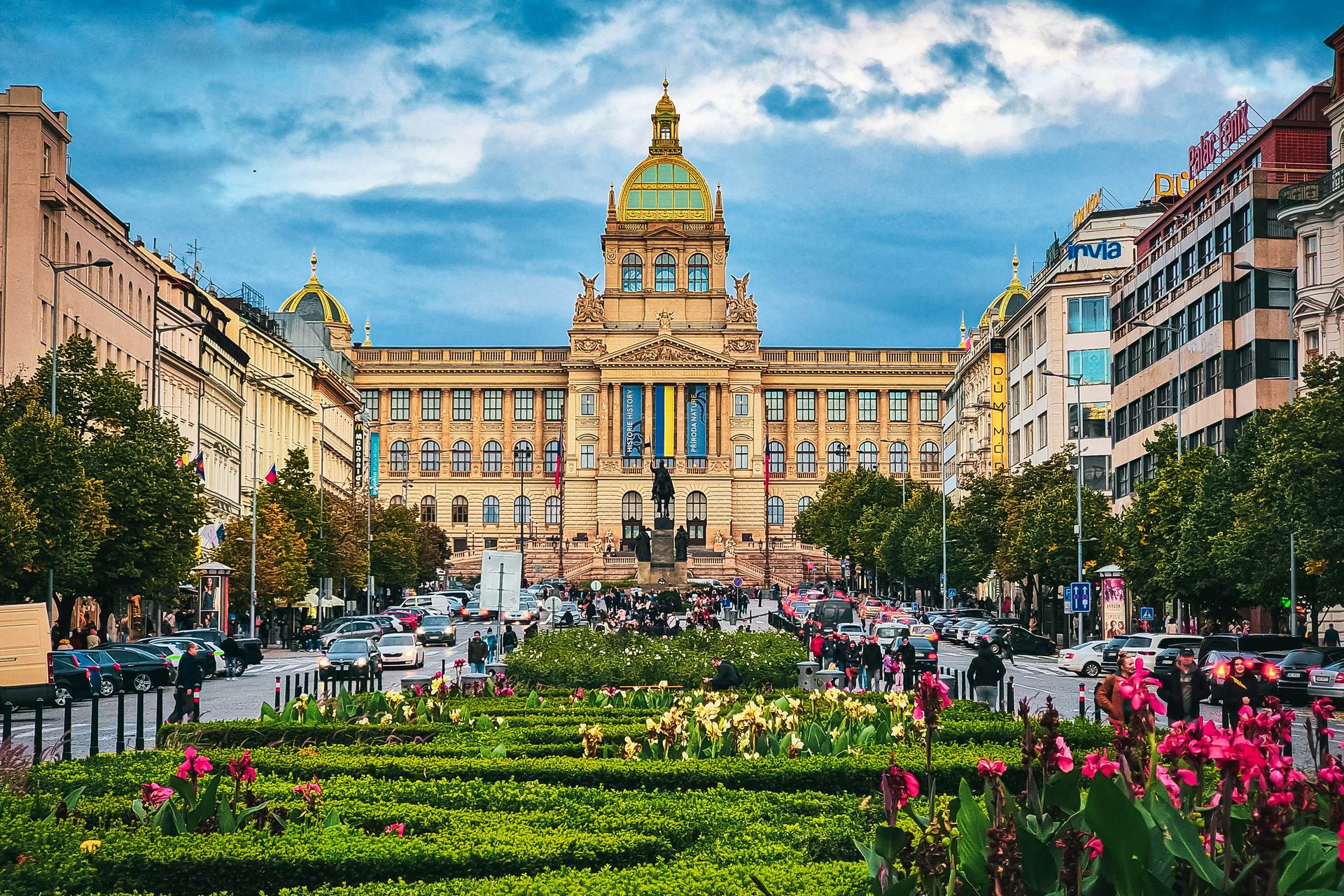
Photo by Tharun Thejus on Unsplash
Vinohrady and Žižkov: the residential districts
Best for: repeat visitors and long-stay clients who want to discover the real Prague.
Vinohrady and neighbouring Žižkov are the most genuinely local neighbourhoods within easy reach of the historic centre. These residential districts have excellent independent restaurants, neighbourhood wine bars, and accommodation that is significantly more affordable than the tourist quarter. Vinohrady’s independent food scene is widely regarded as one of Prague’s strongest dining districts.
A strong base for repeat visitors and long-stay clients wanting to experience Prague beyond the tourist trail — just ten minutes by tram or metro from the old town square.
Top things to do in Prague: Must-see attractions
1. Prague Castle and the Hradčany Quarter
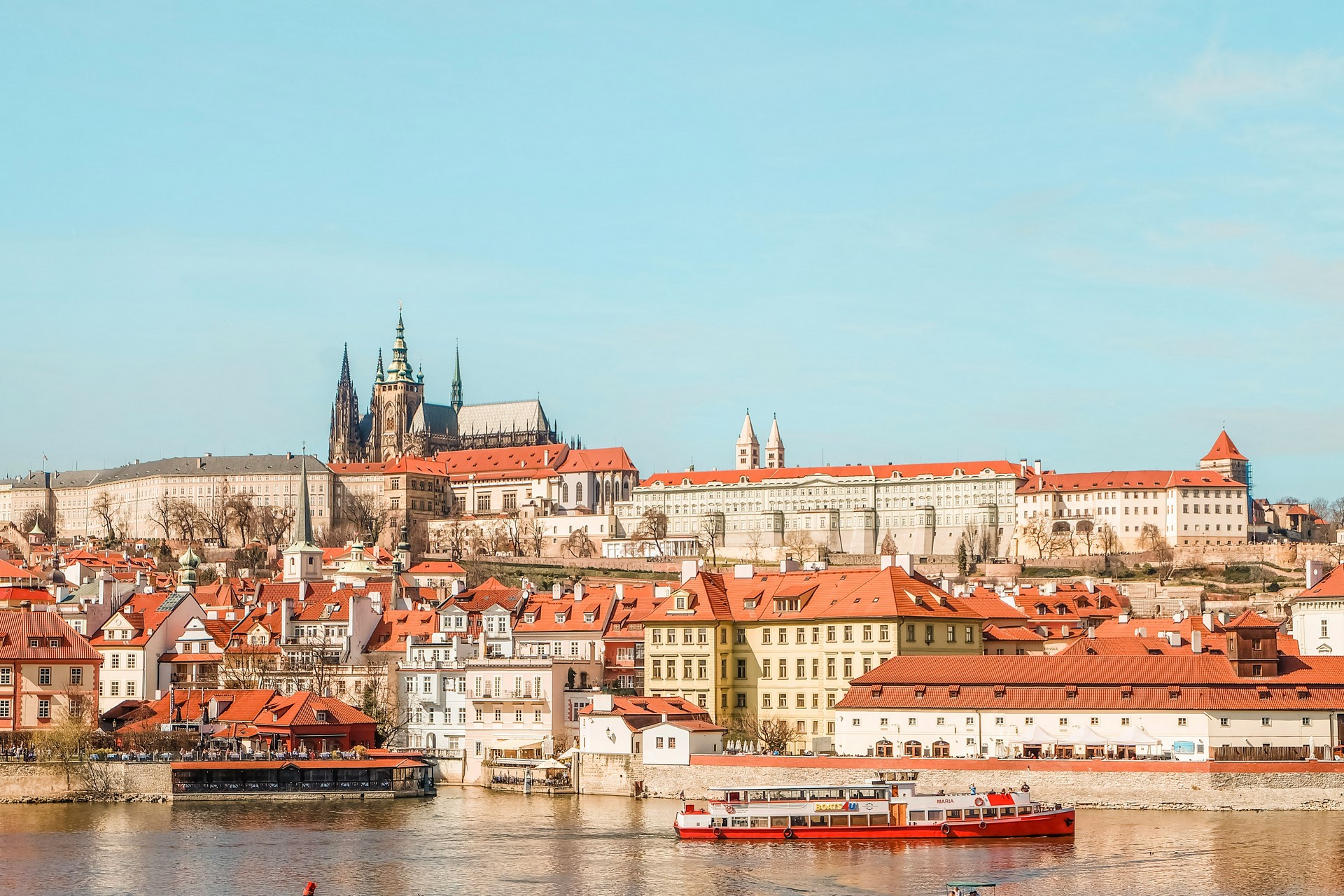
Prague Castle (Pražský hrad) is the largest ancient castle complex in the world by area and the defining image of the Czech capital. The castle complex encompasses the magnificent Gothic St Vitus Cathedral (begun in 1344, completed in 1929 after nearly six centuries), the Old Royal Palace, and the Basilica of Saint George. It also encompasses the Golden Lane (Zlatá ulička), a street of tiny Renaissance houses where Franz Kafka briefly rented a studio in 1916–17.
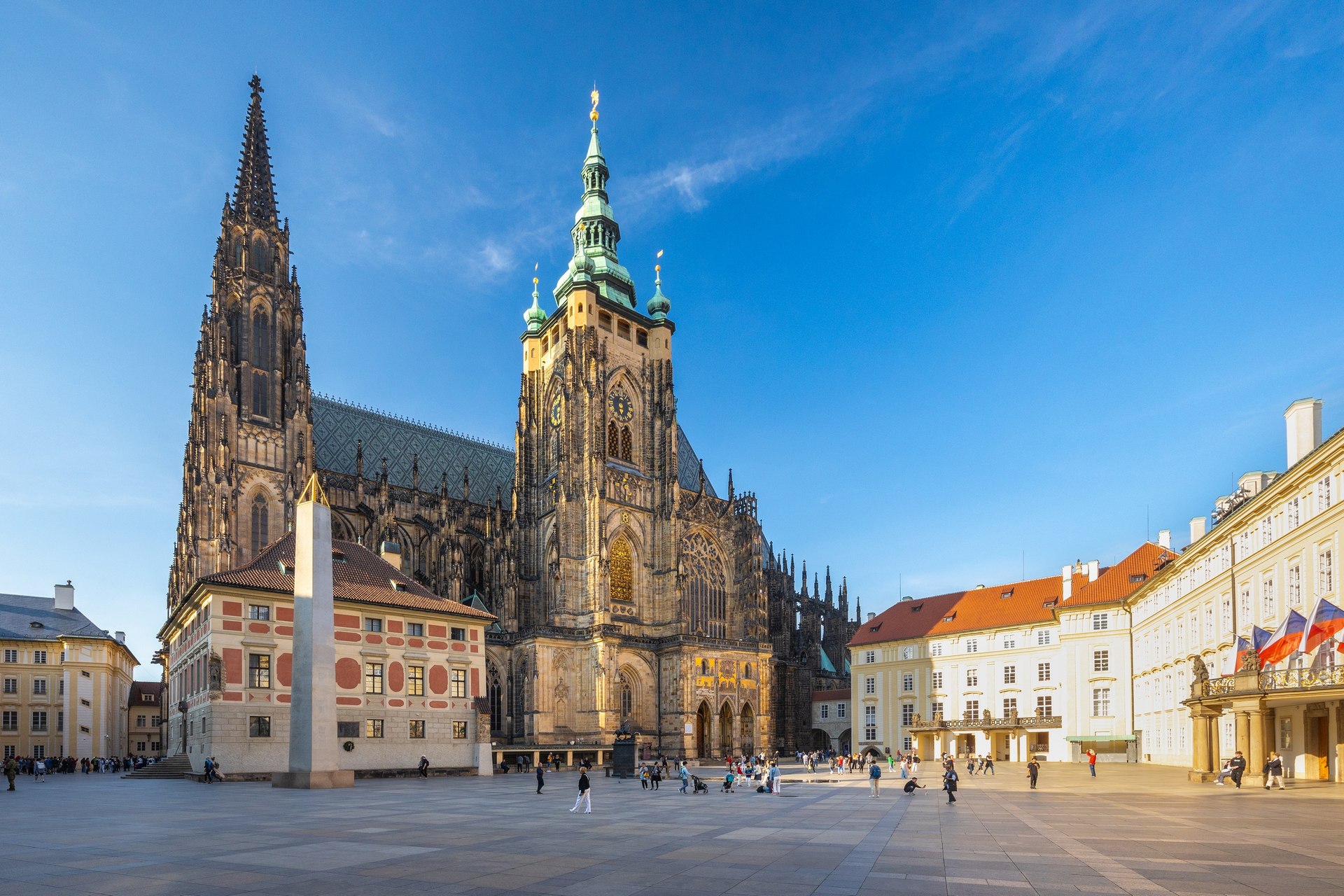
Photo by Viliam.M on Shutterstock
The views from the castle gardens over Prague’s red rooftops are among the finest in the city. Arrive early as the castle is one of the most visited tourist attractions in Europe, and queues for the cathedral grow quickly after 10 AM.
Allow a minimum of a half-day visit. The Lobkowicz Palace, the only part of the complex in private hands, holding original Beethoven and Mozart manuscripts, calls for a full day visit for history enthusiasts.
2. Charles Bridge and the Vltava River
Charles Bridge (Karlův most) is Prague’s most famous bridge and one of the most beautiful medieval bridges in the world. Built by Charles IV from 1357 onwards, the stone bridge stretches 516 metres across the Vltava. It is lined with 30 Baroque statues installed between 1683 and 1714, a procession of saints and martyrs that makes the crossing itself a cultural experience.
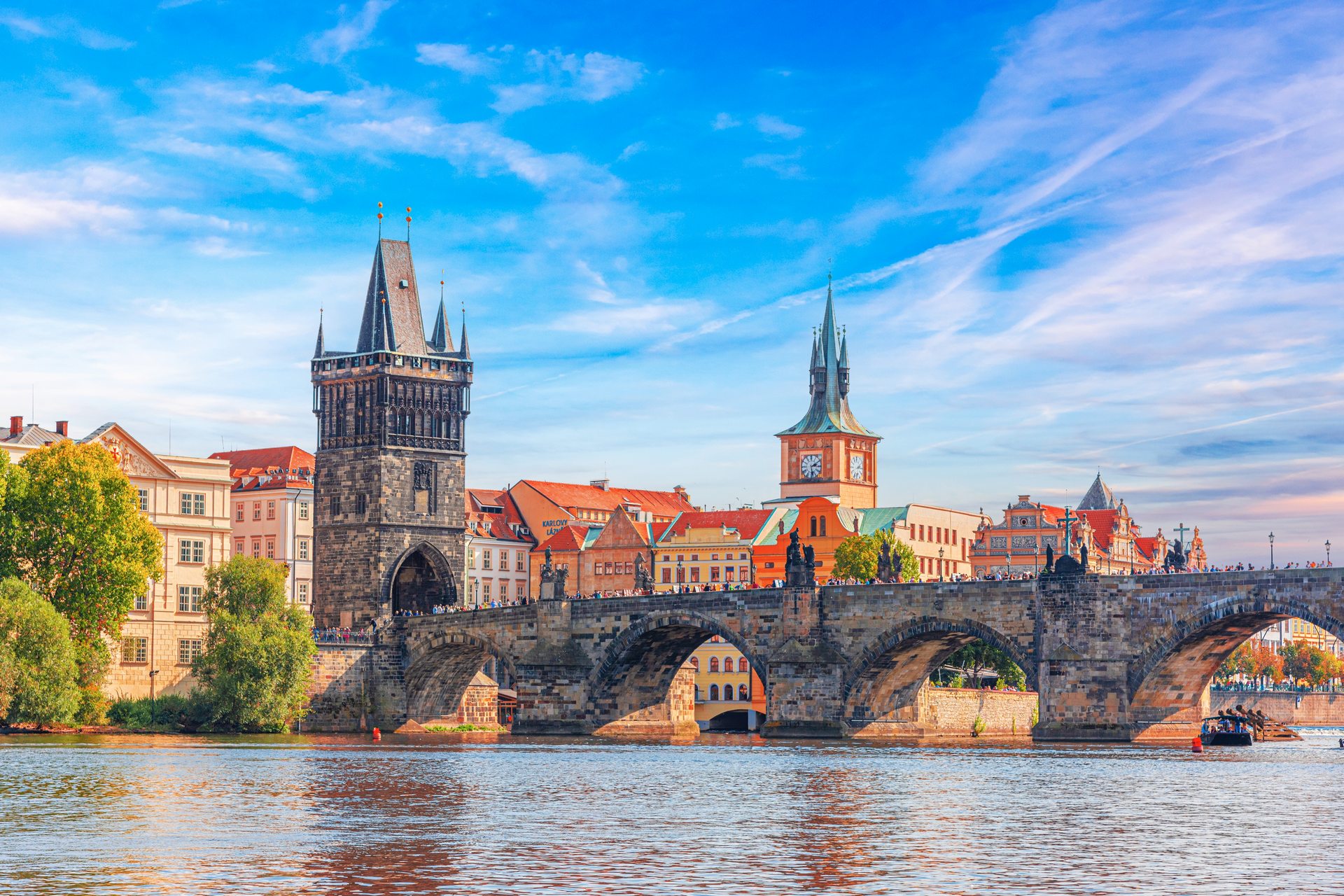
Photo by Den Rozhnovsky on Shutterstock
The bridge connects the old town to Malá Strana, making it the pedestrian link between the two sides of historic Prague.
Early morning provides the lightest crowds and best photography conditions for the Vltava, while midday offers the bridge at its busiest and most atmospheric. The Old Town Bridge Tower at the eastern end is one of the finest Gothic towers in Central Europe. The 138-step climb gives some of the best views over the bridge and river.
3. The Old Town Square and the astronomical clock
The old town square (Staroměstské náměstí) is the historic heart of Prague and one of the finest medieval squares in Europe. Surrounded by Gothic, Baroque, and Rococo buildings — the twin-towered Church of Our Lady before Týn, the Baroque St Nicholas Church, and the Kinský Palace — the square has been the civic centre of Prague since the 12th century.
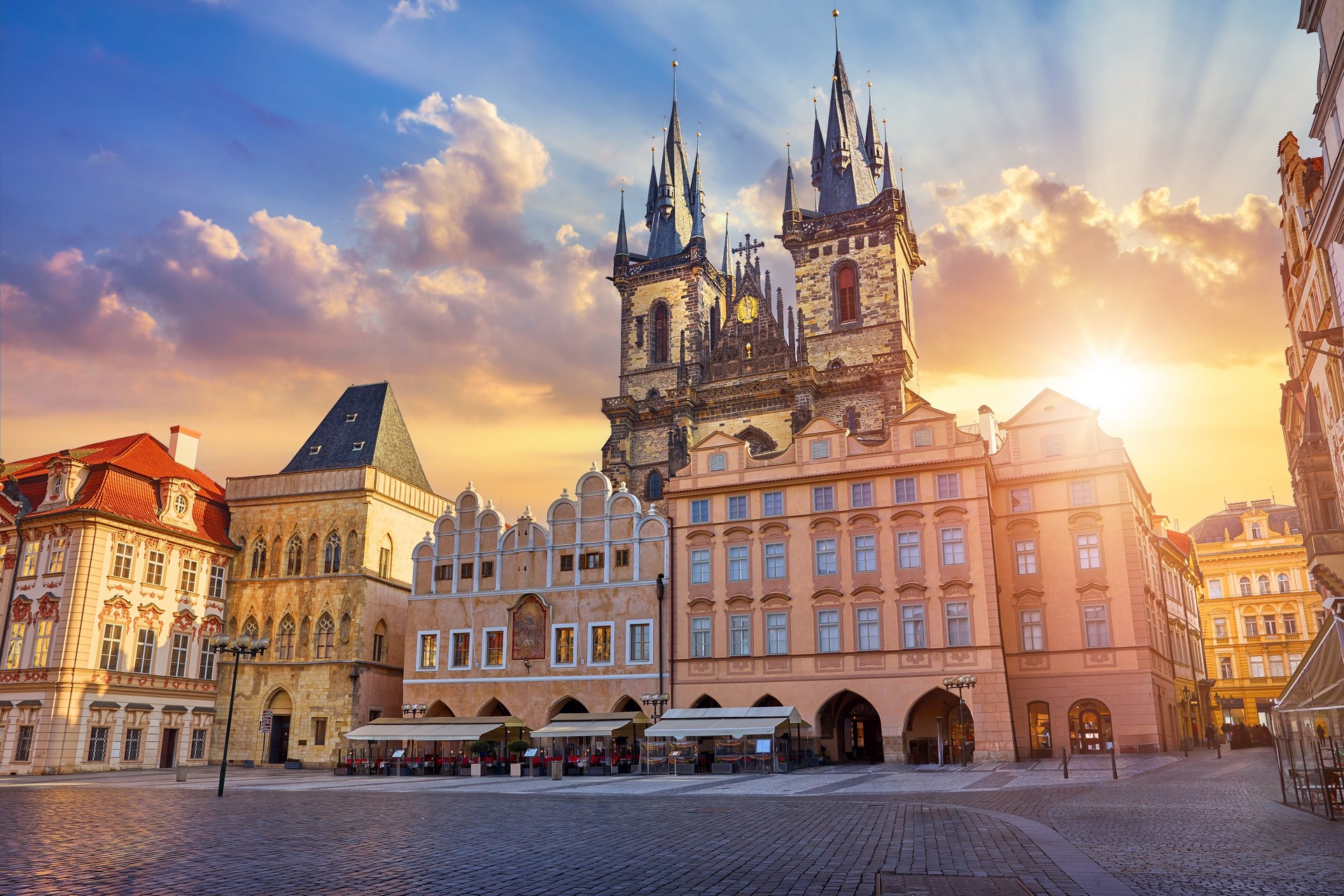
Photo by Yasonya on Shutterstock
It hosts the city’s largest Christmas market, which runs from late November through early January, and the best Easter market in the Czech Republic.
On the southern wall of the old town hall, the Prague Orloj, the astronomical clock active since 1410, marks every hour with a mechanical display: the skeleton rings a bell, the twelve apostles pass in procession, and Death and other allegorical figures complete the performance. The clock mechanism, showing astronomical time, the position of the sun and moon, the zodiac, and times of sunrise and sunset, is a remarkable medieval achievement.
Climb the old town hall tower for the best views over the square and the historic roofscape.
4. Josefov: the Jewish quarter
The Jewish Quarter of Prague (Josefov) is one of the most historically significant urban areas in Central Europe. The community dates to at least the 10th century; the quarter preserves six synagogues, of which five are now part of the Jewish Museum. Highlights include the Old Jewish Cemetery, where up to 12,000 people are buried in layers up to twelve deep, and the 14th-century Old-New Synagogue, the oldest active synagogue in Europe, which has been in continuous use since approximately 1270.
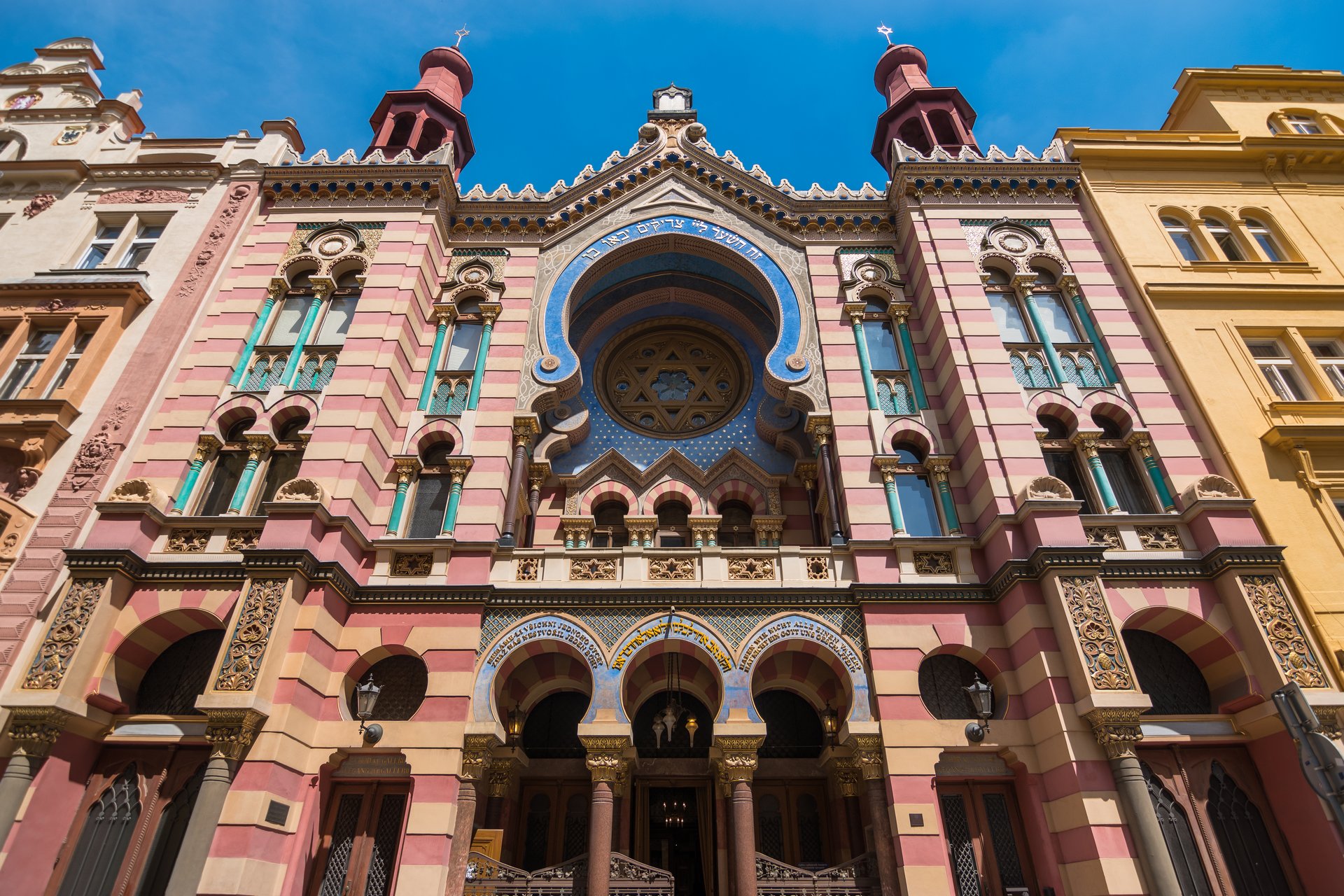
Photo by Bernard Barroso on Shutterstock
The Pinkas Synagogue contains the names of 77,297 Bohemian and Moravian Jews murdered in the Holocaust inscribed on its walls, making it one of the most powerful memorial spaces in Europe. Allow a minimum of two hours; longer for clients with a deep interest in Jewish history and culture.
5. Wenceslas Square and the New Town
Wenceslas Square (Václavské náměstí) is a 750-metre-long boulevard in the heart of Nové Město, lined with Art Nouveau and interwar functionalist buildings of great architectural quality. At its upper end stands the neo-Renaissance National Museum, recently restored to full grandeur.
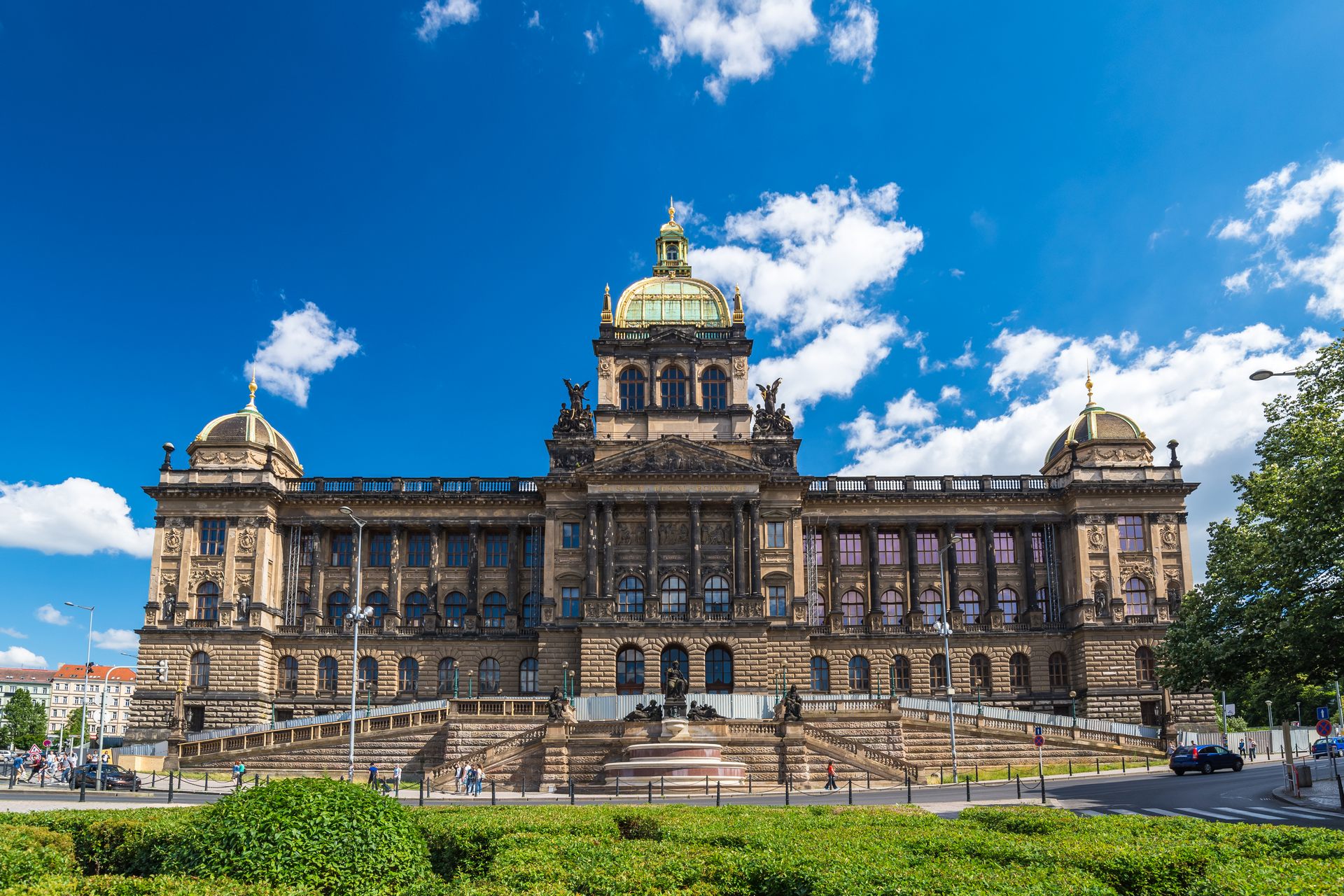
Photo by Noppasin Wongchum on Shutterstock
The square witnessed the defining moments of 20th-century Czech history: the proclamation of the independent Czechoslovak Republic in 1918, Jan Palach’s self-immolation in 1969 in protest at the Soviet occupation, and the jubilant crowds of the Velvet Revolution in November 1989.
A short walk away, the Art Nouveau Municipal House (Obecní dům) on náměstí Republiky contains the spectacular Smetana Concert Hall, among the finest Art Nouveau interiors in the world. The Alfons Mucha Museum presents one of the most significant public collections dedicated to the Art Nouveau artist.
Prague activities by travel type
City breaks
- Old town walking tour: A 2–3 hour guided walk covering the old town square, the astronomical clock, the Jewish Quarter, Charles Bridge, and Malá Strana is the best orientation for first-time visitors to Prague; small-group and private tours with skip-the-line Jewish Museum access are widely available.
- Prague Castle half-day: St Vitus Cathedral, the Old Royal Palace, the Golden Lane, and the castle gardens; the Lobkowicz Palace is strongly worth the additional ticket for clients with an interest in music or history.
- Craft beer evening: Prague has developed one of the most exciting craft beer scenes in Europe alongside its traditional lager culture; a guided tour covering historic hospody and new-generation craft taprooms in Žižkov takes two to three hours and is one of the most enjoyable evenings in the city.
- Classical concert at the Municipal House or Rudolfinum: The Smetana Concert Hall and the Dvořák Hall are two of the most beautiful concert venues in Europe; evening programmes of Czech classical music are available most nights and easy to book.
Family holidays in Prague
- Prague Zoo: Widely regarded as one of Europe’s leading zoos, located in the Troja district on the north bank of the Vltava; approximately 30 minutes from the old town by tram; a full-day family attraction with significant open-air paddocks.
- Petřín Hill funicular and lookout tower: The funicular railway up Petřín Hill and the tower at the summit (a scaled-down Eiffel Tower, built in 1891) offer panoramic views over Prague; one of the best viewpoints in the city for children.
- Boat hire on the Vltava: Pedalo and rowing boat hire from several embankment points in summer; paddling beneath Charles Bridge is an experience children absolutely love.
- Museum of Miniatures (Muzeum Miniatur): A small but remarkable museum near the castle, displaying miniature artworks visible only through magnifying glasses; one of the most unusual and child-friendly attractions in Prague.
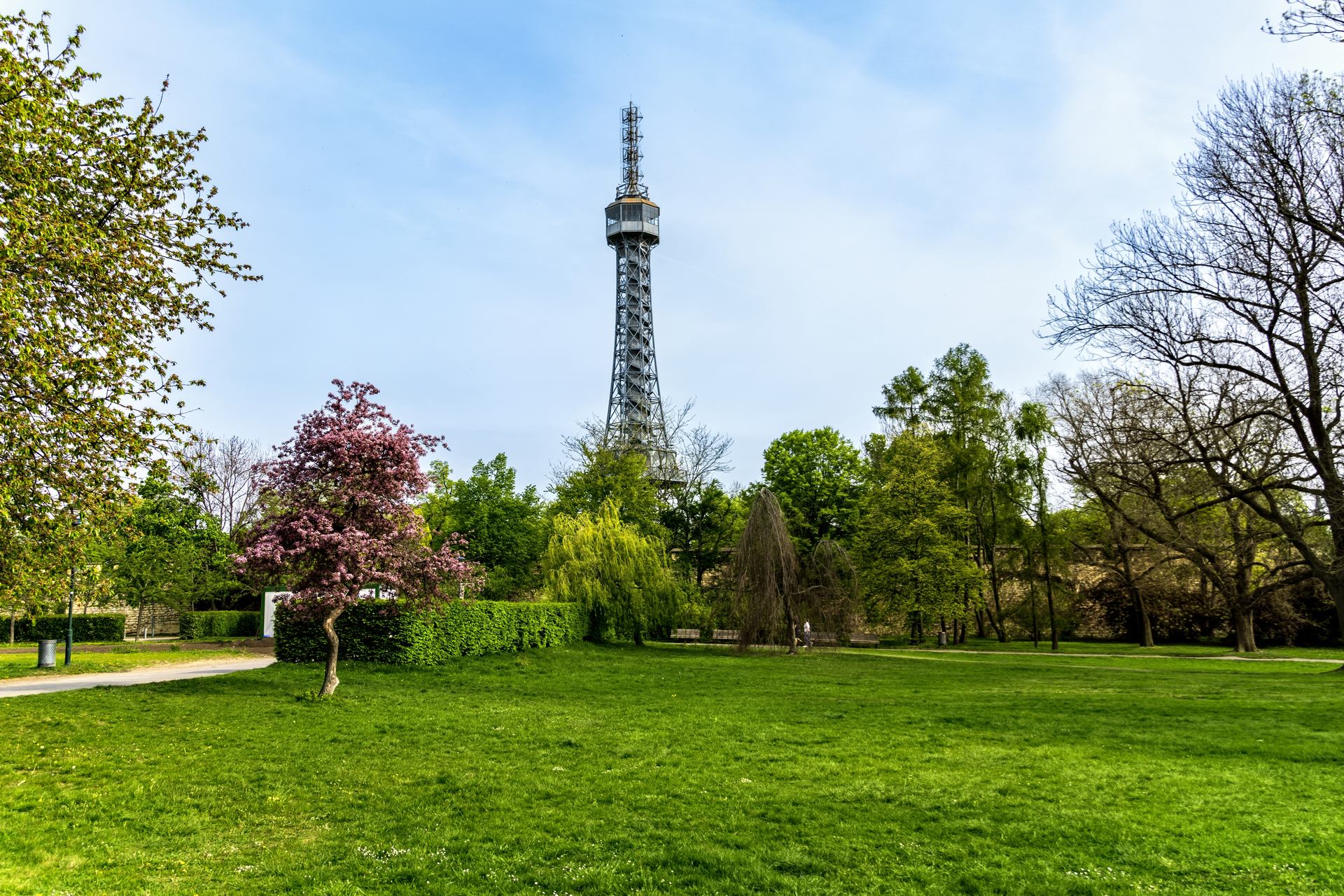
Photo by Jan Zabrodsky on Shutterstock
Luxury escapes in Prague
- Spa hotel stay: Prague has a strong luxury spa hotel market in the old town and Malá Strana; several five-star properties are located in beautifully restored historic buildings and offer wellness programmes that include Czech herbal treatments, hydrotherapy, and massages.
- Private after-hours castle visit: Specialist operators may arrange private or exclusive-access cultural experiences at selected historic sites, subject to availability and current access regulations, including areas normally closed; one of the most distinctive luxury experiences the city offers.
- Fine dining: Prague has several Michelin-starred restaurants and a wider circle of outstanding chef-led establishments; a reservation at Field, La Degustation Bohême Bourgeoise, or the vineyard restaurant Salabka, in the north of the city, is one of the best dinner experiences in Central Europe.
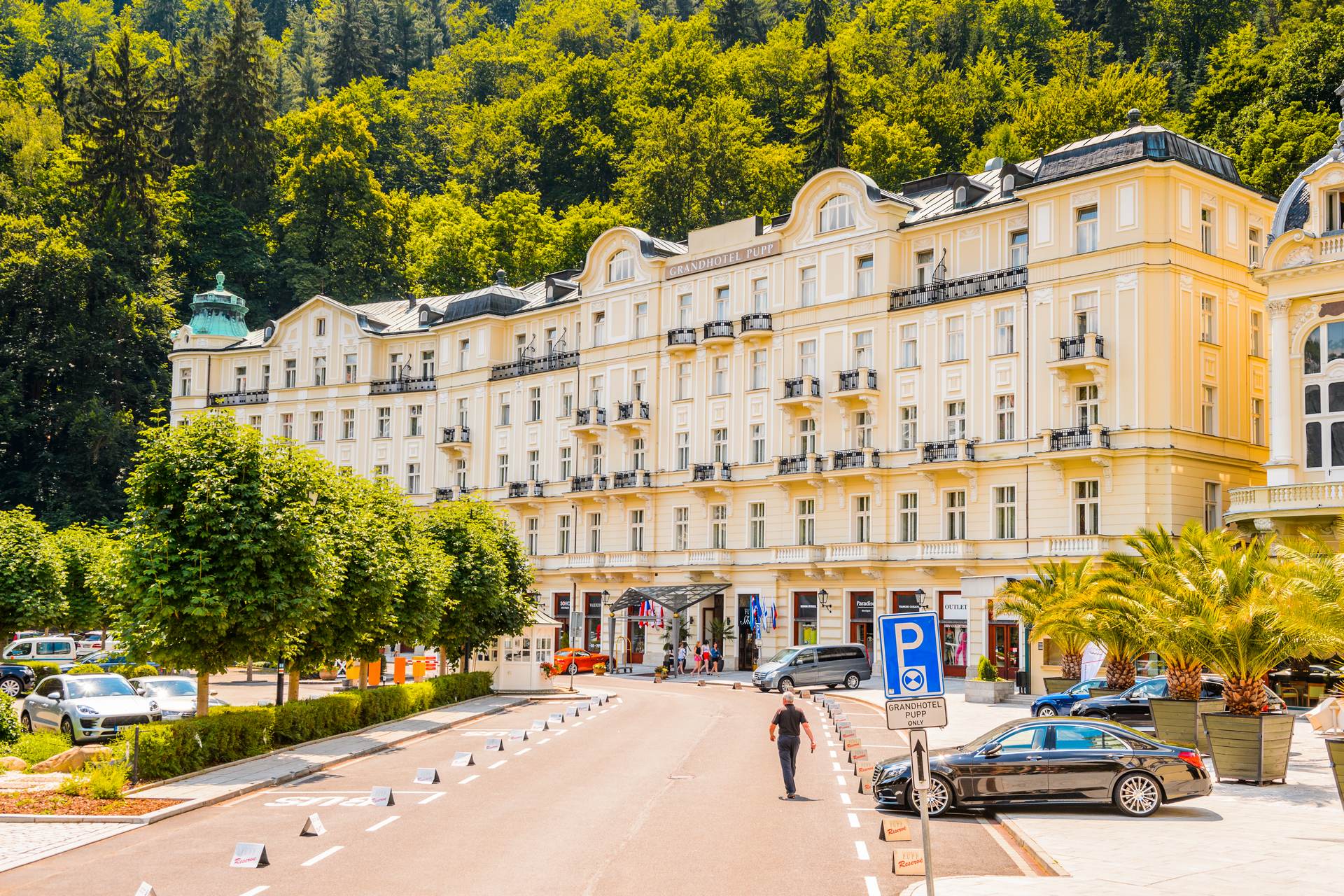
Photo by Anton Ivanov on Shutterstock
Nature and active trips
- Cycling along the Vltava Valley: Well-maintained cycling routes through vineyards, river meadows, and small historic towns; bike hire available from multiple city-centre operators.
- Bohemian Switzerland National Park: The dramatic sandstone rock formations and river gorges of this national park, 130 km north of Prague, include the Pravčická brána, the largest natural sandstone arch in Europe; accessible by train from Prague to Děčín, followed by a short bus transfer into the national park.
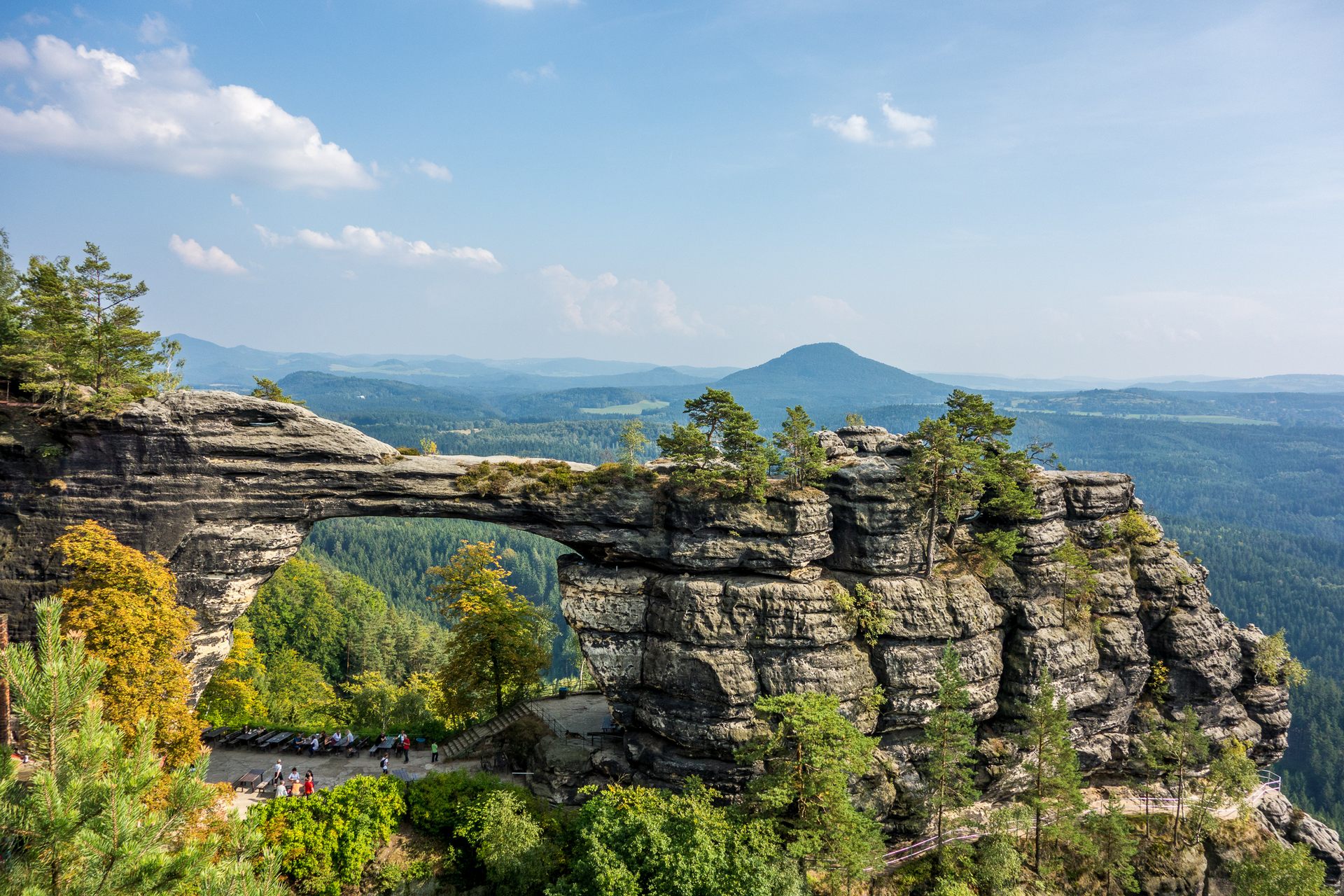
Photo by KarlosXII on Shutterstock
Nearby destinations: Day trips from Prague, Czech Republic
Český Krumlov
Český Krumlov, 180 km south of Prague, approximately 2.5 hours by direct bus, is one of the most beautiful small towns in Central Europe. Its castle, the second largest in Bohemia, sits on a rocky promontory above a horseshoe bend of the Vltava. The Baroque tower is visible from every corner of the UNESCO-listed medieval old town below.
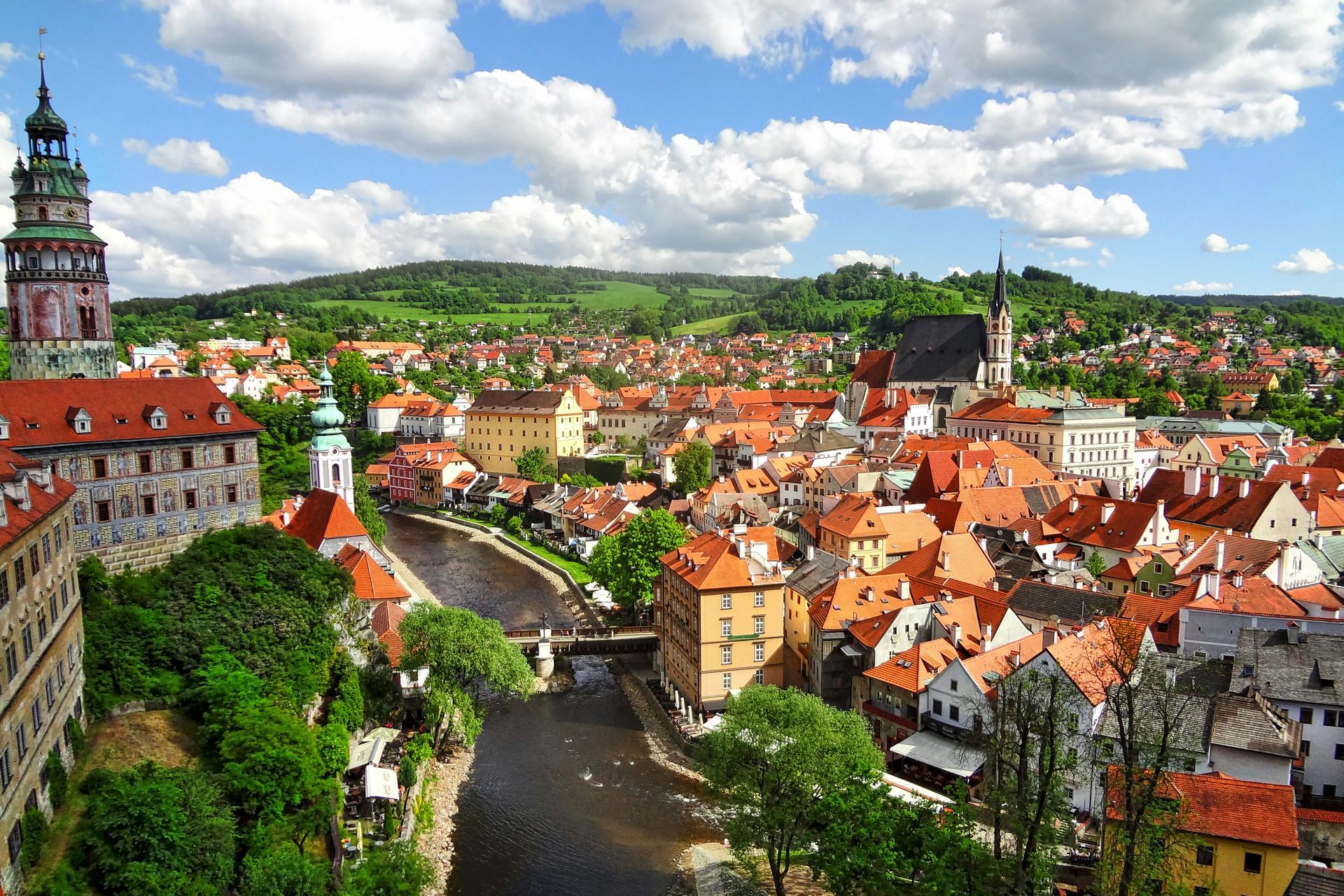
Photo by Mike Swigunski on Unsplash
A full day is the minimum tourists will want to spend here, with an overnight stay being strongly recommended. Best for clients with an interest in medieval history, architecture, and the Czech countryside.
Kutná Hora
Kutná Hora, 70 km east of Prague, one hour by direct train, was once the second most important city in Bohemia, built on silver mining wealth.
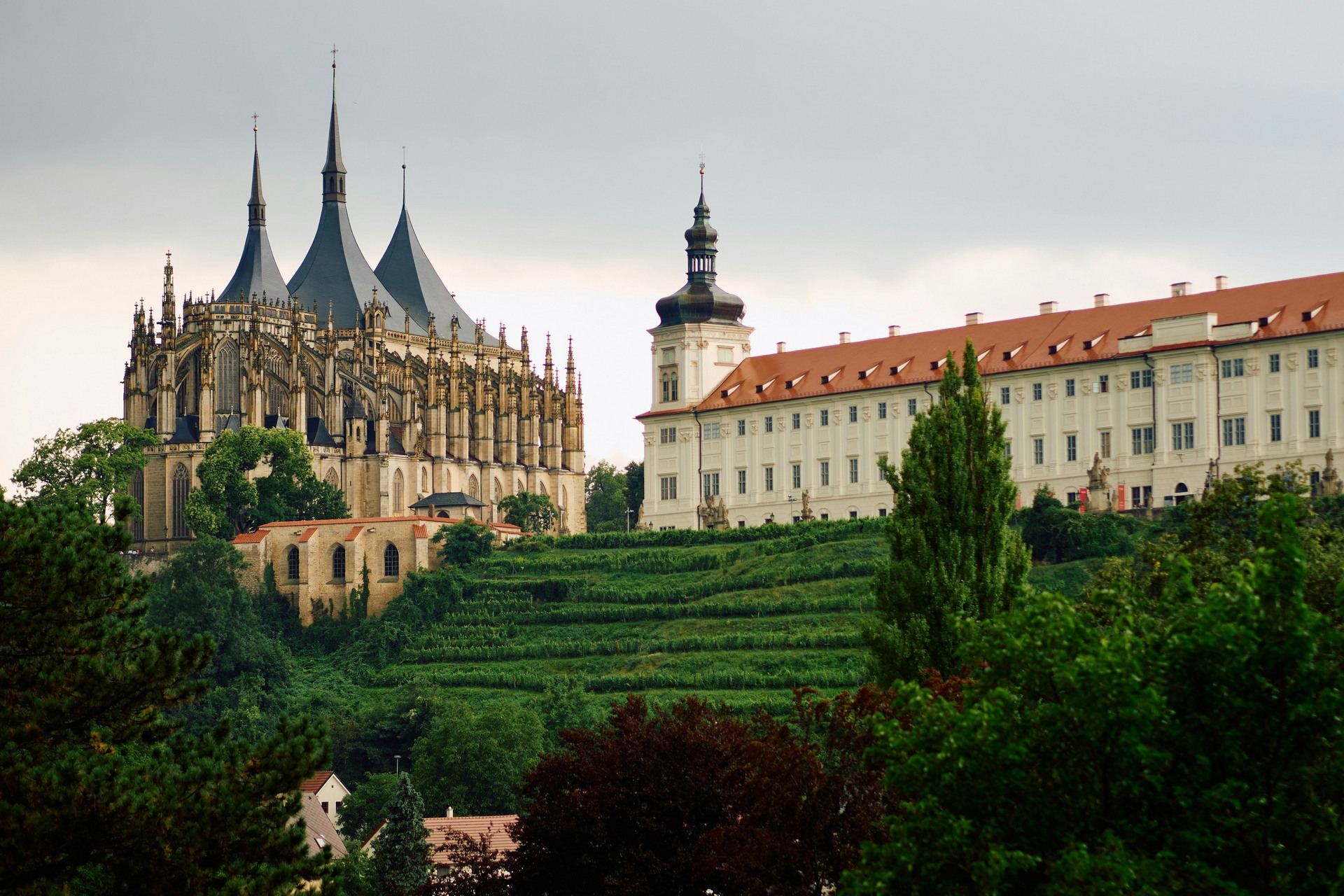
Photo by Adrian Villa on Unsplash
Its Cathedral of Saint Barbara is a UNESCO World Heritage Site and rivals St Vitus Cathedral in Prague with its ambitious Gothic vaulting. The town’s most famous attraction is one of the most extraordinary and thought-provoking sacred spaces in Europe. The Sedlec Ossuary is a chapel decorated with the artistically arranged bones of between 40,000 and 70,000 people. An easy and highly rewarding half-day or full-day trip from Prague.
Karlovy Vary: The Czech spa town
Karlovy Vary, 130 km west of Prague, approximately 1h30 by direct bus, is the most famous of the West Bohemian spa towns and one of the most elegant historic resort towns in Central Europe.
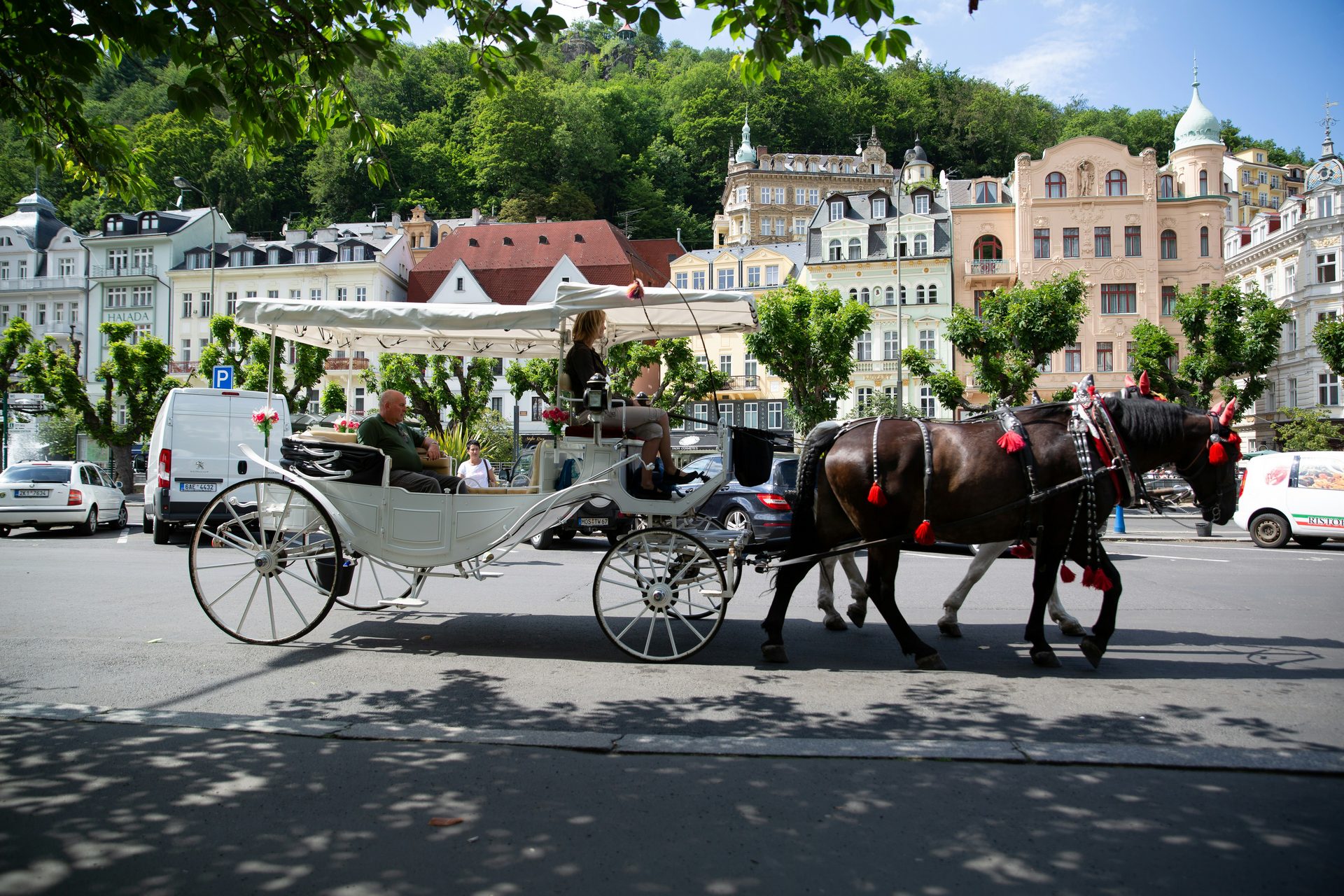
Photo by Sergey Mind on Unsplash
Its colonnaded spa promenades along the Teplá river, Belle Époque hotels, and 13 thermal springs give it an atmosphere entirely different from Prague. The Moser crystal glassware factory offers guided tours and a remarkable showroom.
Karlovy Vary hosts the International Film Festival each July, one of the oldest and most prestigious in the world, having been founded in 1946. An overnight stay is recommended for clients who want the full spa experience.
Czech food and beer in Prague: What your clients should try
Traditional Czech food
- Svíčková na smetaně: The national dish of the Czech Republic: braised beef sirloin in a creamy root vegetable sauce, with bread dumplings (knedlíky), cranberry sauce, and whipped cream. Found at every traditional Czech restaurant in Prague, a must for every first-time visitor to the Czech Republic.
- Vepřo knedlo zelo: Roast pork with bread dumplings and stewed sauerkraut; the classic Czech pub lunch, served at every hospoda across the city and extraordinarily satisfying in winter.
- Trdelník: A sweet spiral pastry cooked over rotating spits and coated in sugar and nuts. It is widely sold throughout Prague’s historic centre and popular with visitors, although it is not traditionally associated with Prague itself. Best at the old town square stalls in winter or at specialist year-round shops.
- Smažený sýr: Fried cheese (typically Edam or Hermelín) in breadcrumbs, served with tartare sauce and potato salad; a pub staple beloved by Czechs and almost universally enjoyed by first-time visitors.
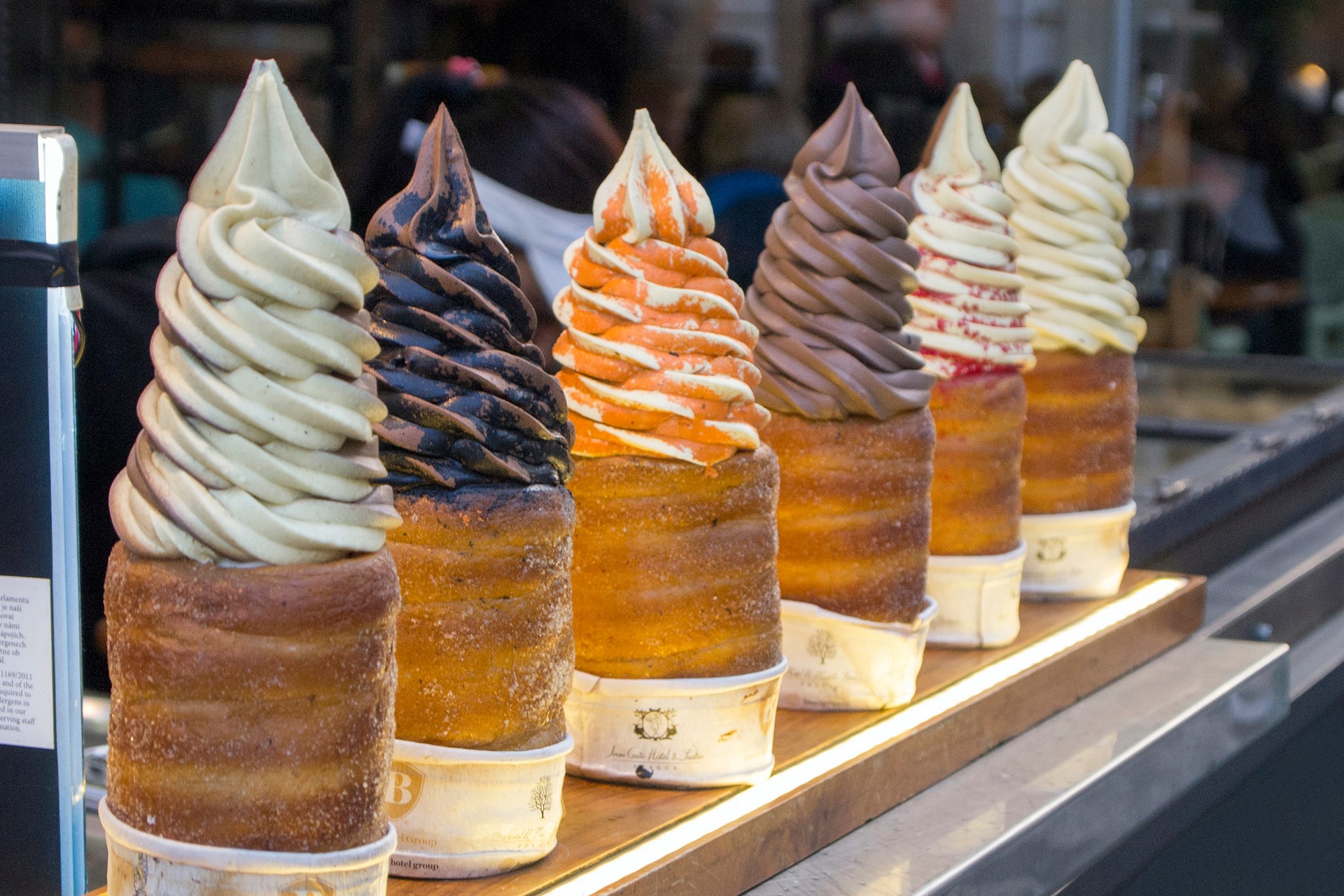
Photo by L.Kora on Shutterstock
Czech beer culture in Prague
Czech beer is a cultural institution and one of the defining elements of Czech national identity. The Czech Republic is famous for pilsner-style lager, a beer style that originated in nearby Plzeň in 1842, which is the ancestor of the most widely drunk beer style in the world.
Prague also has its own great beer traditions: Staropramen, brewed in Smíchov, and the tank beer served directly from unpressurised tanks at traditional hospody give the city a beer culture of extraordinary depth.
The 3 ways to experience Czech beer culture in Prague:
- A traditional hospoda, like the U Zlatého tygra in Husova street, where Václav Havel once brought President Clinton.
- The historic U Fleků brewery pub, which has been brewing its own dark beer since 1499, or a tank beer pub, such as Lokál or Pivovarský klub.
- At one of the new-generation craft beer taprooms in Žižkov or Vinohrady.
Brief your clients on the Czech ritual of beer before their visit. Each glass is meant to be consumed fresh with a careful three-pour into a chalice glass and a dense white head, known as the ‘Czech head’.
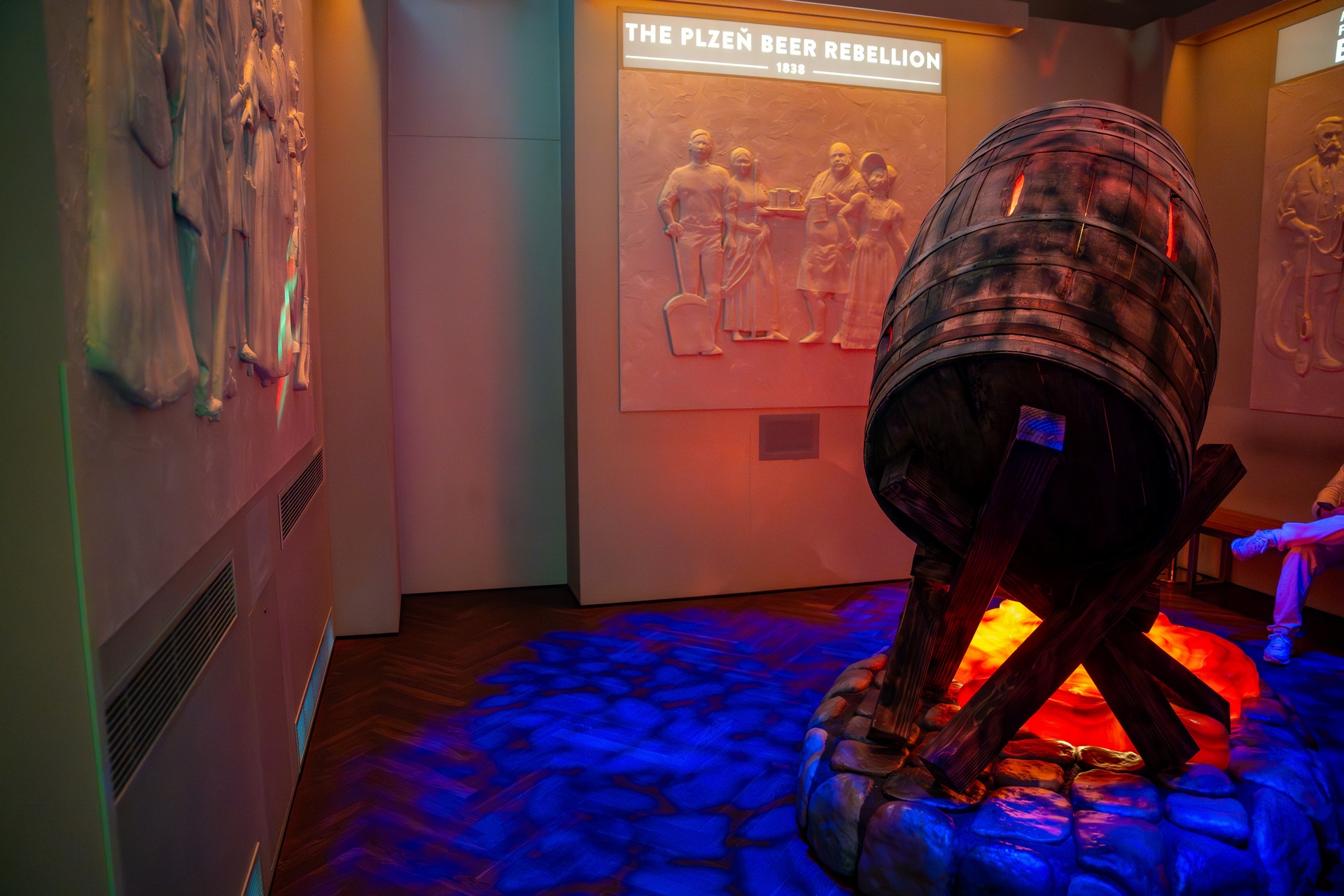
Photo by Tatiana Diuvbanova on Shutterstock
Insider tips for Prague
Souvenirs worth buying
- Bohemian crystal and glass: The Czech Republic has one of the world’s great glassmaking traditions; Moser crystal from Karlovy Vary and artisan studios in the old town produce exceptional pieces. Look for mouth-blown and hand-cut work with a maker’s mark; quality varies significantly from tourist shop offerings.
- Marionettes: Czech puppet theatre dates to the 18th century; high-quality handmade marionettes from specialist old town shops (Marionety Truhlář on Dlouhá) are among the most distinctive and best-made souvenirs available in Prague.
- Becherovka: The herbal liqueur produced in Karlovy Vary since 1807 is the Czech Republic’s most famous spirit; a bottle makes an excellent and genuinely local gift, available at specialty liquor shops throughout Prague.
- Granát (Bohemian garnet) jewellery: Dark red Bohemian garnets mined in northern Bohemia have been set in Czech jewellery since the 17th century; look for the official Granát Turnov hallmark at workshops in the old town and Malá Strana.
- Classical music vinyl and recordings: Prague is one of the great cities of classical music; the Supraphon label has produced legendary recordings of Czech music since 1932; vinyl and CDs are available at the Supraphon shop in Jungmannova street and second-hand record shops in Žižkov.
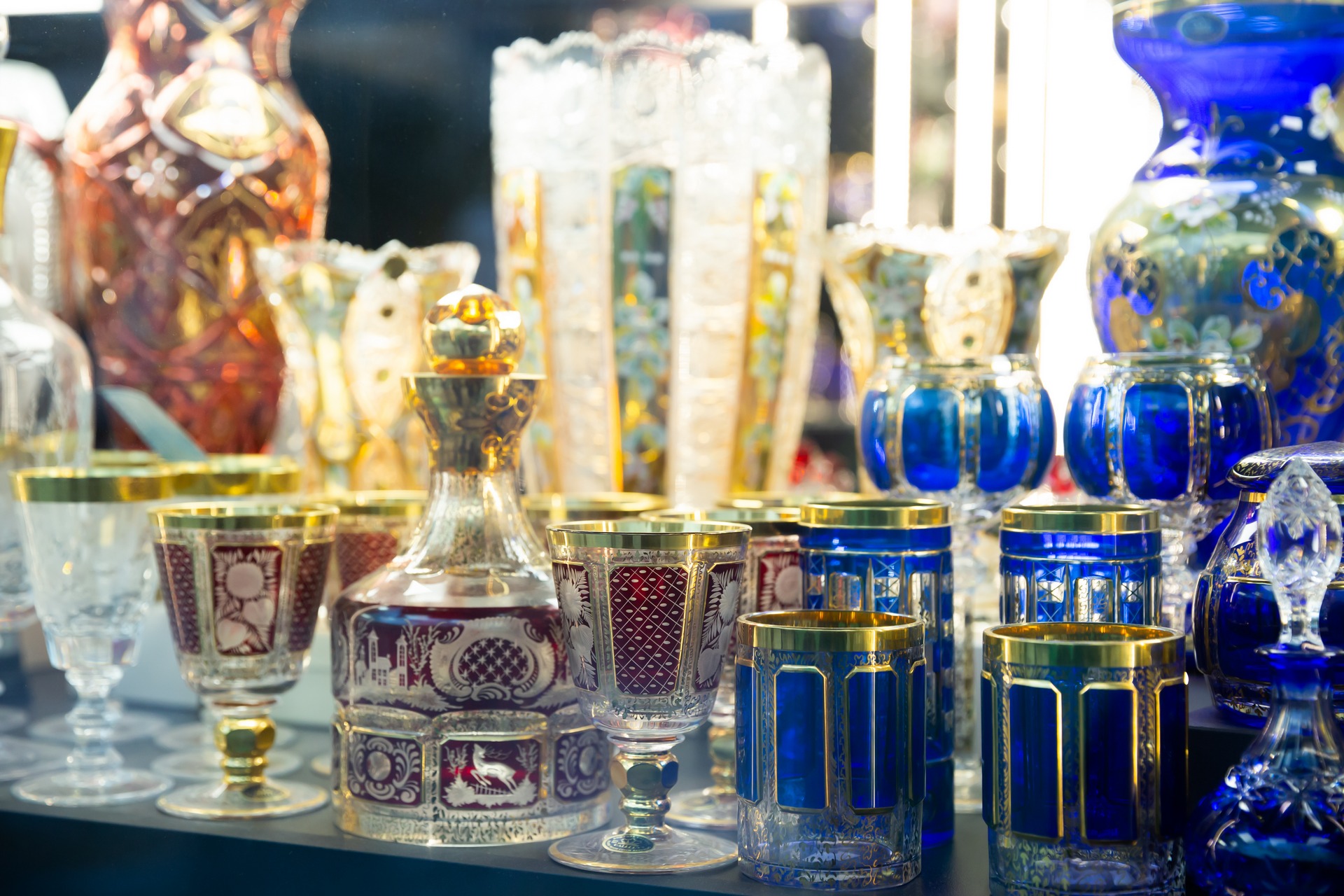
Photo by BearFotos on Shutterstock
Prague as a “Destination Next” recommendation
Prague Czech Republic is one of the most consistently recommended alternatives on the RateHawk Destination Next tool for European city-break itineraries.
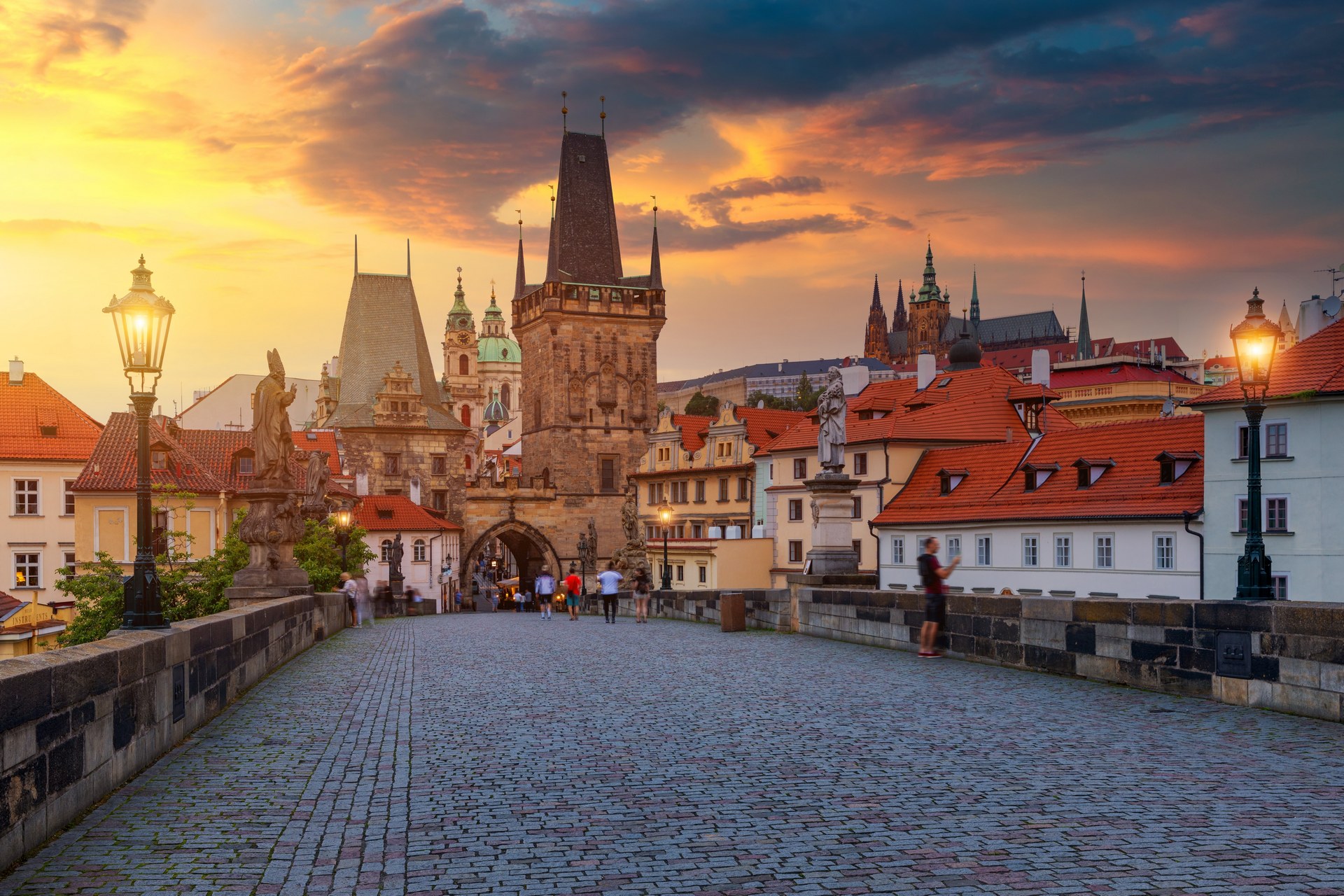
Photo by DaLiu on Shutterstock
Here is when Prague is best suited as a recommendation:
- As an alternative to Vienna or Budapest, Prague offers comparable architectural grandeur and cultural depth at a lower overall cost; its beer culture, Gothic and Baroque architecture, and the castle complex give it a distinct identity that stands entirely on its own.
- As a substitute for Amsterdam or Brussels for shorter European city breaks, Prague is among the most beautiful old town environments in the world and significantly more affordable; the historic centre is more compact and walkable than either city.
- As the anchor of a Central European tour, Prague, combined with Vienna (4.5 hours by direct train) and Budapest (approximately 7 hours by direct train or 1 hour by flight), builds the classic Central Europe itinerary that remains one of the most compelling multi-city programmes available to a travel agent.
- For Christmas market city breaks, Prague’s old town square market is widely regarded as one of Europe’s leading Christmas market destinations; December visits to Prague are a strong seasonal product for Northern and Western European clients.
Ready to supercharge your Prague proposals?
Explore the full hotel inventory and start building your client’s next Prague itinerary on RateHawk.
This article is part of the Destination Next initiative by RateHawk — helping travel businesses find stronger destination alternatives when travel plans change.