

 335
335 25 minutes read
Contents
- Why travel agents should be selling Amsterdam right now
- Practical information for travel agents
- Where to Stay in Amsterdam: Neighbourhoods and Hotel Options
- Top things to do in Amsterdam: Must-see attractions
- Amsterdam activities by travel type
- Nearby destinations: Day trips from Amsterdam, Netherlands
- Dutch food in Amsterdam: What your clients should try
- Insider tips for Amsterdam
- Amsterdam as a “Destination Next” recommendation
Why travel agents should be selling Amsterdam right now
Amsterdam is one of the most rewarding city-break destinations in Europe — a place that delivers a genuinely distinct and layered experience across every client profile. Here’s why Amsterdam consistently sells for travel agents:
- The Rijksmuseum, the Van Gogh Museum, and the Anne Frank House form one of the finest museum circuits in the world.
- The city’s most memorable experiences are often in the everyday experiences: on a self-driven canal boat on a Tuesday morning, at the bar of a Jordaan brown café with a jenever and a plate of bitterballen, in the Noordermarkt on a Saturday with a stroopwafel and a bag of aged Gouda, or exploring the tulip fields around Keukenhof by bicycle in April when the flowers are in bloom.
- Amsterdam’s canal house hotel market is unique in Europe — there is literally nowhere else where clients can wake up in a 17th-century merchant house above a tree-lined canal.
- Outstanding Schiphol Airport connectivity from virtually every source market makes it one of the most complete city destinations on the continent.
For agents building European city-break packages, cultural tour programmes, or Netherlands itineraries, Amsterdam’s hotel supply across the canal ring, the Museum Quarter, De Pijp, and Centraal means the right property for every client profile is available and bookable.
RateHawk’s inventory across Amsterdam’s distinctive neighbourhoods gives you the booking platform to build those proposals as soon as your client is ready to commit.
Practical information for travel agents
Travel guidelines
Weather and best time to visit Amsterdam
Amsterdam has a temperate maritime climate. It’s mild and frequently overcast year-round, with no extreme hot or cold periods. Rain is possible at any time of year; the Dutch weather is famously changeable, and clients should be briefed to pack layers and waterproof clothes, regardless of the season.
- Spring (April–May): The best time to visit Amsterdam for most clients. The tulip season is in full bloom, particularly the extraordinary Keukenhof Gardens (open March to May and located 30 km from Amsterdam). The city’s parks are at their most spectacular, especially around King’s Day on 27 April, when street parties fill the streets, and the entire city turns orange. Accommodation prices are elevated around Keukenhof opening and King’s Day; book well in advance.
- Summer (June–August): Warm temperatures of 18–24°C, bringing long days with extremely busy crowds. Canal cruise queues, museum entry queues (Anne Frank House, Rijksmuseum), and high hotel rates define summer Amsterdam. The cultural programme, including outdoor concerts at Vondelpark, canal festivals, and the Amsterdam Pride parade and festival (end of July/early August), offers added depth to itineraries. Early morning visits to popular attractions are essential.
- Autumn (September–October): An excellent alternative to summer. Temperatures remain comfortable, between 12 and 18°C. The summer crowds thin considerably, and hotel rates drop. The city’s indoor culture — its brown cafés (bruine kroegen), its music venues, its late-opening museums — becomes a highlight. The autumn light on the canals is particularly beautiful.
- Winter (November–March): Amsterdam in winter is atmospheric and affordable. The Christmas markets, the Amsterdam Light Festival (where light art installations are projected across the canals and museum facades from late November through mid-January), and the museum circuit all operate fully. Cold and potentially wet, but the canal reflections at night under the festival lights are among the most beautiful urban images in Europe.
Amsterdam fun facts
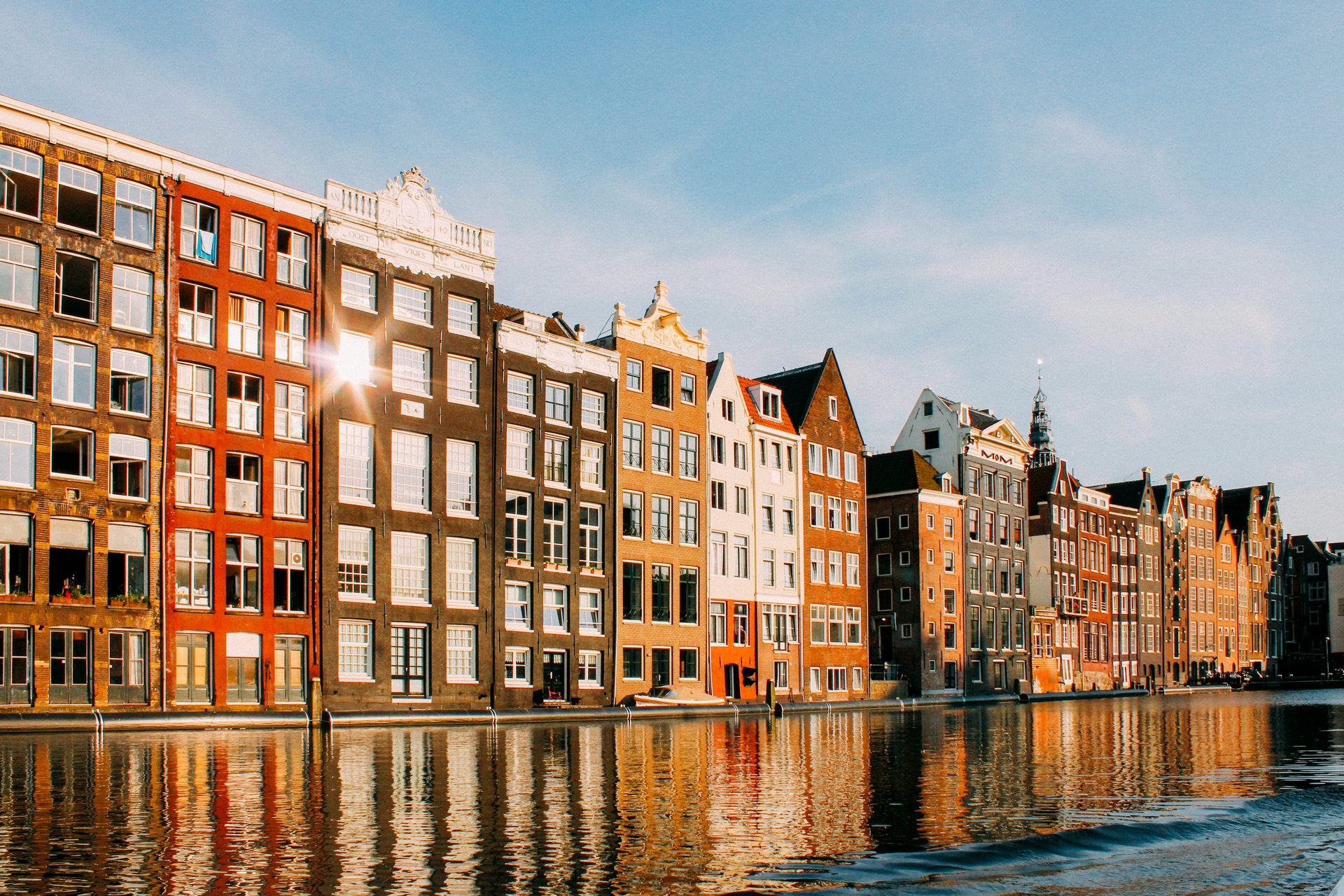
- Amsterdam has more bridges than Venice (approximately 1,700), spanning the city’s network of 165 canals. The canal ring (grachtengordel), built during the Dutch Golden Age of the 17th century, is a UNESCO World Heritage Site.
- The Rijksmuseum, Amsterdam’s great museum of Dutch art and history, holds over one million objects in its collection, of which approximately 8,000 are on display at any given time. Its most famous work, Rembrandt’s The Night Watch (De Nachtwacht), is the largest and most celebrated painting in the Dutch art tradition, measuring 363 cm × 437 cm.
- Amsterdam is known as the ‘bicycle capital of the world’ with approximately 900,000 to 1 million bikes for a city of approximately 900,000 people. Cycling accounts for a remarkably large share of daily journeys, making Amsterdam one of the world’s most bicycle-oriented major cities.
- The Anne Frank House, the hidden annexe at Prinsengracht 263–267, where Anne Frank, her family, and four others hid from the Nazis for just over two years between July 1942 and August 1944, is one of the most visited houses in the world and the most important memorial site in the Netherlands. Tickets are released online in advance and often sell out quickly during peak periods, so advance booking is strongly recommended; walk-up entry is not available.
- The Dutch were the world’s largest spice traders in the 17th century through the VOC (Vereenigde Oostindische Compagnie — the Dutch East India Company), the world’s first publicly traded company. Amsterdam was the financial and commercial capital of the world during the Dutch Golden Age, and the city’s canal houses, museums, and merchant architecture are the direct legacy of this extraordinary period of wealth and global reach.
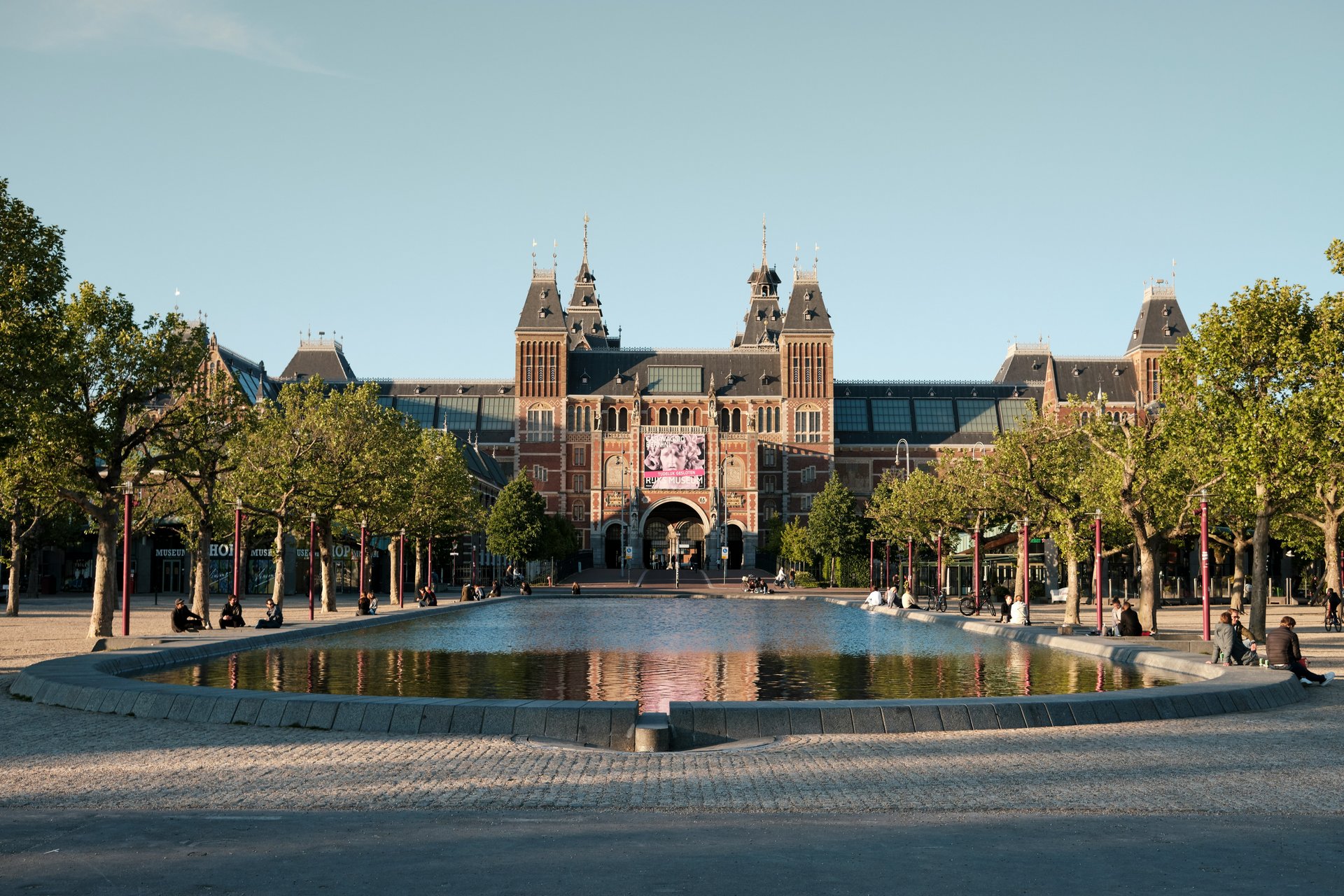
Photo by Frans Ruiter on Unsplash
Getting around Amsterdam
Amsterdam is one of the most walkable and cycle-friendly cities in Europe. The historic centre is compact enough to cover major sights on foot; the canal ring geography makes even complex routes intuitive once clients understand the concentric canal structure.
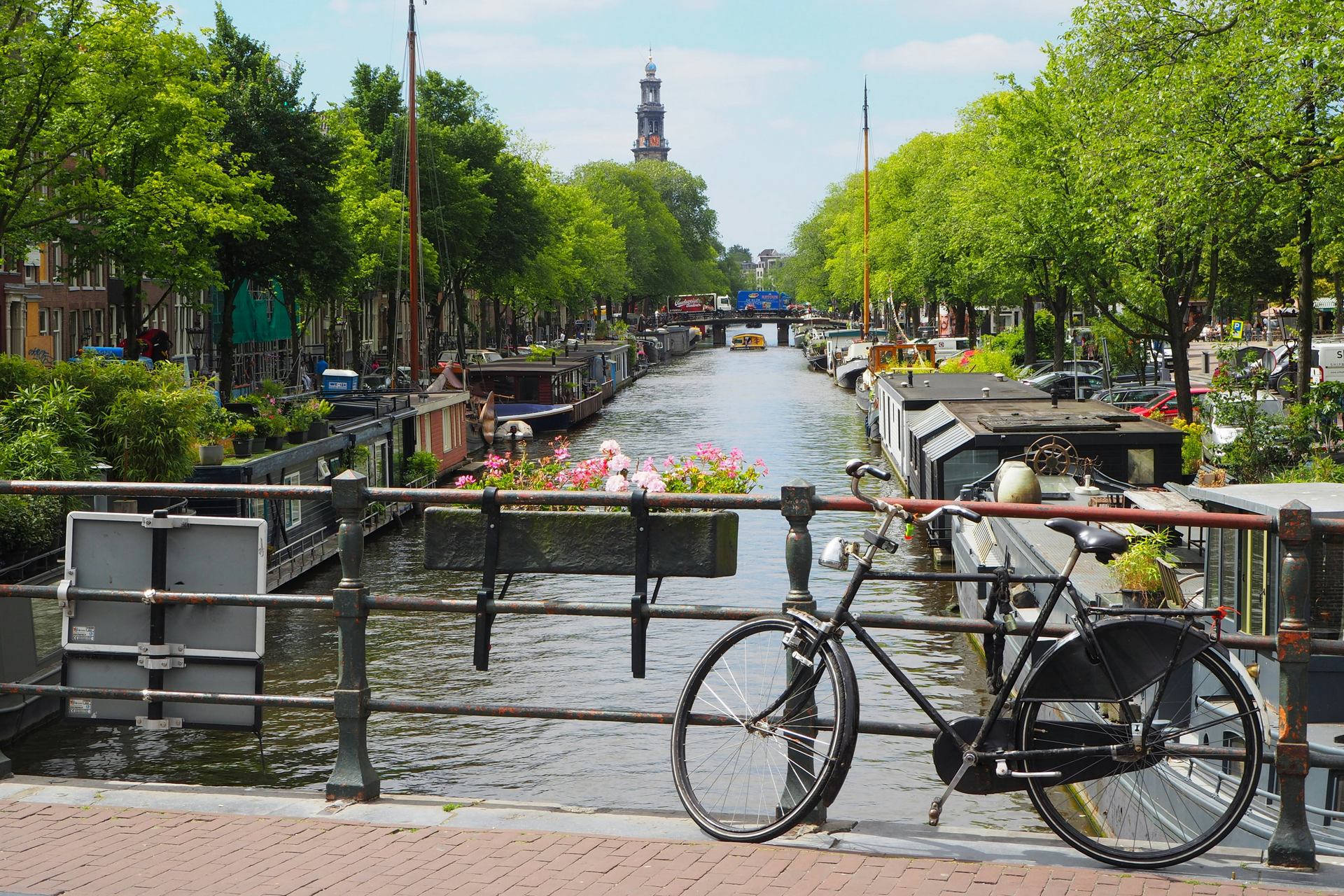
Photo by Callum Parker on Unsplash
- Walking: The best way to experience Amsterdam’s canal houses, hidden courtyards (hofjes), and neighbourhood street life. The walk from Amsterdam Centraal station to the Rijksmuseum takes approximately 25 minutes through the heart of the city, passing the Dam Square, Spui, and the Begijnhof along the way.
- Cycling: The most Dutch and, for confident cyclists, the most enjoyable way to explore the city. Bike hire is available from multiple operators near Centraal Station and in the Jordaan and De Pijp districts. Advise clients to use bike parking racks (not any random pole) and to carry a lock; theft is common. Riding an Amsterdam rental bike on the dedicated cycle paths is a genuinely distinctive local experience.
- Tram: Amsterdam’s tram network is the most practical public transport option for clients who are not cycling. Lines 2 and 12 are particularly useful for reaching the Rijksmuseum, Van Gogh Museum, and Vondelpark from Centraal Station. A 24-hour or 48-hour GVB transit pass covers all trams, buses, and the metro; buy at vending machines at Centraal or at GVB service points.
- Canal boat: Private canal boat hire — for a self-skippered electric boat, no licence required — is one of the best authentic Amsterdam experiences for small groups and families. Several operators rent compact electric boats from near the Jordaan and from the area around Leidseplein. A 2-hour self-drive on the canals covers a remarkable amount of the city and is consistently rated one of the best things to do in Amsterdam.
- Metro and bus: Useful for reaching areas outside the canal ring, including the Pijp, Amsterdam-Noord (across the IJ river by free ferry), and the RAI and NDSM area. Less useful within the historic centre, where trams and cycling are faster.
RateHawk insight
Transport can be one of the most difficult parts of visiting a new country – but RateHawk removes this stress by allowing agents to offer transportation alongside accommodation as part of vacation packages. Agents can book airport transfers from Schiphol airport to Amsterdam centre or train tickets to other European cities, such as Paris, London, and Brussels, with direct Eurostar routes.
Where to Stay in Amsterdam: Neighbourhoods and Hotel Options
Amsterdam’s accommodation market showcases the city’s diverse personality — canal house hotels converted from 17th-century merchant houses, design boutique properties in the Jordaan, large four-star hotels near the museums, and business hotels near Centraal Station. The right neighbourhood shapes the entire feel of an Amsterdam visit.
The canal ring and the Jordaan
Best for: Clients in search of an authentic Amsterdam experience.
The canal ring, the UNESCO World Heritage canal district of Herengracht, Keizersgracht, and Prinsengracht, and the Jordaan neighbourhood immediately to the west of the ring are the most atmospheric and most sought-after areas to stay in Amsterdam. A canal house hotel on one of the major canals gives clients a genuinely distinctive experience: the narrow staircases, the canal views from tall windows, the sound of bells from the Westerkerk across the water.
The Jordaan district, with its independent boutique shops, art galleries, coffee houses, and the best café terraces in the city, is the most authentically local neighbourhood in the historic centre. Accommodation here ranges from boutique canal house hotels at the luxury end to well-reviewed mid-range properties.
Museum Quarter (Museumplein)
Best for: Culture-focused clients who want to be within walking distance of major attractions.
The Museumplein, the green square flanked by the Rijksmuseum, the Van Gogh Museum, the Stedelijk Museum of contemporary art, and the Concertgebouw concert hall, is Amsterdam’s most prestigious cultural address.
Staying in the Museum Quarter puts clients within walking distance of Amsterdam’s three greatest museums and the city’s finest parks (Vondelpark is two minutes on foot). Hotels here lean toward four- and five-star; the area is quieter than the canal ring, more residential in character, and well-connected by tram to the city centre.
Centraal Station and the old centre
Best for: Budget-conscious travelers or those with a multi-stop itinerary with accessible transport links for day trips.
The area around Amsterdam Centraal station and the adjacent old centre (including the Red Light District, the Nieuwmarkt, and the Dam Square) is the most convenient arrival and navigation hub in the city. Hotels here cover every price level and offer the fastest access to public transport links to Schiphol Airport and to day trips by train.
The neighbourhood is busy and tourist-dense during the day, but the adjacent Nieuwmarkt square and the Jewish historical quarter to the south have a genuinely neighbourhood character. A practical base for clients who prioritise connectivity and value, or who are making Amsterdam part of a broader Netherlands or European rail itinerary.
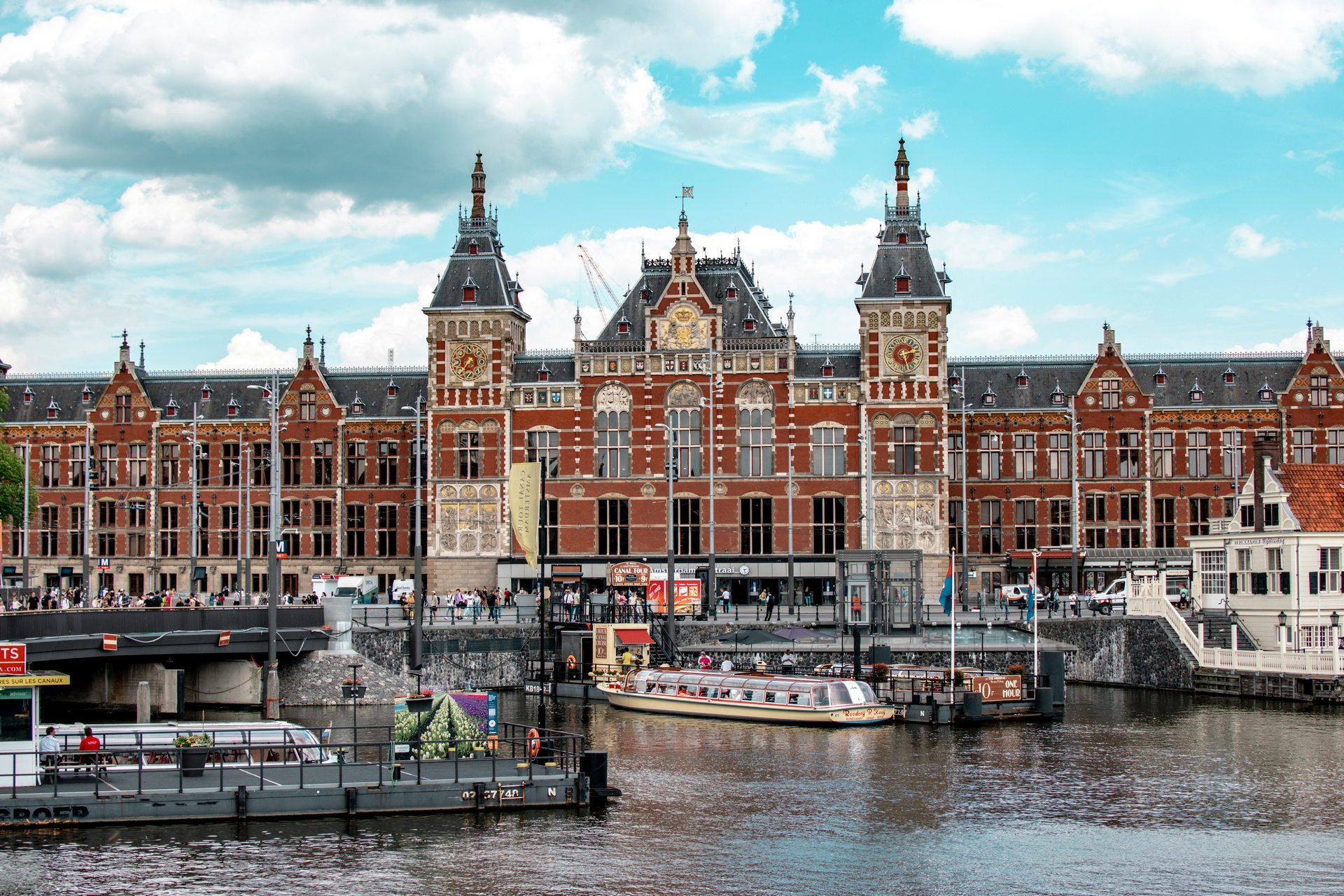
Photo by Jakub Gigler on Unsplash
De Pijp and the Albert Cuyp district
Best for: Food connoisseurs, solo travelers, and those who want to discover Amsterdam beyond the historic sites.
De Pijp, the neighbourhood south of the Rijksmuseum centred on the Albert Cuyp market and the Ferdinand Bolstraat restaurant and bar strip, is Amsterdam’s most cosmopolitan and most independent-spirited district.
Its daily street market, the extraordinary concentration of independent restaurants, coffee bars, and craft beer cafés, and the local residential feel make it the best base for food-focused clients, independent travellers, and those who want to experience Amsterdam beyond the historic tourist circuit. Frequent tram and metro connections provide quick access to the Museum Quarter and the historic centre.
Top things to do in Amsterdam: Must-see attractions
1. The Rijksmuseum: Dutch art and history at its finest
The Rijksmuseum, the Netherlands’ national museum, housed in a monumental 19th-century neo-Gothic and Renaissance building on the Museumplein, is one of the finest art and history museums in the world and the single most important visit in Amsterdam.
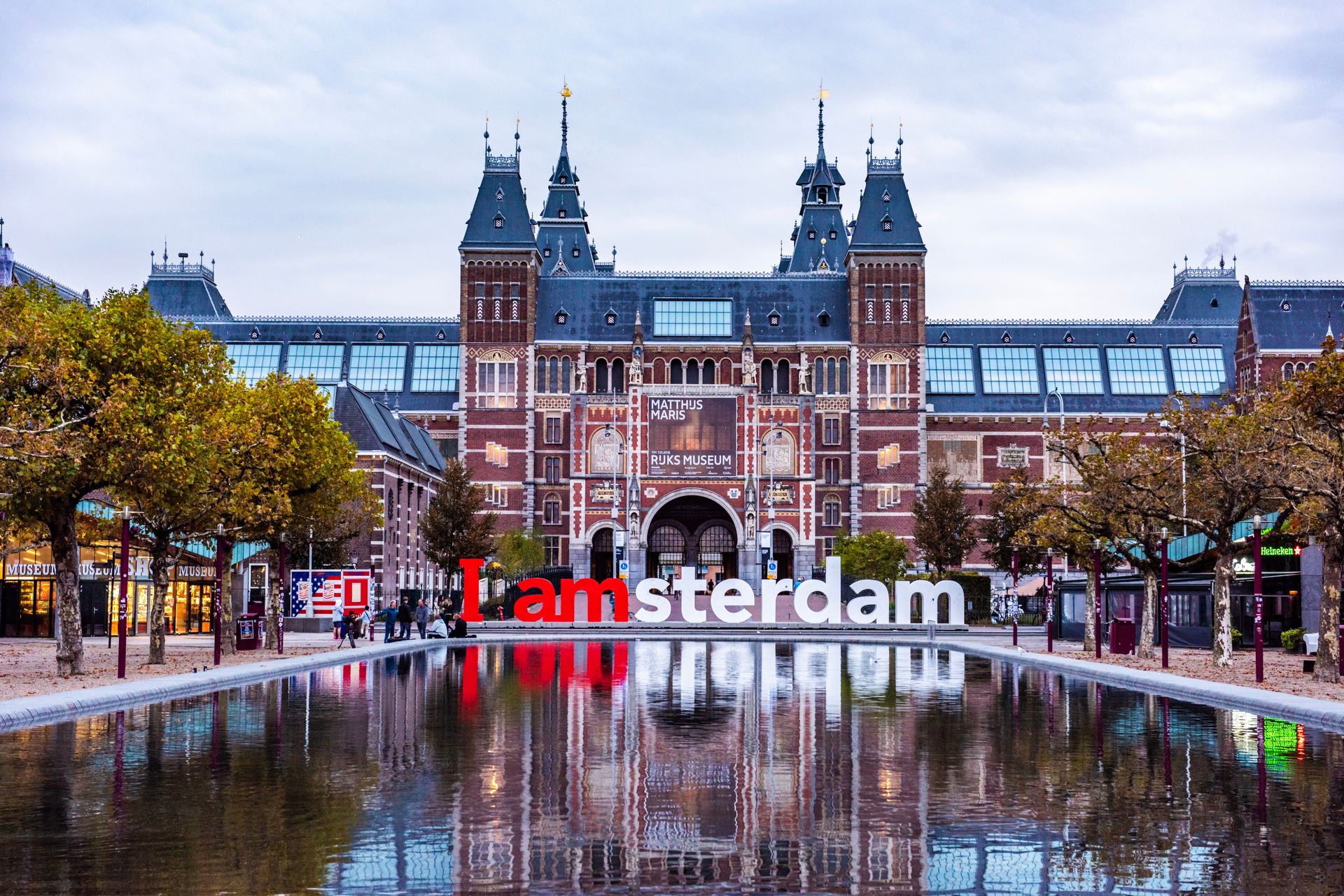
Photo by Resul Muslu on Shutterstock
Its collection of Dutch and Flemish art from the 17th-century Golden Age is unmatched anywhere: Rembrandt’s The Night Watch (1642), the masterpiece of the entire Dutch Golden Age tradition, hangs in the purpose-built Gallery of Honour alongside Johannes Vermeer’s The Milkmaid (c.1657–1658) and The Love Letter, Jan Steen’s domestic interior scenes, Frans Hals’ portraits, and more than 400 other paintings from the period.
The museum’s craft and applied arts collection, which features Delftware, Dutch silver, ship models, and the reconstructed Dollhouses of Amsterdam’s wealthy 17th-century merchant wives, is equally extraordinary.
2. The Van Gogh Museum: the world’s greatest Van Gogh collection
The Van Gogh Museum, a short walk from the Rijksmuseum on the Museumplein, holds the largest and most comprehensive collection of works by Vincent van Gogh in the world: over 200 paintings, 500 drawings, and 800 personal letters, assembled largely from the collection that the artist’s brother Theo and sister-in-law Jo Bonger preserved after Van Gogh’s death in 1890.
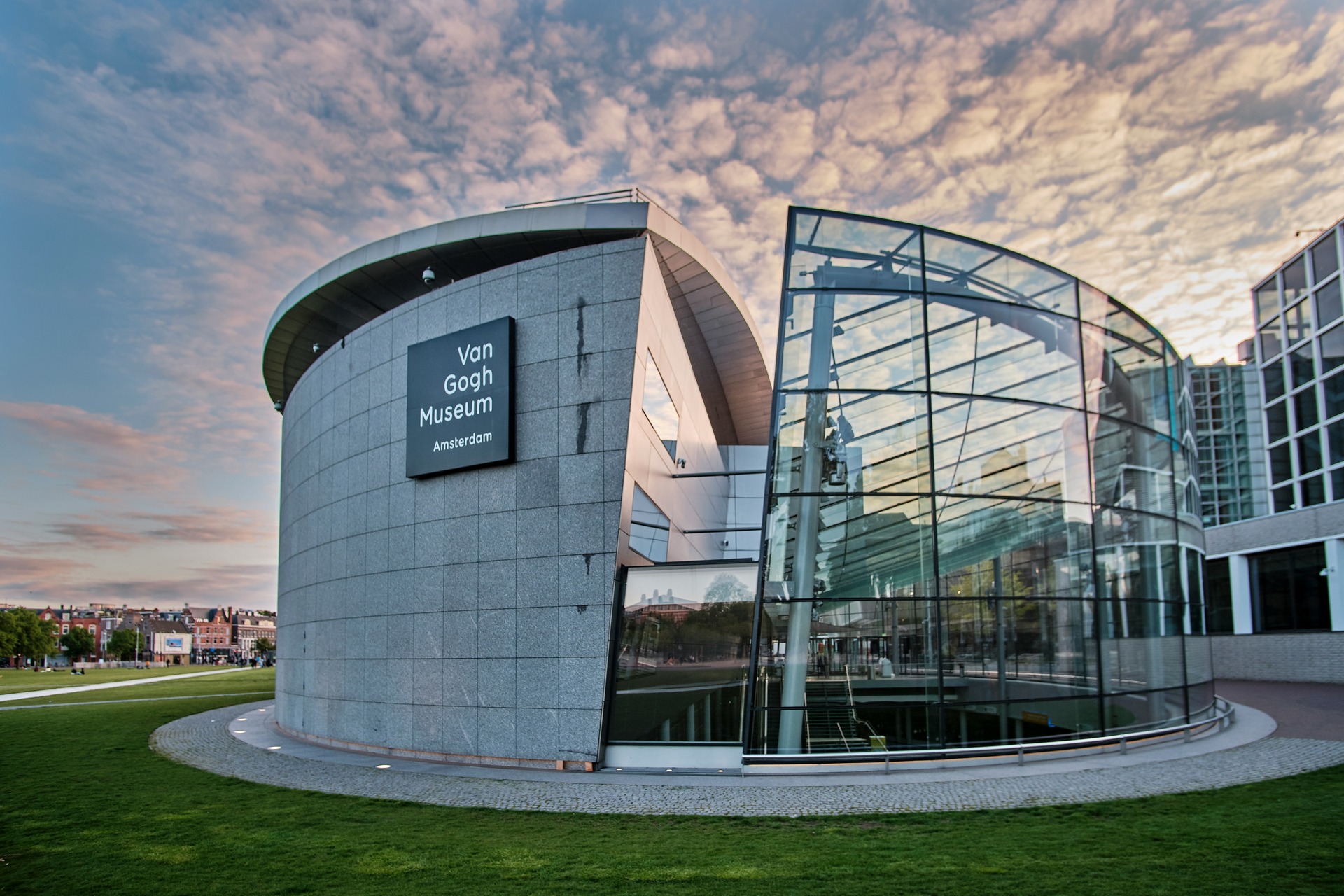
Photo by Frans Ruiter on Unsplash
The permanent collection is arranged chronologically through Van Gogh’s career, from the dark Dutch works of The Potato Eaters (1885) through the Arles sunflower paintings and the Starry Night period to the final works painted at Auvers-sur-Oise.
The museum also holds an extraordinary collection of Japanese prints that Van Gogh collected obsessively and which directly influenced his use of flat colour and outline. The building itself, a 1973 Gerrit Rietveld design, is understated and allows the art to dominate entirely.
3. The Anne Frank House: Europe’s most important memorial site
The Anne Frank House at Prinsengracht 263–267 is one of the most visited historic houses in Europe and one of the most emotionally significant memorial sites in the Netherlands. It was the hiding place where Anne Frank, her family (Otto, Edith, Margot), and four others were concealed in a Secret Annexe for 25 months between July 1942 and August 1944, when they were discovered and deported to Nazi concentration camps.
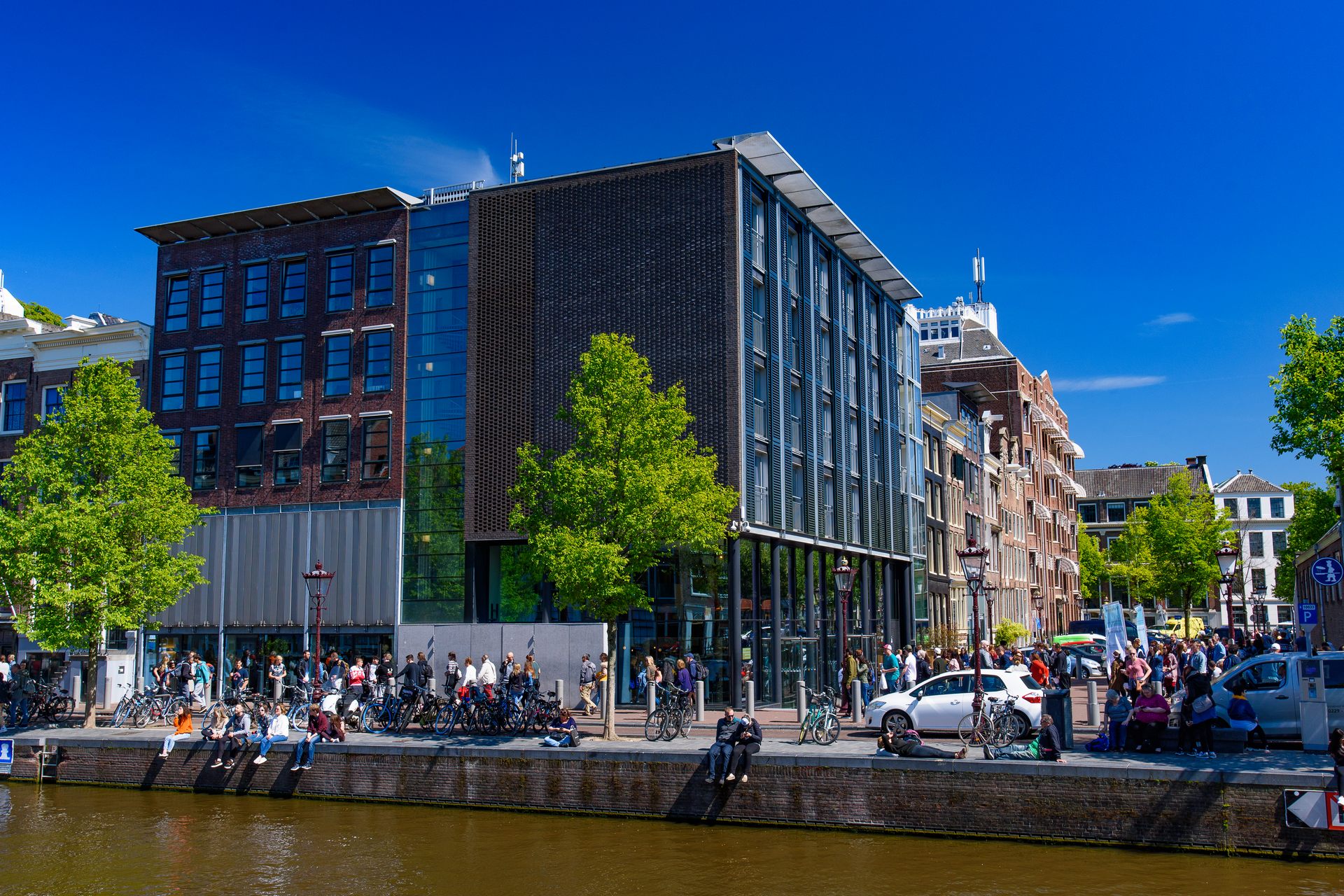
Photo by Mo Wu on Shutterstock
Anne Frank died in Bergen-Belsen in early 1945, shortly before the camp was liberated. The diary she kept during her time in hiding, published in 1947 by her father Otto (the only family member to survive the camps), has been translated into over 70 languages and is one of the most widely read books in the world.
4. The Jordaan: Amsterdam’s most beautiful neighbourhood
The Jordaan, the neighbourhood immediately west of the Prinsengracht canal, was built in the 17th century as the city’s artisan and immigrant quarter and is now Amsterdam’s most coveted residential address. It is the best place in Amsterdam to experience the city like a local.
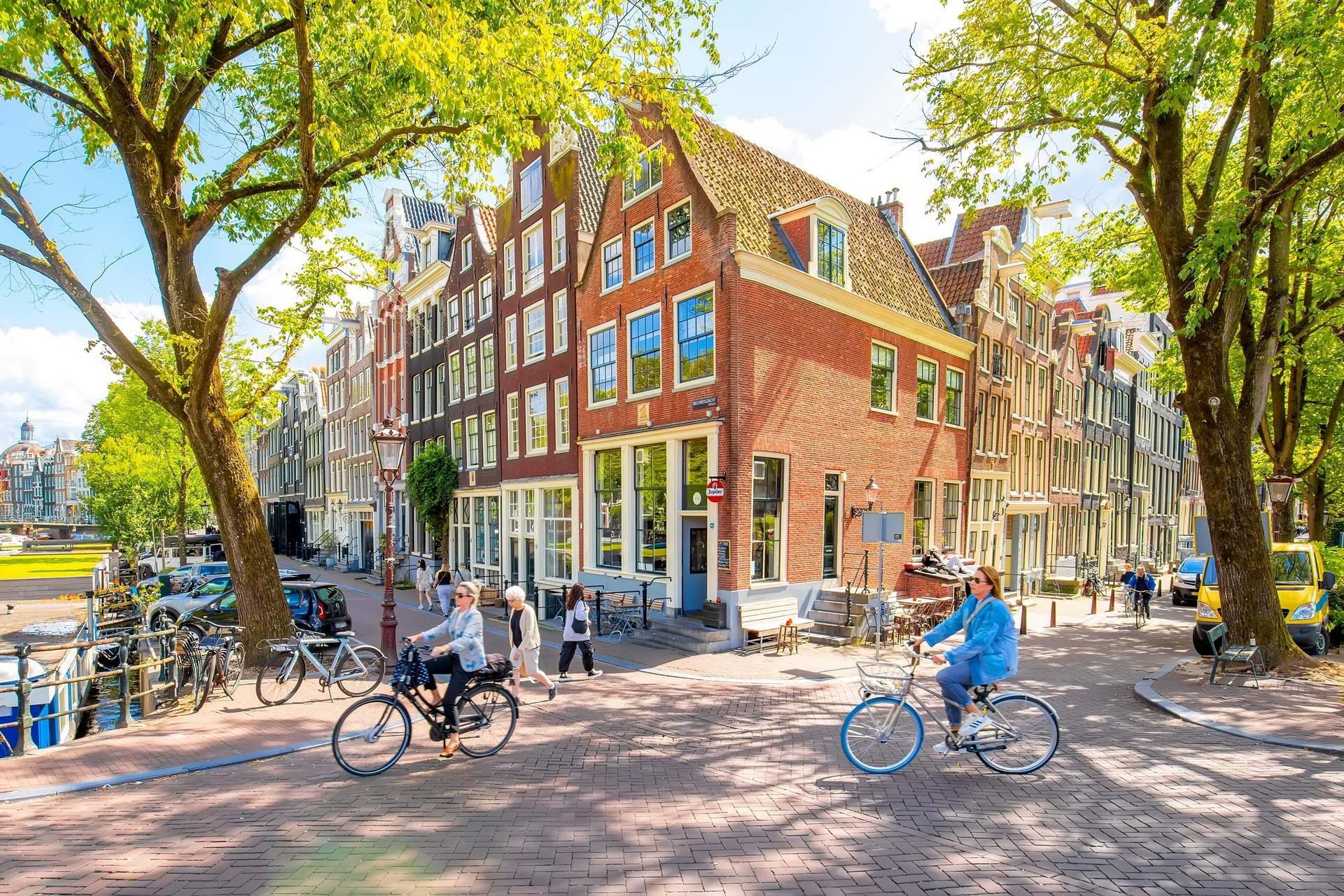
Photo by Arcady on Shutterstock
Its streets follow the original 17th-century pattern of being slightly irregular, unlike the disciplined canal ring grid. The neighbourhood’s character is brought to life in its independent boutiques, antique shops, and art galleries. Other highlights include the extraordinary Noordermarkt flea, organic food market (Saturdays and Mondays), and the hidden hofjes (historic almshouse courtyard gardens hidden behind unmarked doors).
The Jordaan also has the best concentration of brown cafés (bruine kroegen) in the city, making it feel distinctly different from the tourist-facing areas of the old centre.
5. Canal cruises and the Amsterdam canal ring
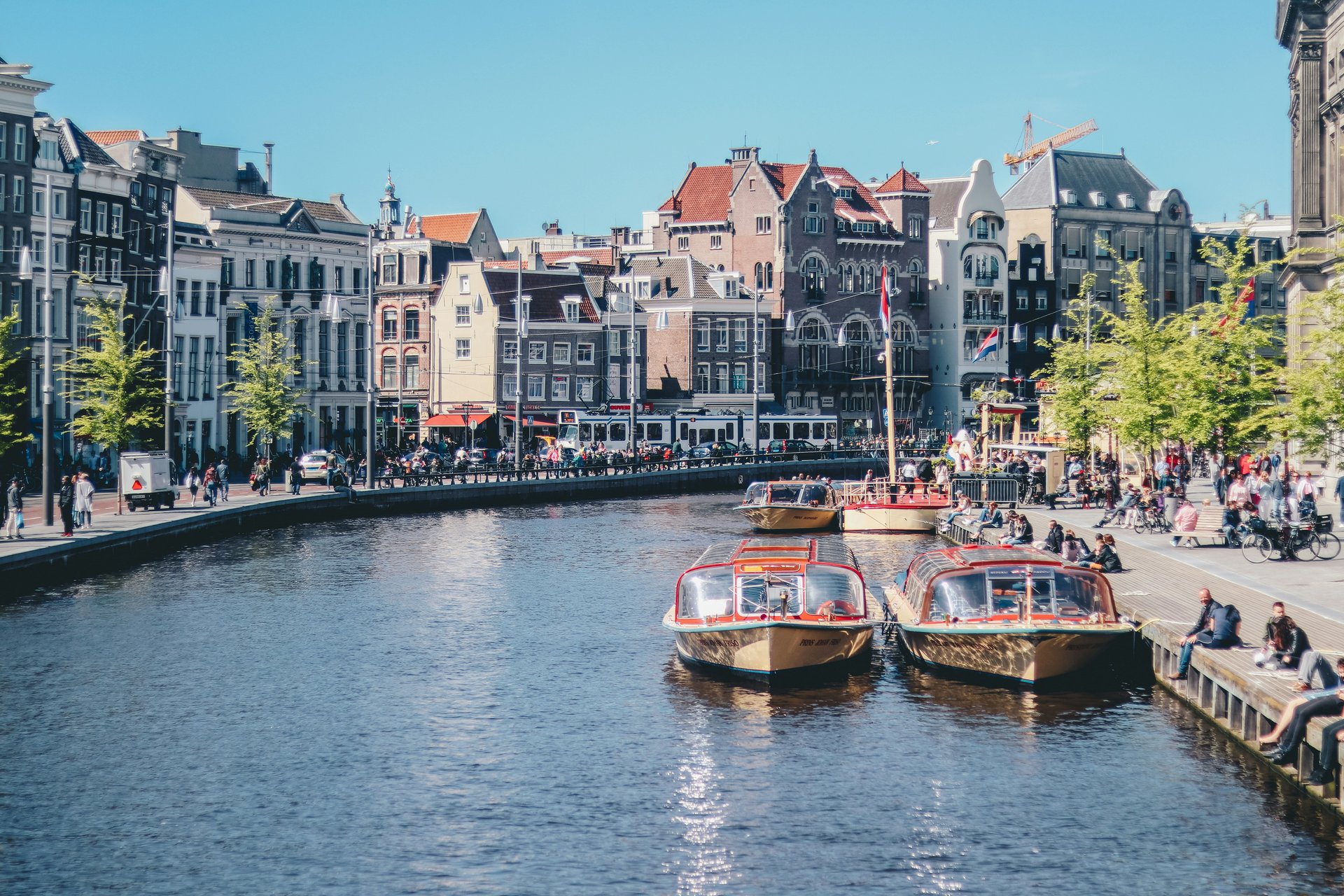
Amsterdam’s canal network of 165 canals, approximately 100 km in total length, spanned by 1,700 bridges, lined with 17th-century gabled merchant houses, is the physical and aesthetic heart of the city. It visually distinguishes Amsterdam from any other European capital.
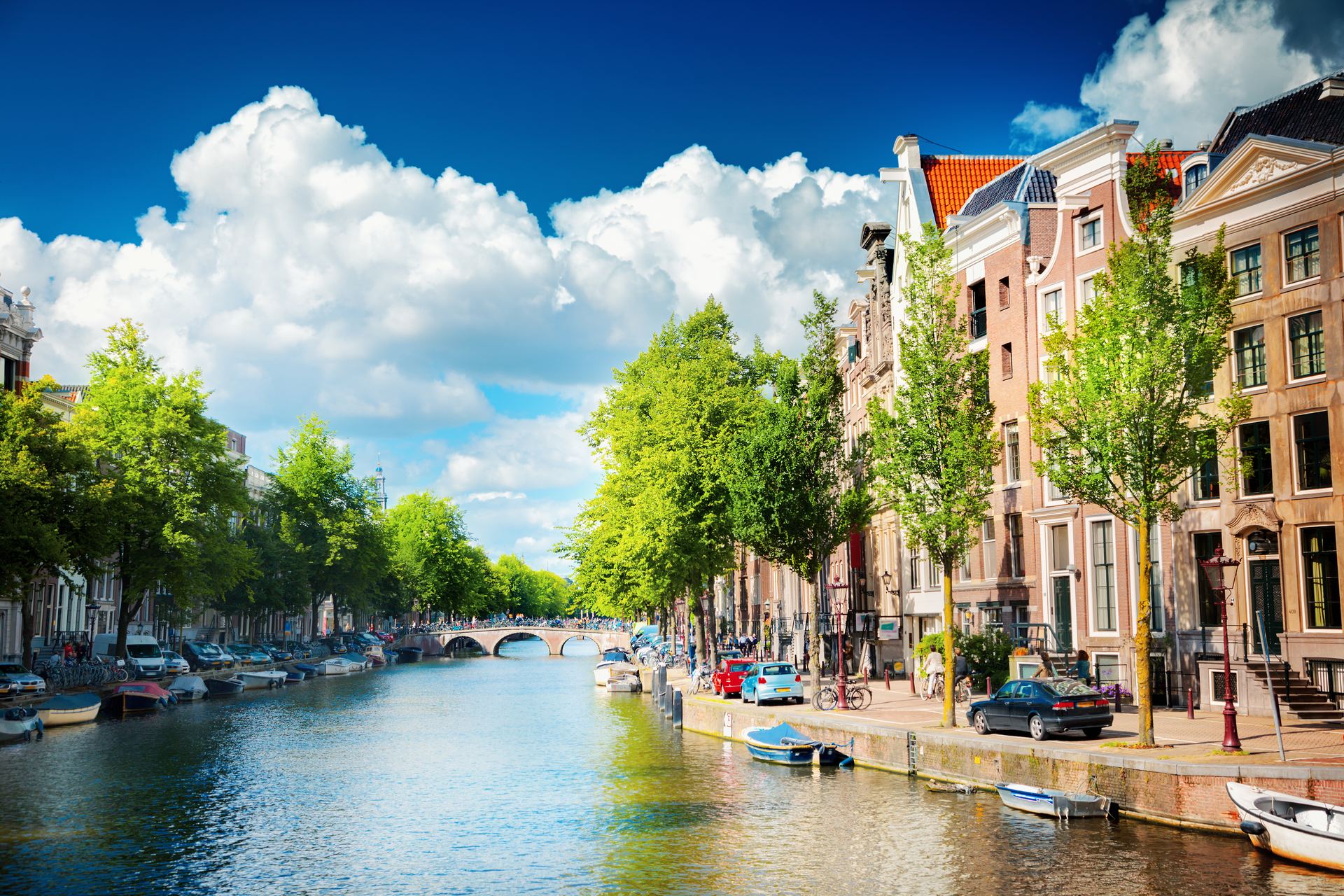
Photo by Adisa on Shutterstock
The best way to experience the canals is from the water. Guided canal boat tours (available from multiple operators departing from near Centraal station, the Rijksmuseum, and Leidseplein) give a one-hour tour of the main canal ring and the Prinsengracht.
Audio guide versions allow clients to navigate at their own pace. Private canal boat hire, usually a compact electric boat for four to eight people with no skipper’s licence required, is the most flexible and most enjoyable option, giving clients the freedom to moor, explore, and return at their own rhythm.
Amsterdam activities by travel type
City breaks and cultural tours
Amsterdam is primarily a city-break destination, and the quality of its cultural experience — the museum circuit, the historic architecture, the neighbourhood texture — is genuinely world-class. The key for agents is building an itinerary that is rich without being exhausting, while aligning directly with the client’s interests.
- Stedelijk Museum (Museum of Modern and Contemporary Art): The third great museum of the Museumplein is one of the finest modern art collections in Europe and consistently under visited compared to its two famous neighbours; its permanent collection includes Matisse, Mondrian, Picasso, Malevich, and Andy Warhol alongside the best collection of Dutch Design in the world. Entry is significantly cheaper than the Rijksmuseum or Van Gogh Museum, and queues are rarely a problem.
- Albert Cuyp Market walking and food tour: The largest outdoor market in the Netherlands, open on Monday to Saturday, from approximately 9 AM – 5 PM. It is one of the best in Europe, with highlights including fresh stroopwafels made to order, raw herring with onions, Dutch cheese, and street food from the Dutch-Indonesian, Surinamese, and Moroccan vendors that reflect Amsterdam’s multicultural food culture.
- Dutch Resistance Museum (Verzetsmuseum): One of the finest museum experiences in Amsterdam and deeply complementary to the Anne Frank House visit. It tells the story of Dutch life under Nazi occupation through personal objects, photographs, and documentary film, covering collaboration, resistance, and the extraordinary range of individual choices people made during the occupation years. Housed in a beautifully converted synagogue in the Plantage neighbourhood.
- Brown café (bruine kroeg) afternoon: The Dutch brown café is Amsterdam’s most distinctive social institution: dark wood, Dutch beer (Heineken, Grolsch, or craft beers from Brouwerij ‘t IJ in the De Pijp windmill), small glasses of jenever (Dutch gin), and bitterballen (deep-fried ragout croquettes, the essential brown café snack). The best examples can be found in the Jordaan, around the Spui, and in Nieuwmarkt Square.
- Vondelpark afternoon: Amsterdam’s most beloved park, a 120-acre green space immediately west of the Museum Quarter. Free outdoor concerts in the Vondelpark Openluchttheater (June to August), excellent café terraces, and a network of cycling and walking paths; the best way to spend a free afternoon in Amsterdam during good weather.
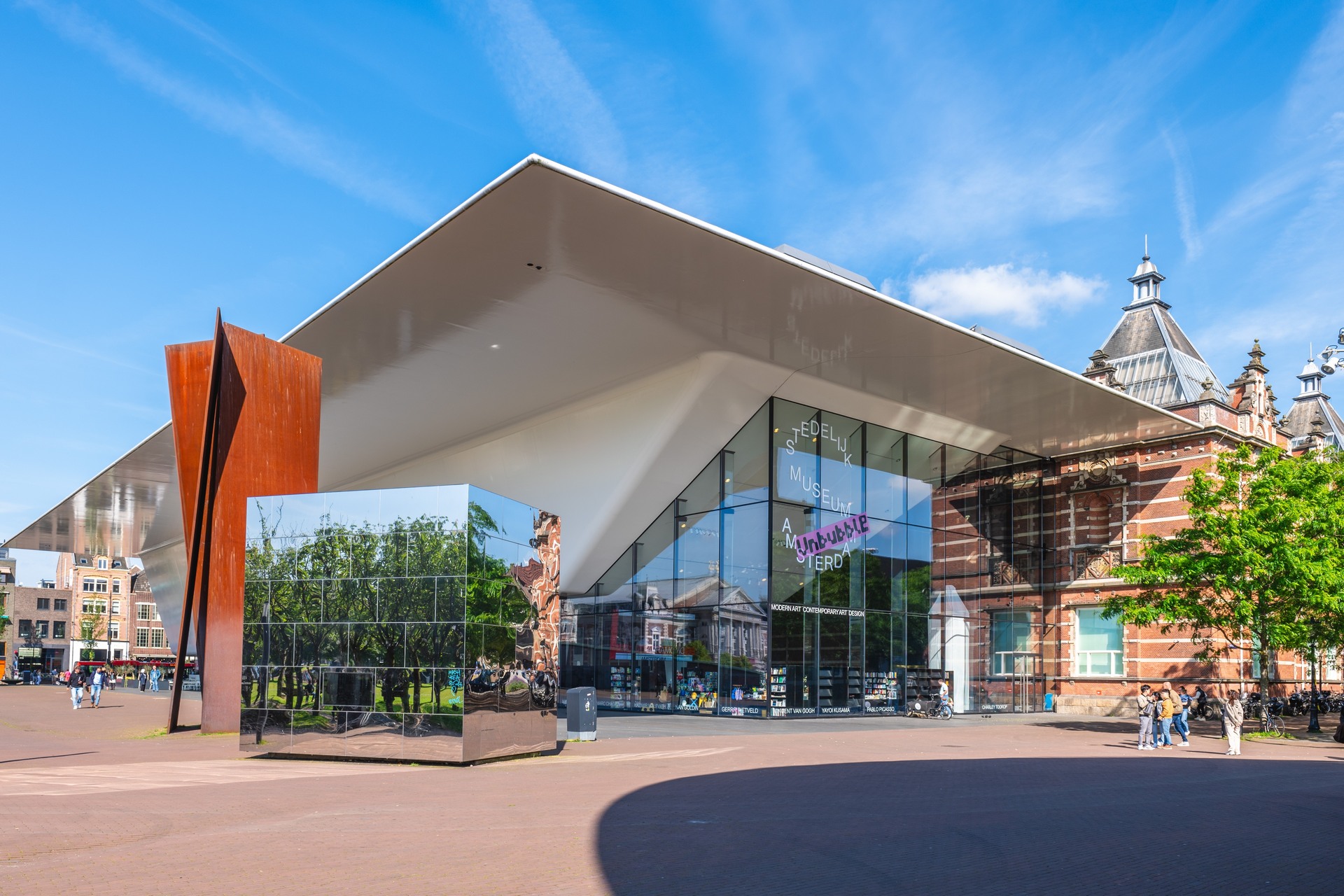
Photo by Richie Chan on Shutterstock
Family holidays in Amsterdam
- NEMO Science Museum: The large, green-hulled building that looks like a ship’s prow rising above the water on the Oosterdok (designed by Renzo Piano, opened 1997) is Amsterdam’s finest family attraction. There are interactive science exhibits across five floors covering chemistry, physics, biology, and technology. The rooftop terrace is also one of the best free viewpoints over the city’s waterfront and the historic centre.
- Artis Royal Zoo: Amsterdam’s historic zoo, founded in 1838 and set in a beautifully landscaped park in the Plantage district. It is the oldest zoo in the Netherlands and one of the most pleasant in Europe. Family-friendly highlights include penguin feeding, butterfly pavilion, insectarium, and the aquarium. The adjacent Micropia museum is the world’s only museum dedicated entirely to micro-organisms and is ideal for older children.
- Keukenhof Gardens day trip: The Keukenhof is the world’s largest spring flower garden (open late March to mid-May) and is near Lisse, 30 km from Amsterdam. The 32 hectares of tulip, daffodil, and hyacinth beds, planted with approximately 7 million bulbs, represent the extraordinary Dutch flower-growing industry at its most spectacular. Direct bus services are available from Schiphol Airport, making it one of the best day trips from Amsterdam for families visiting in spring.
- Houseboat Museum (Woonbootmuseum): A converted 1914 sailing barge moored on the Prinsengracht that is now a small museum showing what life on an Amsterdam houseboat looks like from the inside. Children generally love it as a short 90-minute outing in a convenient location, close to the Anne Frank House.
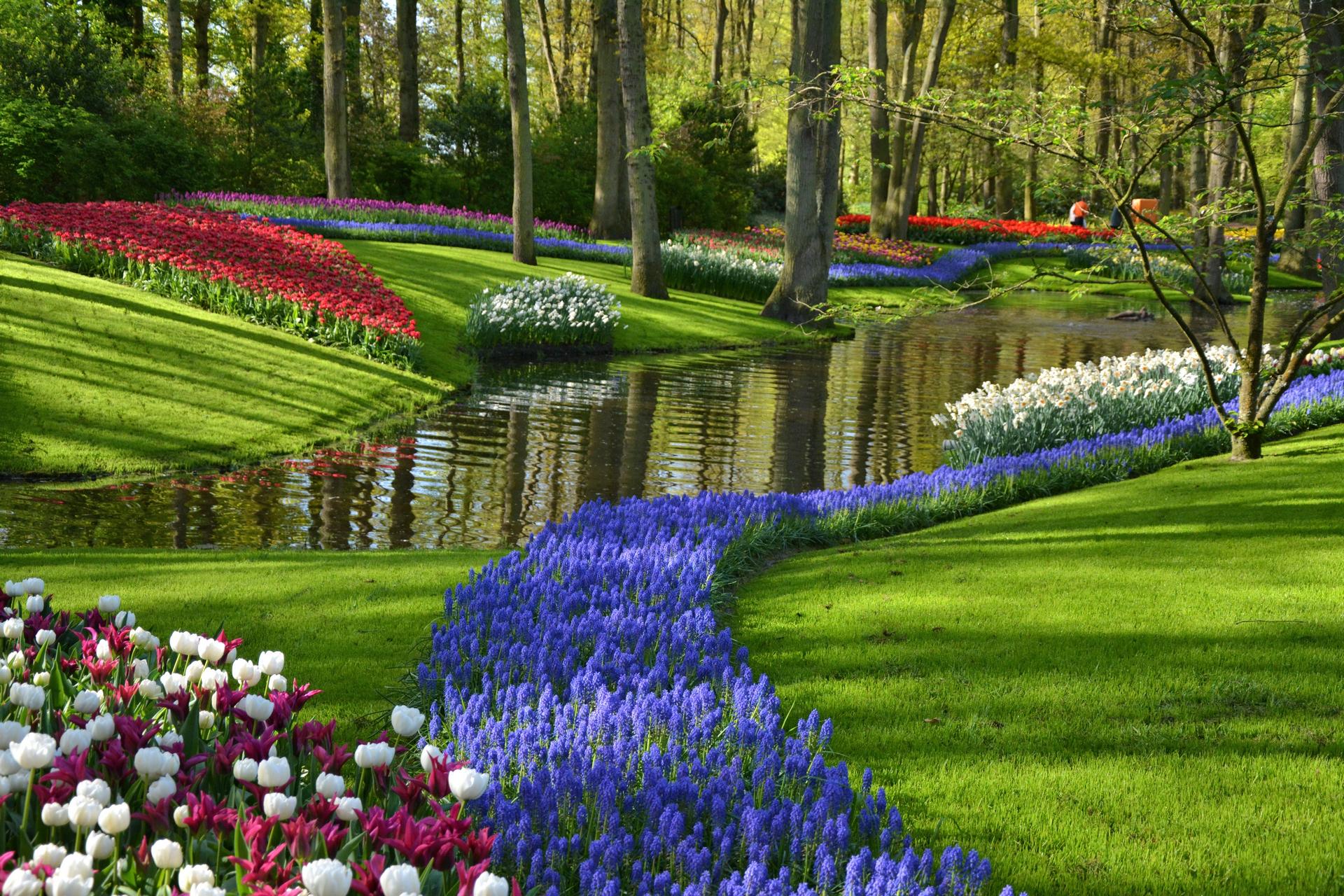
Photo by Studio Barcelona on Shutterstock
Food and local market exploration
- Foodhallen Amsterdam: A large indoor food market in a converted tram depot in the Oud-West neighbourhood near Vondelpark, with approximately 20 permanent food vendors covering Dutch and international cuisines. It is the most comfortable and most varied indoor food market experience in the city, open daily from 11 AM to 11:30 PM. The surrounding De Hallen complex includes bars, cafés, and cultural venues that make it a lively destination throughout the day and evening.
- Haarlemmerdijk and Haarlemmerstraat food and design street: The long pedestrianised street running from the Jordaan toward Centraal station is Amsterdam’s best street for independent food shops, patisseries, coffee roasters, natural wine bars, and concept stores. Walk the full length from Westerdoksplein to Singel for the best independent shopping in the city.
- De Hallen and the West Amsterdam neighbourhood: The broader West Amsterdam neighbourhood (Westerpark, De Hallen, and the area around the Jordaan’s western edge) is the city’s most creative district, with design studios, independent restaurants, the Westergasfabriek cultural complex in a converted gas plant, and the Westerpark. The neighborhood calls for a full day of exploration.
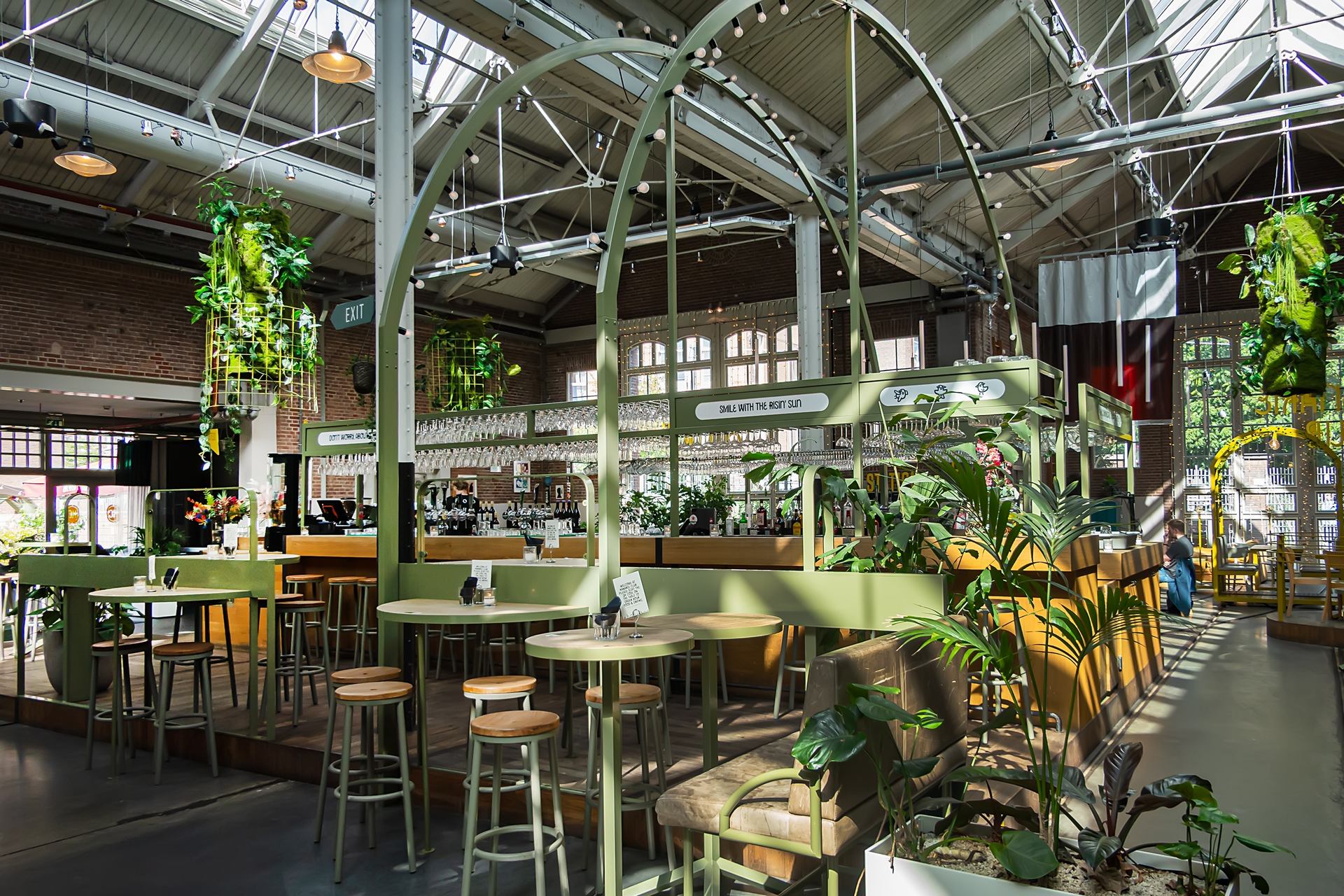
Photo by Kiev.Victor on Shutterstock
Luxury escapes in Amsterdam
- Canal house hotel experience: The best luxury stays in Amsterdam are the boutique canal house hotels on the main canals (Herengracht, Keizersgracht, Prinsengracht); staying in a converted 17th-century merchant house with canal views, original timber beams, and personalised service is the most distinctively Amsterdam luxury accommodation experience.
- Private canal dinner cruise: A private boat with a catered Dutch-Indonesian dinner (rijsttafel — the extraordinary Dutch-Indonesian rice table of 15–25 small dishes, a direct legacy of the VOC colonial period in the Dutch East Indies) creates an unforgettable luxury experience for couples, groups, and families. Several operators offer fully bespoke private canal dining onboard custom-fitted vintage wooden boats.
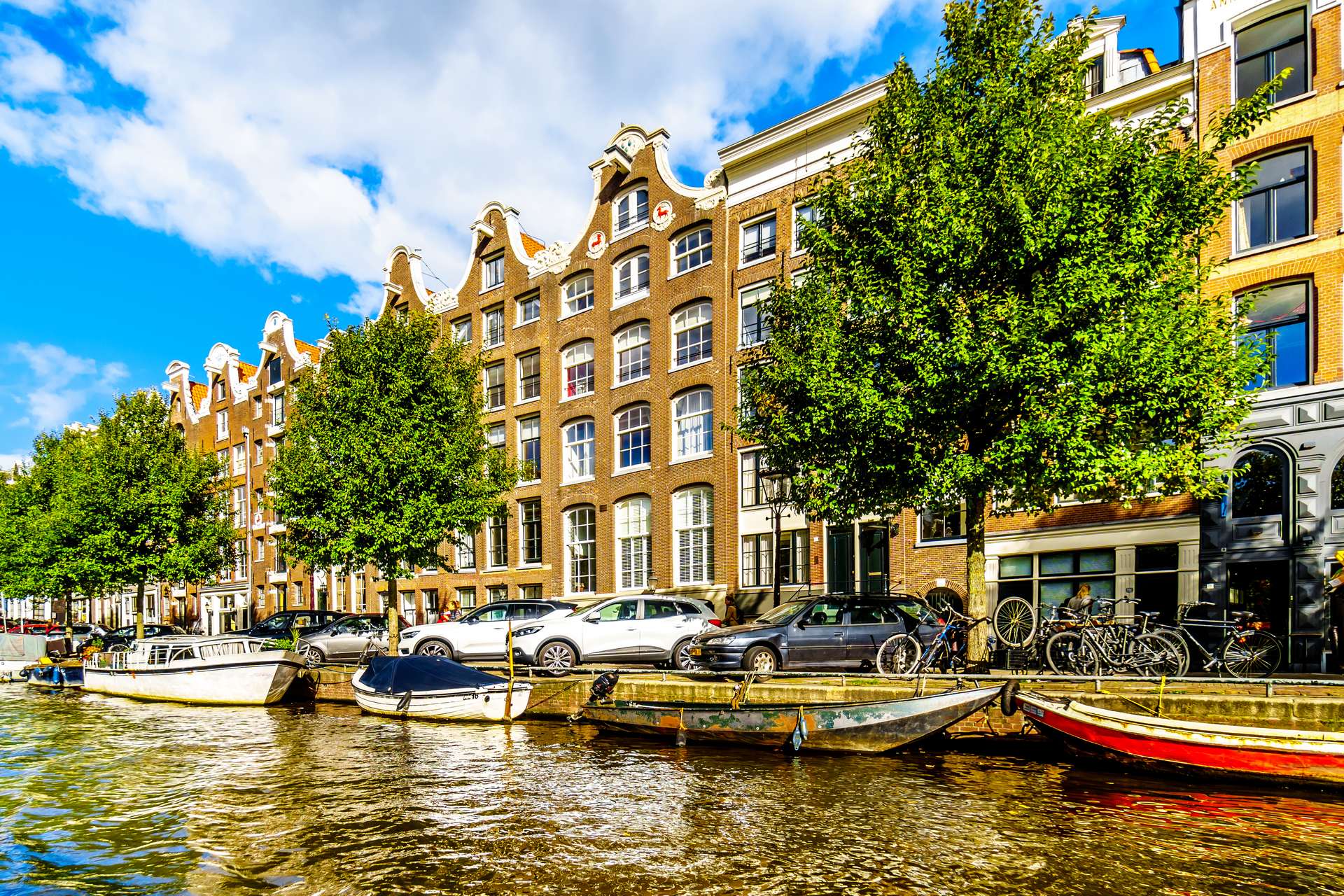
Photo by Harry Beugelink on Shutterstock
Nearby destinations: Day trips from Amsterdam, Netherlands
Keukenhof and the Dutch tulip fields (Spring Only)
The Keukenhof Gardens near Lisse open from late March to mid-May and comprise the world’s most spectacular spring flower garden. It’s located 30 km from Amsterdam and accessible by direct bus from Schiphol. The 32 hectares of tulip, daffodil, and hyacinth beds are planted with approximately 7 million bulbs.
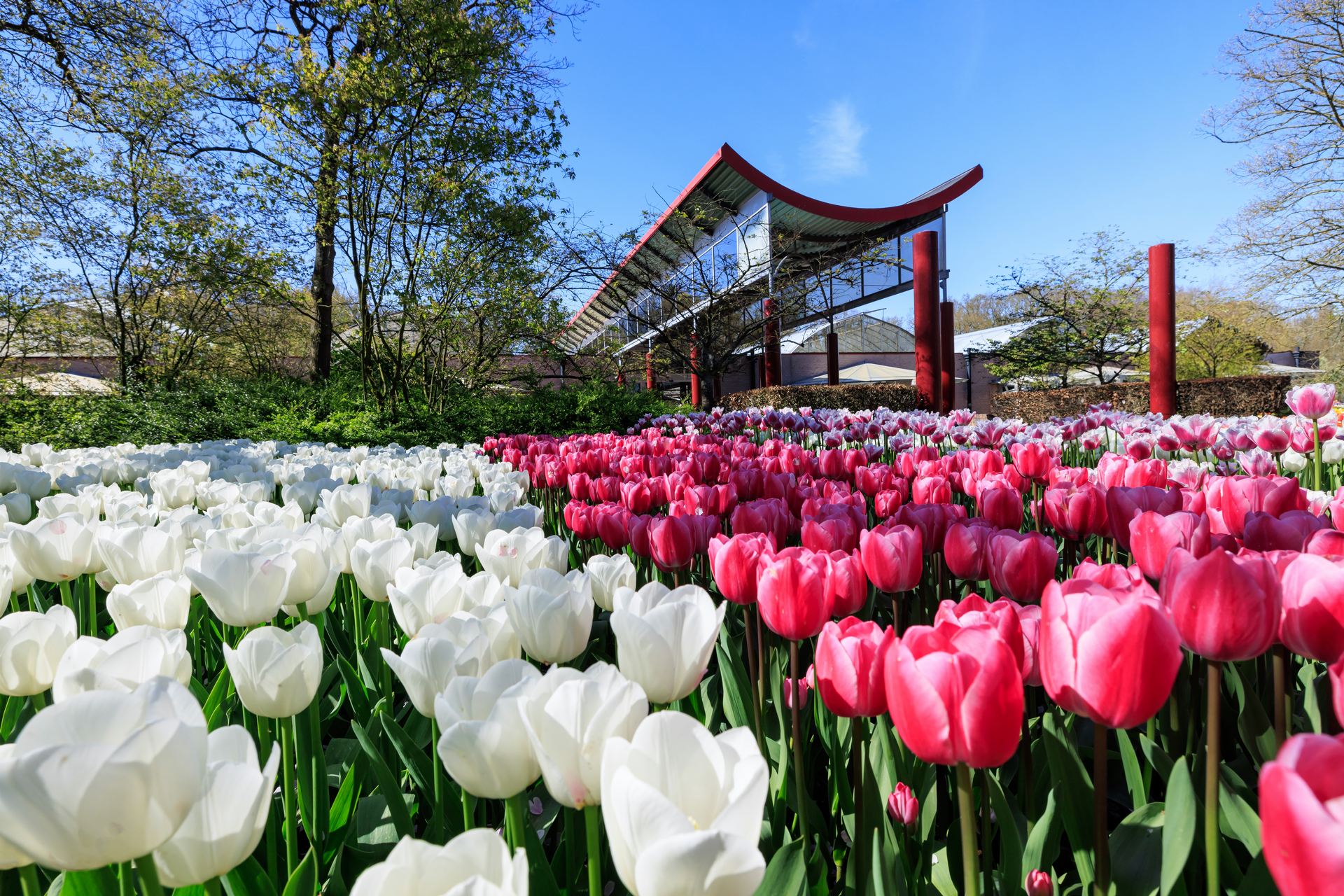
Photo by MstudioG on Shutterstock
The drive or cycle through the bulb fields of the Bollenstreek between Haarlem and Leiden in early April, when the flat landscape is painted in horizontal stripes of red, yellow, orange, and white , feels like a fairytale. Rent a bike from Haarlem and cycle through the fields for the ultimate Dutch experience.
Haarlem
Haarlem, just 20 minutes from Amsterdam Centraal by direct train, is one of the finest small cities in the Netherlands and one of the most underused day-trip options from Amsterdam. Its historic centre is beautifully preserved and significantly less crowded than Amsterdam. Highlights include Grote Markt market square, the 15th-century St Bavo Church, and the Frans Hals Museum, which houses the finest collection of 17th-century Dutch portraiture after the Rijksmuseum.
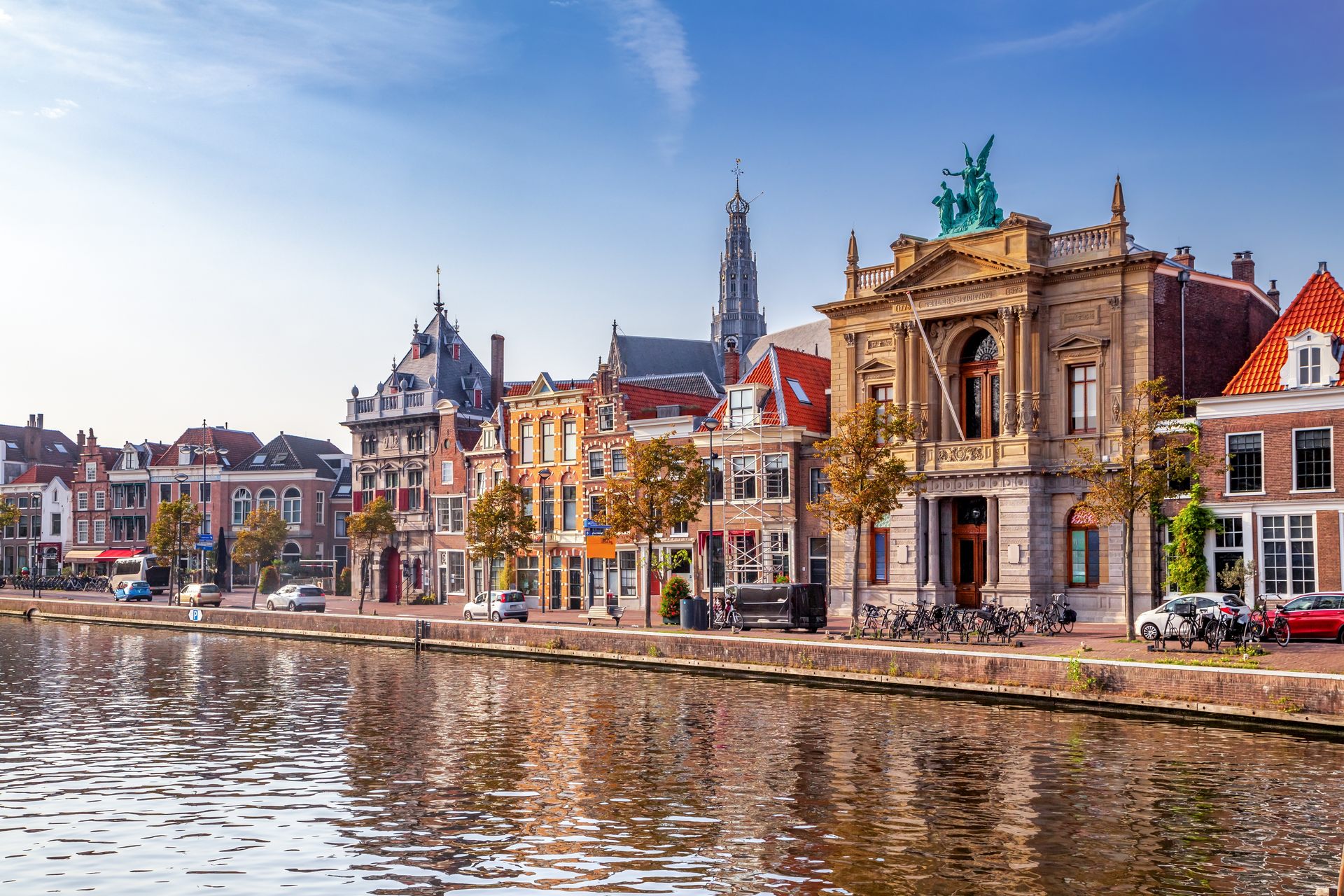
Photo by Sina Ettmer Photography on Shutterstock
The city’s independent restaurant scene, its Saturday market, and the 30-minute cycle path to the North Sea beach at Zandvoort make it an excellent full-day excursion. The Frans Hals Museum underwent a major renovation in 2023 and has recently reopened with a significantly upgraded permanent collection display.
Rotterdam
Rotterdam is 40 minutes from Amsterdam Centraal by Intercity Direct train. It is the most architecturally radical city in the Netherlands. Rotterdam is the perfect full-day or overnight trip for clients interested in design and architecture.
Completely rebuilt after its destruction in the German bombing of May 1940, Rotterdam’s centre is a showcase of post-war and contemporary architecture.
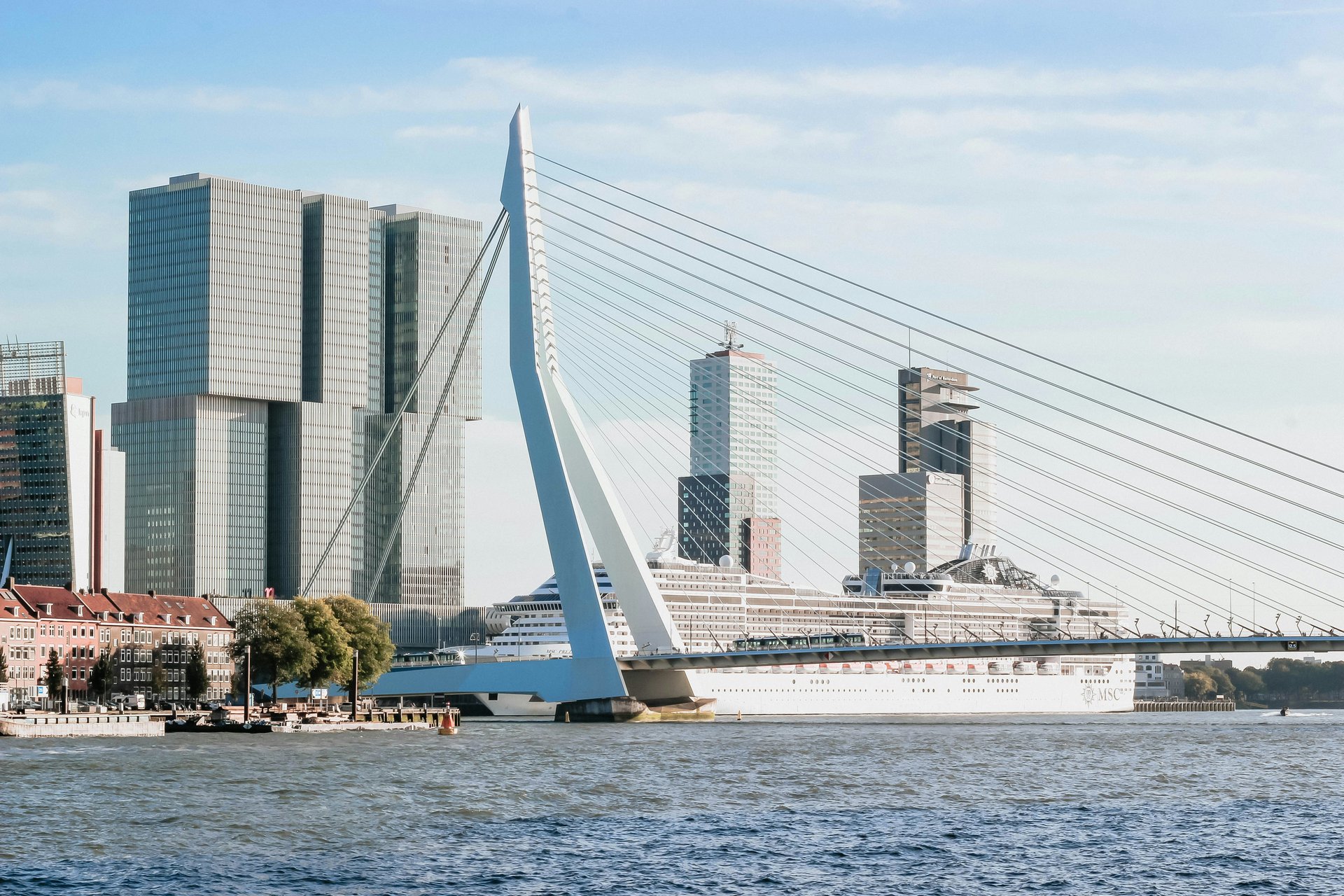
Photo by micheile henderson on Unsplash
Highlights include the Cube Houses (Kubuswoningen) by Piet Blom, the Markthal covered food market by MVRDV, the Erasmusbrug bridge, the new Depot Boijmans Van Beuningen (the world’s first publicly accessible art depot, holding 151,000 artworks on visible storage), and the Witte de Withstraat restaurant and gallery district.
Entirely unlike any other Dutch city, and an outstanding contrast to Amsterdam’s canal-house heritage.
Dutch food in Amsterdam: What your clients should try
Dutch cuisine is more interesting than its reputation suggests. The Amsterdam food scene, enriched by centuries of Dutch-Indonesian, Surinamese, and multicultural food culture, is genuinely excellent. Briefing clients on what to eat transforms their Amsterdam meals from afterthoughts into highlights.
- Haring (raw herring with onions and pickles): The quintessential Dutch street food, eaten whole by holding the fish by the tail and tipping it into the mouth, or sliced and served in a small roll (broodje haring). Available from the herring stalls (haringkar) throughout the city and from the fishmonger stalls of the Albert Cuyp market. The best in Amsterdam is widely considered to be from Haringhandel Stubbe on Singel, near the flower market.
- Stroopwafel: Two thin waffle biscuits joined by a layer of caramel syrup, invented in Gouda in the early 19th century. It is the most internationally exported Dutch food product. Best eaten by placing the fresh stroopwafel on top of a hot coffee cup for 30 seconds to warm the caramel. Fresh stroopwafels made to order at the Albert Cuyp market are a revelation compared to the packaged version most clients will have tried at home.
- Bitterballen: Deep-fried crispy breadcrumbed ragout croquettes, served as a bar snack in every Dutch brown café. The interior is a smooth, dense beef or mushroom filling and best eaten dipped in Dutch mustard. One of the most satisfying and most distinctively Dutch food experiences available in Amsterdam,
- Rijsttafel (Dutch-Indonesian rice table): 15–25 small Indonesian dishes (sambals, rendang, satay, tempeh) served simultaneously around a central rice bowl. This extraordinary Dutch-Indonesian food tradition was born from the VOC colonial period. Amsterdam has the finest rijsttafel restaurants outside Indonesia, concentrated on Reguliersdwarsstraat, in the Jordaan, and near Vondelpark.
- Dutch cheese from a kaas stall or specialist shop: Gouda (young, aged, and extra-aged), Edam, Maasdam, and the extraordinary aged Oude Gouda (with its crystalline texture and caramel-butterscotch flavour profile at 18 months and above) are the most important Dutch cheeses. The Albert Cuyp market kaas stalls and the specialist cheese shops of the Jordaan (Kaaskamer on Runstraat is the most famous) are the best places to taste and buy.
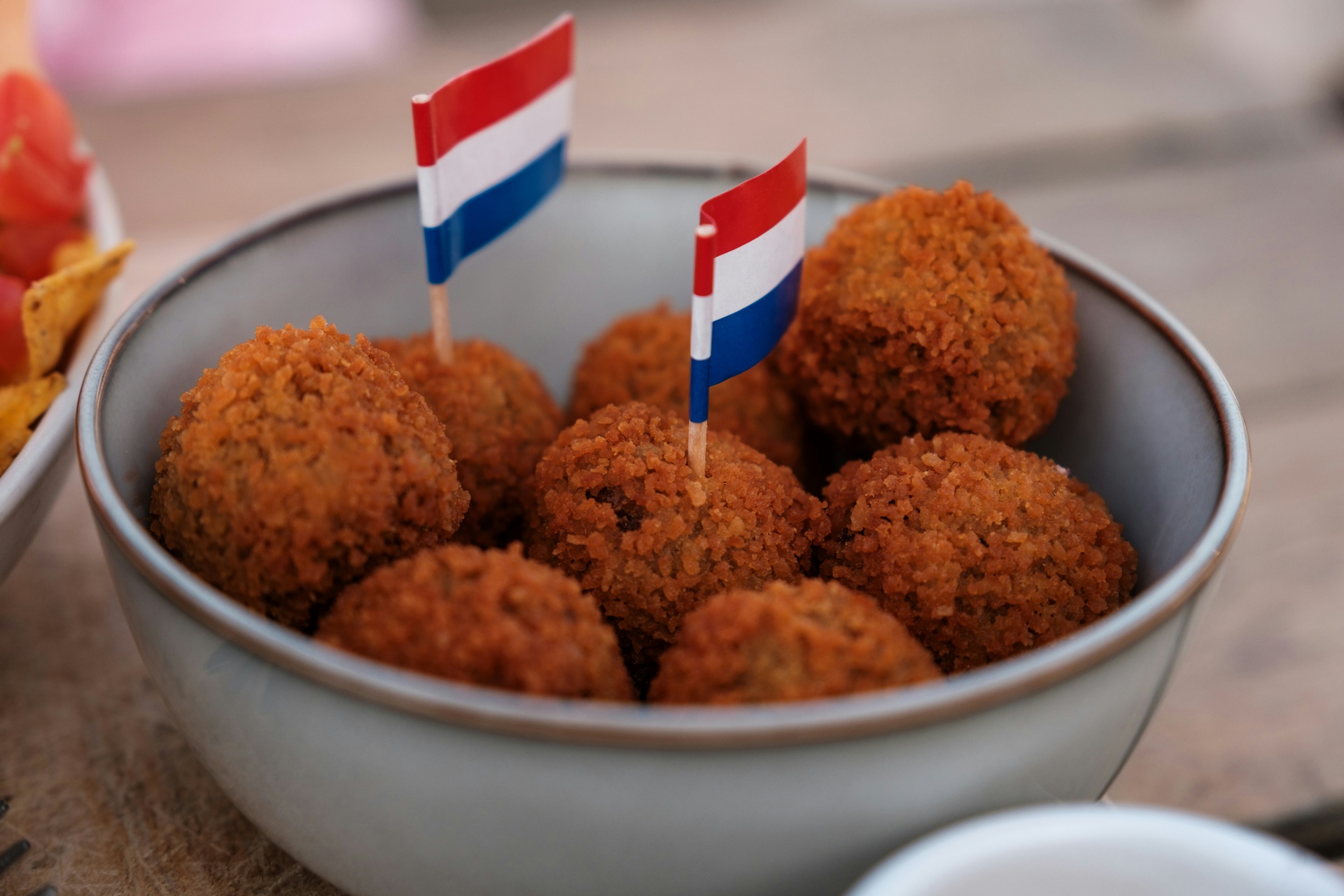
Photo by Haberdoedas II on Unsplash
Insider tips for Amsterdam
Souvenirs worth buying in Amsterdam
- Aged Dutch cheese (Oude Gouda): A wedge of well-aged Gouda (Oude or Extra Oude, minimum 12 months) from Kaaskamer or the Albert Cuyp market travels well when vacuum-packed and is vastly superior to the wax-coated young Gouda available in airport shops. The most authentic Dutch food souvenir that’s readily available.
- Delftware (Delfts blauw): The hand-painted blue-and-white ceramics of Delft have been produced since the 17th century in imitation of Chinese porcelain. Genuine Royal Delft pieces (from the only remaining original factory in Delft) are expensive and beautiful, while reproductions sold in tourist shops vary widely in quality. Advise clients to look for the handmade mark and the Royal Delft (Koninklijke Porceleyne Fles) signature.
- Jenever (Dutch gin) from a traditional proeflokaal: Dutch jenever, the original gin from which London dry gin descends, is best sampled and purchased at a proeflokaal (tasting room). Wynand Fockink proeflokaal, established in 1679 in a tiny room off the Dam Square, is the oldest and most authentic. A bottle of Kopke Old Genever or Bols Barrel Aged Genever makes a genuinely Dutch and distinctively flavoured spirit gift.
- Tulip bulbs from the Bloemenmarkt: The Amsterdam Bloemenmarkt (flower market) on the Singel canal is the world’s only floating flower market. Tulip bulbs packaged for travel (with phytosanitary certificates for import into the EU) are available at most stalls, making them a practical and beautifully Dutch souvenir for those with a green thumb.
- Vintage market finds from the Jordaan: The Noordermarkt flea market (Monday mornings, Saturdays for organic food) and the Waterlooplein market (daily) offer an extraordinary range of vintage Dutch homewares, books, prints, and clothing; significantly more interesting than anything in the tourist shop circuit and often excellent value.
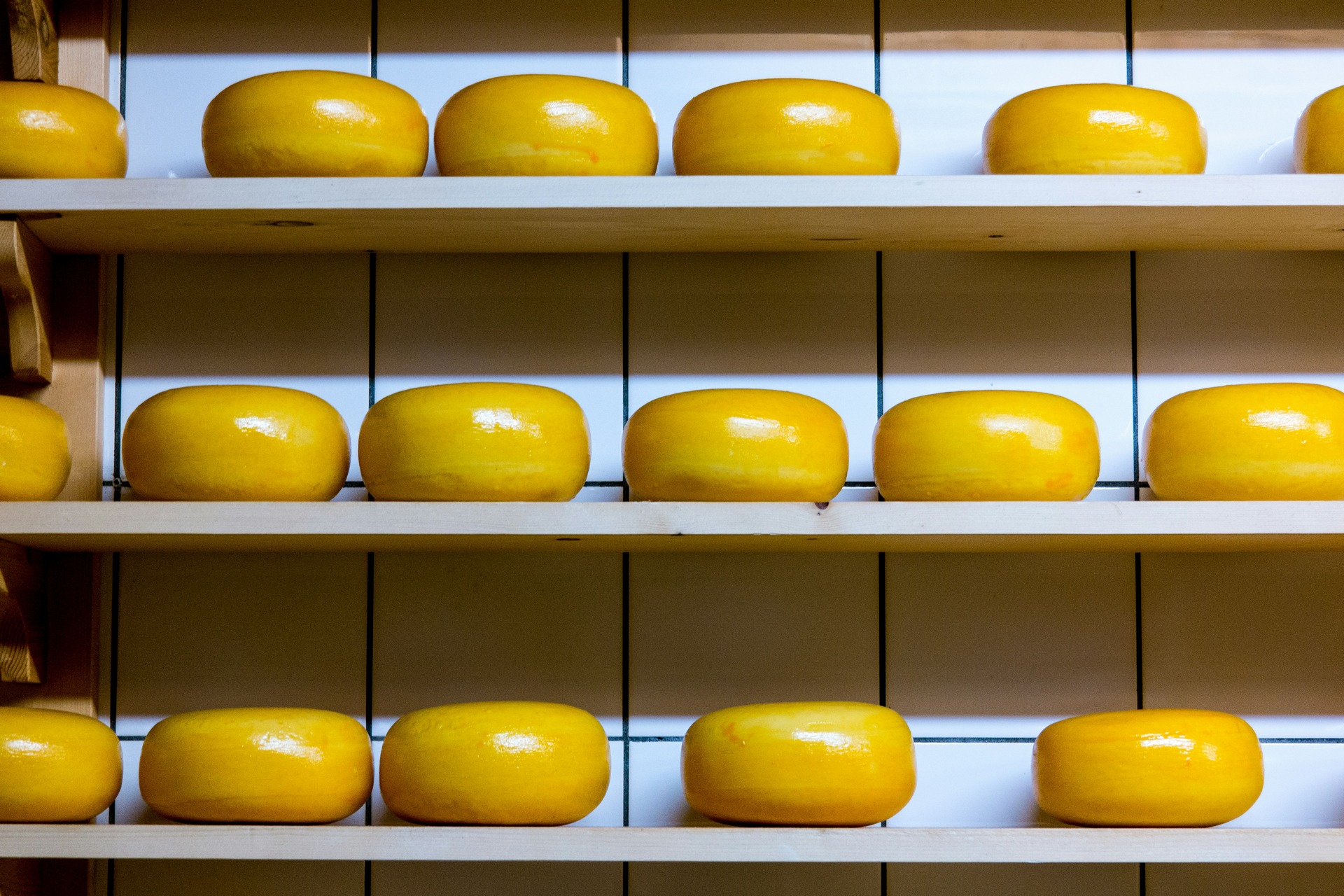
Photo by Katrin Leinfellner on Unsplash
Amsterdam as a “Destination Next” recommendation
Amsterdam is one of the most consistently recommended Destination Next alternatives on the RateHawk platform for European city-break disruption scenarios.
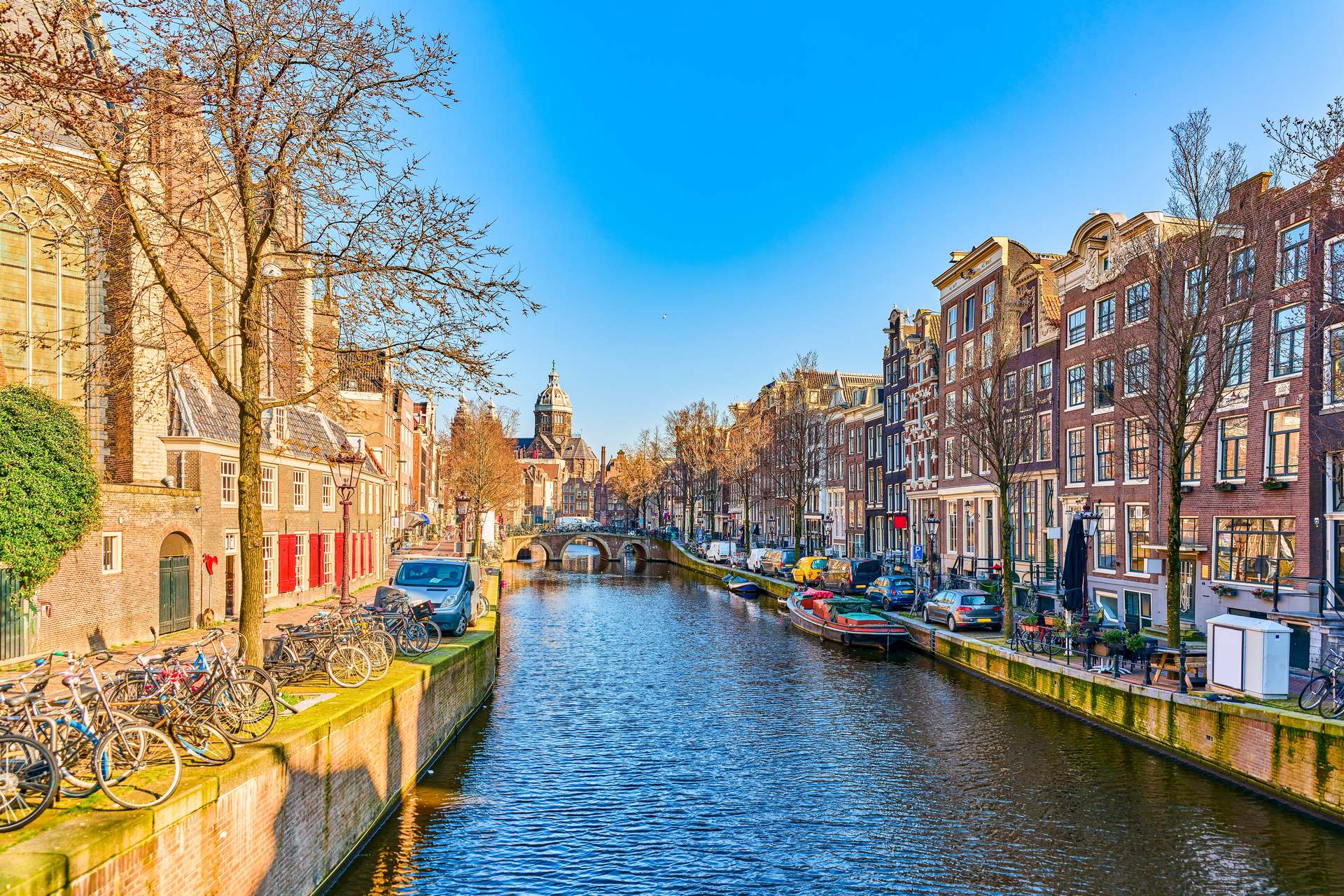
Photo by V_E on Shutterstock
Here is when Amsterdam typically surfaces as a recommendation:
- As an alternative to Paris when Western European city breaks face pricing pressure or accommodation constraints, Amsterdam offers comparable museum quality (the Rijksmuseum stands alongside the Louvre and the Uffizi as one of the great art museums in the world), canal architecture unlike anything in France, and a food scene that has diversified enormously in recent years.
- As a substitute for Brussels or Copenhagen when clients face routing disruption, Amsterdam Schiphol is one of the best-connected airports in Europe, with direct long-haul and European connections making it easily accessible from more source markets than either alternative. Amsterdam is connected directly to London, Paris, and Brussels by international rail services including Eurostar, making multi-city European itineraries easy to build.
- For clients in traveller indecision between Northern European city breaks, Amsterdam’s combination of the Rijksmuseum, the Anne Frank House, the canal ring, the Jordaan neighbourhood, the Albert Cuyp market, and one of the most distinctive food cultures in Western Europe covers more client interests in a compact, walkable city than almost any Northern European competitor.
- As the anchor of a Netherlands itinerary, Amsterdam, combined with Haarlem, Rotterdam, Delft, and the Keukenhof tulip fields (in spring), builds one of the finest compact European programmes available, all accessible by train with no car needed.
Ready to supercharge your Amsterdam proposals?
Explore the full hotel inventory and start building your client’s next Amsterdam or wider Netherlands itinerary on RateHawk.
This article is part of the Destination Next initiative by RateHawk — helping travel businesses find stronger destination alternatives when travel plans change.