
 635
635 15 minutes read
Contents
- Shoes and indoor etiquette
- Photography and respect in sacred spaces
- What to know before visiting Japan
- Navigate Japan like a local expert with RateHawk
Shoes and indoor etiquette
Most of us are used to wearing shoes indoors, but it’s considered in Japan. The culture prioritizes hygiene, and everyone is expected to remove outdoor shoes before entering homes, schools, and temples. Some other spaces, such as restaurants and hospitals, may also have similar rules. Tourists will usually be provided with slippers to wear instead, and they’ll leave their outdoor shoes in a row by the door.
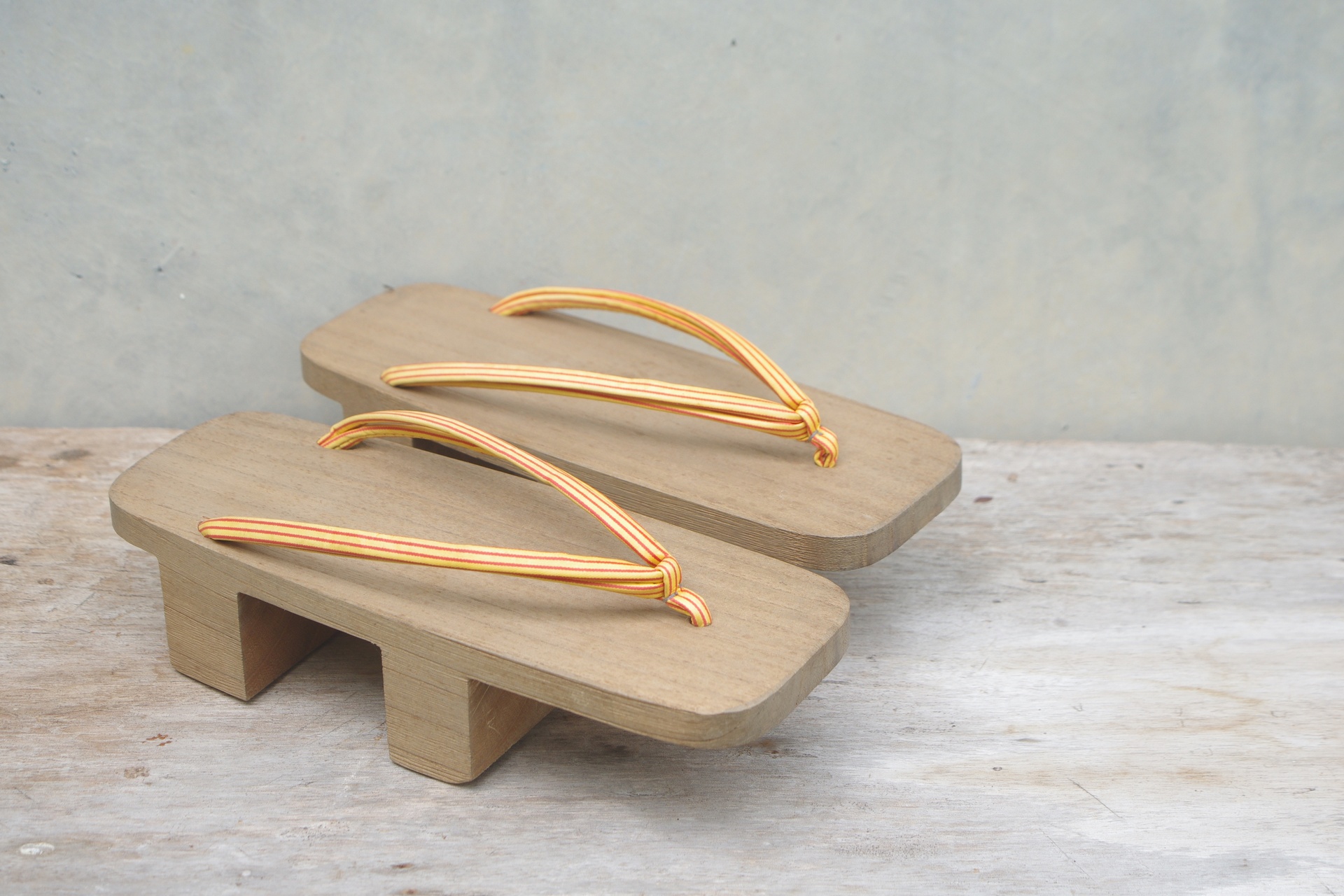
Most of us are used to wearing shoes indoors, but it’s considered in Japan.
Photo by sunstep on Shutterstock
It’s also considered bad manners in Japan to wear your indoor slippers to the bathroom. This area gets its own dedicated slippers, so walking in and out of the bathroom wearing the same slippers you’ve worn in someone’s home or at a restaurant is likely to cause some curious looks.
Japanese bathrooms have tatami floors, and wearing a separate pair of slippers is intended to protect the flooring and to keep it clean. Just like entering and leaving a house, there is usually a row of shoes by the door and slippers nearby to change into.
Chopstick and dining etiquette
Over 42 million international tourists visited Japan in 2025, so it’s no surprise that the dominance of Asia is one of the top global travel trends shaping the industry. Many of these tourists are drawn to Japan for its cuisine, but even the most frequent visitors to Japanese restaurants can make mistakes with their dining etiquette.
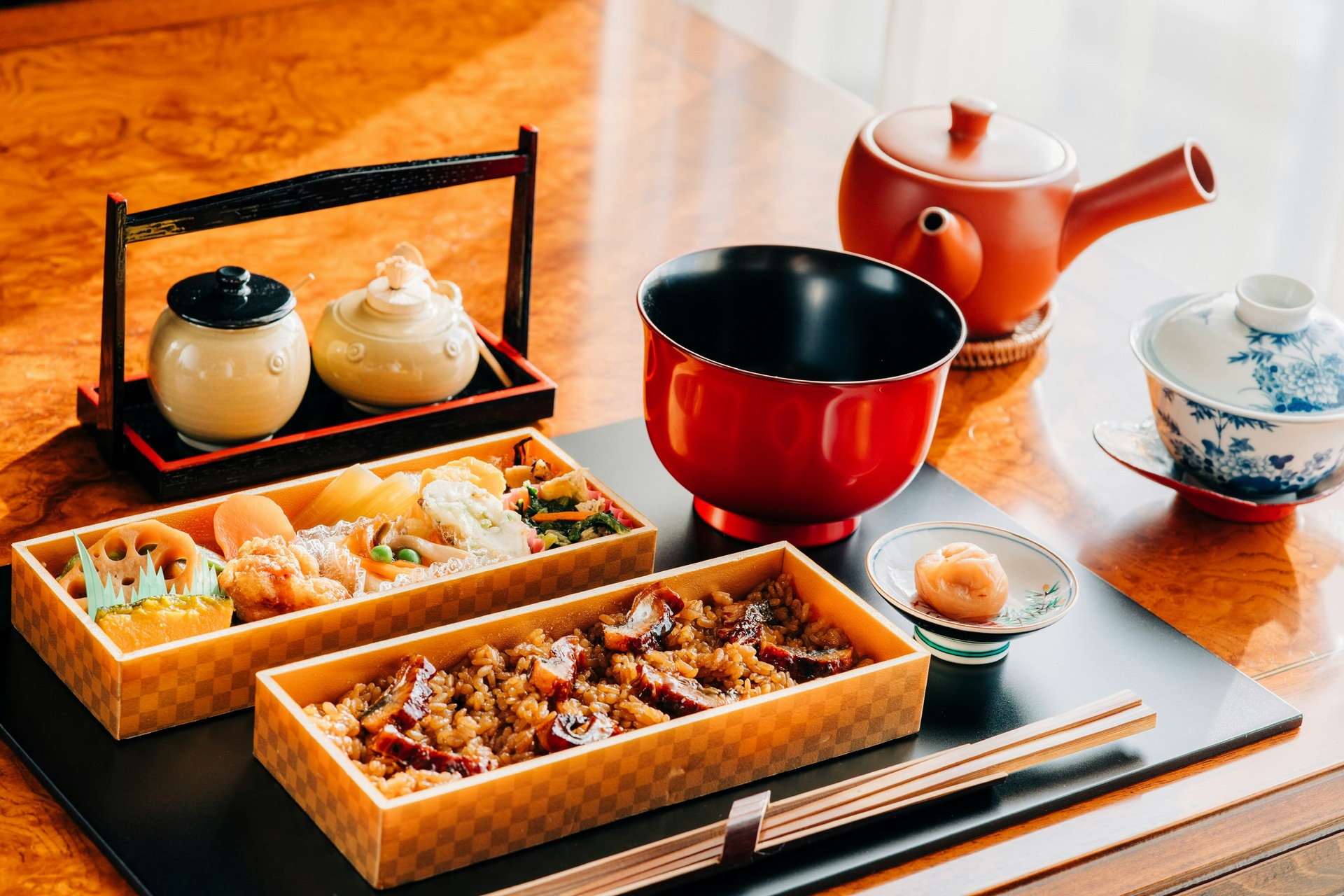
Many tourists are drawn to Japan for its cuisine.
Photo by Richard Iwaki on Unsplash
Japanese people traditionally say “itadakimasu” (いただきます), pronounced as ee-tah-dah-kee-mass ,before eating to give thanks for the meal. Similarly, it’s expected to follow this up with “gochisousama deshita” (ごちそうさまでした), pronounced as go-chee-so-sama-desh-ta to express gratitude after eating.
What to do – and not do – when using chopsticks
Chopsticks are deeply symbolic in Asian culture and misusing them is one of the most common mistakes that tourists make. Here are a few things not to do using chopsticks:
- It’s a taboo to put chopsticks upright in a rice bowl. While it might seem convenient to do this, it’s a ritual that only appears during funerals, so it is seen as bad luck or disrespectful.
- Never stab your food with chopsticks. If you’re not confident with chopsticks, use cutlery instead.
- It’s wrong to aggressively rub your chopsticks together in your hands to break them. Instead, gently rub one against the other to pull them apart.
- Never use chopsticks to point at someone or something.
- Don’t pass food to other people using chopsticks, and always flip the chopsticks around when sharing a dish with others.
- Chopsticks should always be held parallel, so avoid crossing them over.
On the flip side, there are other things that tourists should do when eating in Japan:
- Small plates, including rice and noodles, can be lifted from the table to make it easier to use chopsticks.
- Slurping is encouraged when eating noodles. While making noises when eating might disrupt your fellow diners in the Western world, slurping is seen as a compliment to the chef in Asia. Just make sure not to slurp noodles that aren’t in a broth.
How to eat sushi and dine respectfully in Japan
Sushi has its own etiquette and is one of the most popular dishes amongst locals and tourists alike. It’s acceptable to eat sushi with your hands or chopsticks, and most Japanese people will rotate between the two. If sushi is being dipped into soy sauce, then only the fish should come into contact with the sauce. Wasabi should not be mixed with soy sauce directly.
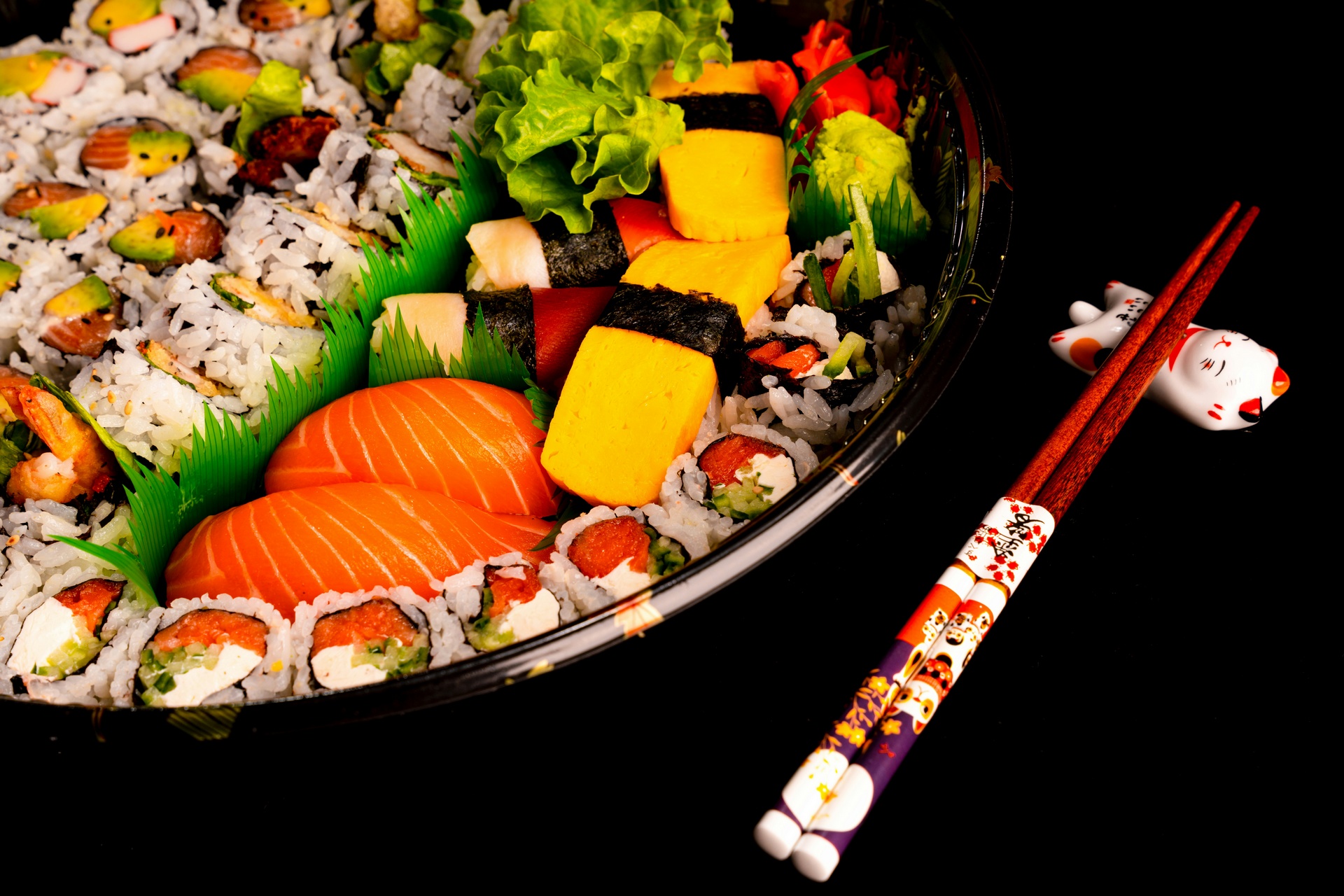
Sushi has its own etiquette.
Photo by Leviosa Hou on Unsplash
While casual restaurants, especially those that use conveyor belt systems, may be more relaxed, these sushi rules are usually stricter at nicer, traditional restaurants.
Here are a few other things to avoid when eating in Japan:
- Larger plates should not be lifted from the table. Instead, transfer some of the food to a smaller plate and pick that up instead.
- Burping is considered extremely rude in Japan, especially at the dinner table.
- Similarly, it’s rude to blow your nose anywhere in public.
- Tipping is not part of Japanese culture, and leaving a tip behind may cause your server to come out after you to return it.
The most important thing to do when dining in Japan is to thank your server. Say “gochisousama deshita” (ごちそうさまでした), pronounced as go-chee-so-sama-desh-ta, to thank them.
Public transport and street manners
Japanese culture focuses heavily on being respectful to others, so it’s no surprise that tourists are expected to be mindful of their surroundings. Public transport is the most efficient way to get around Japan, especially with a JR Pass, but these trains are where visitors often break social rules.
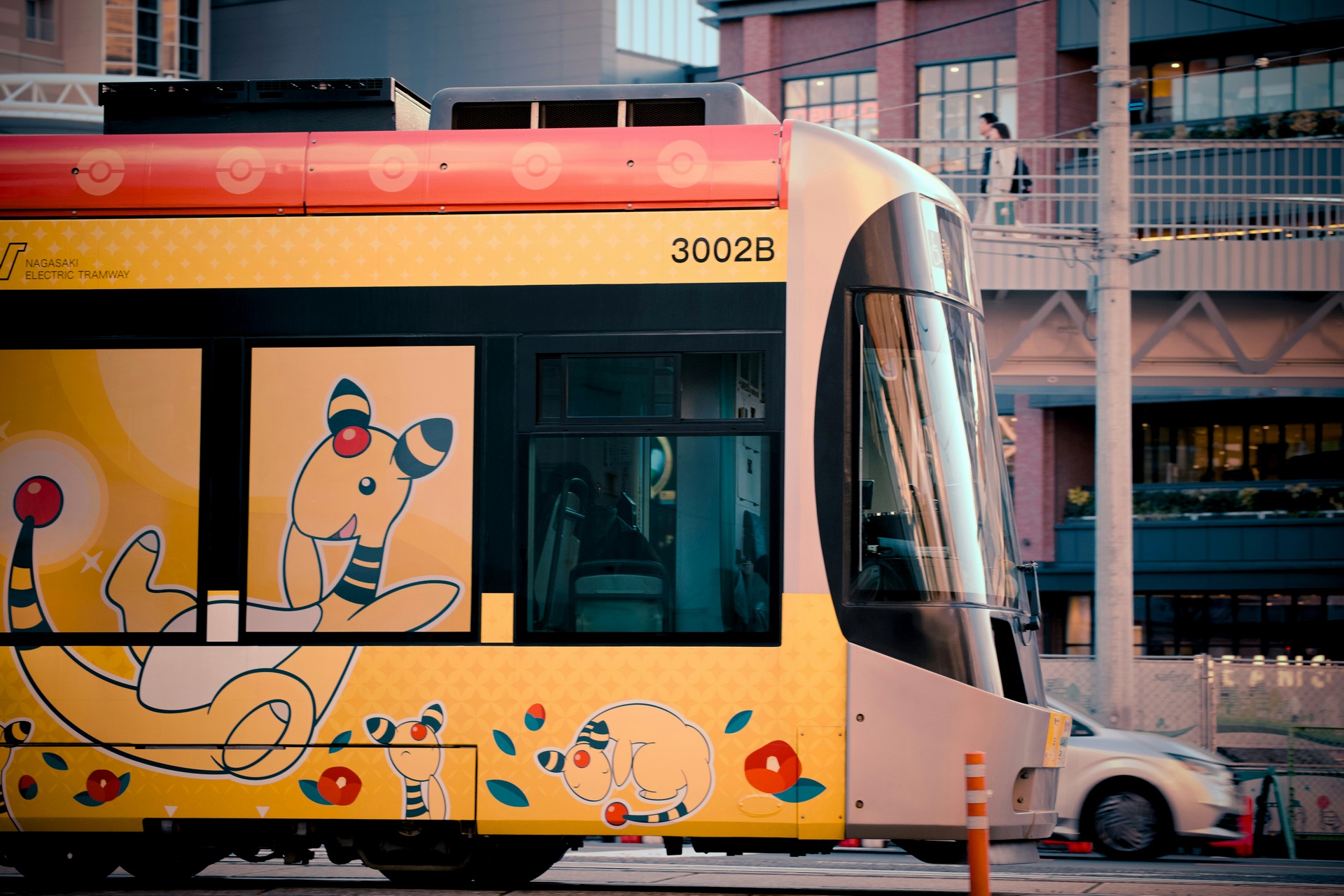
Public transport is the most efficient way to get around Japan.
Photo by Carol Gauthier on Unsplash
Trains and buses have priority seating, usually color-coded, and clearly marked, which are reserved for seniors, those with disabilities, and pregnant women. Japanese people are unlikely to ask for one of these seats if they need it, and tourists are expected to get up and offer their reserved seat if they accidentally sit on one.
While it’s okay to use a phone on public transport, travelers must be wearing headphones, and the volume should be low enough not to disturb anyone around them. Talking on a phone is a strict no-go, especially on busy public transport. If a visitor needs to take a call in a restaurant or public area, they’re expected to do so quietly or head outside to take the call.
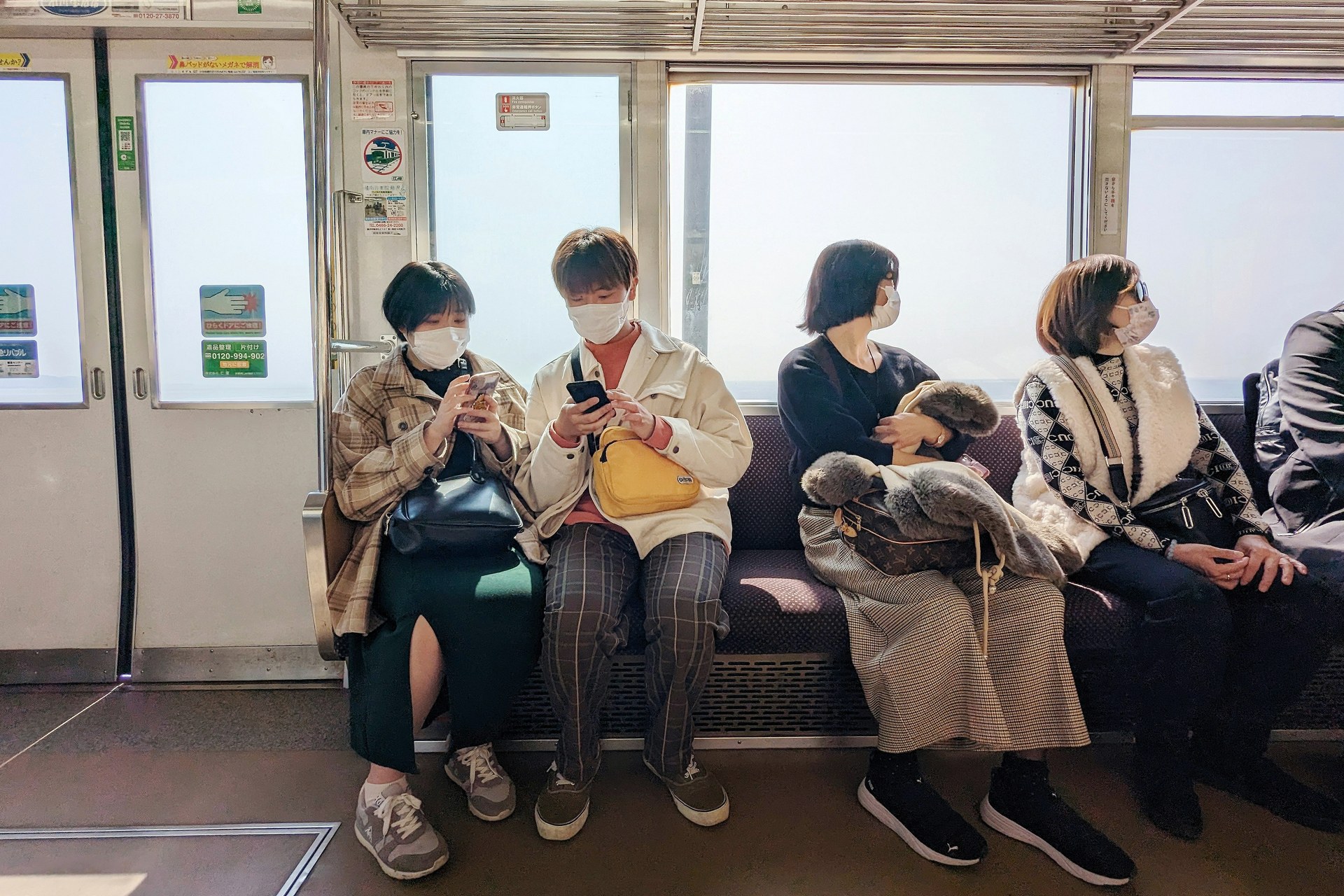
Talking on a phone is a strict no-go, especially on busy public transport.
Photo by note thanun on Unsplash
Just like in other major cities, it’s important to stand on the correct side of an escalator. In Japan, you’ll stand on the left and walk on the right. Similarly, the Japanese are strict with their queuing system, so it’s common to see an orderly queue for everything from restaurants to trains. Always let whoever is leaving go first, before stepping forward.
Can you eat outside in Japan?
While it’s normal to eat outside, especially when walking, in Western cities, it’s considered rude to eat on busy streets. Cleanliness is a priority in Japan, and eating on the go is considered disrespectful. Take a few minutes and drink your coffee in a café, instead of rushing out the door.
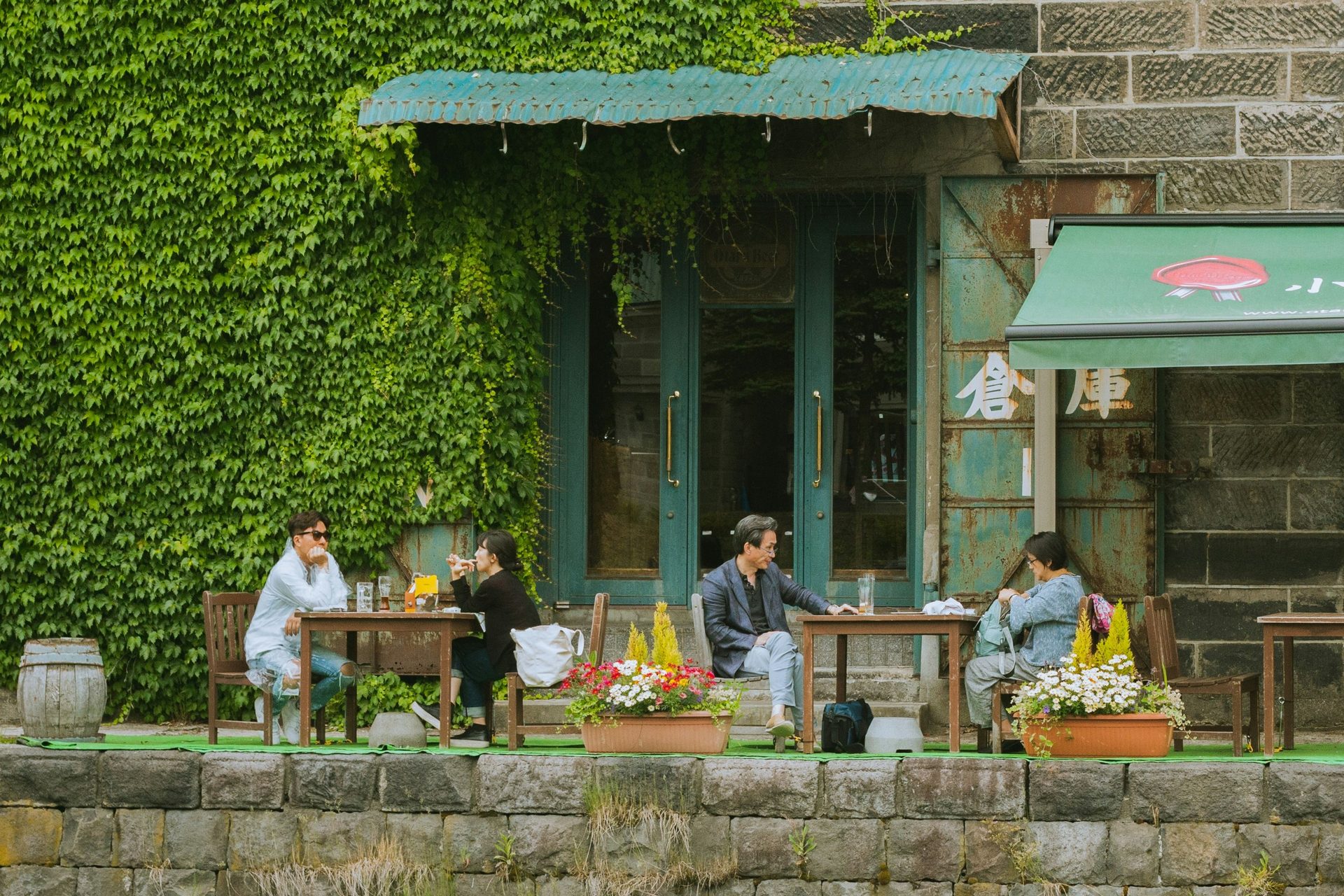
Similarly, you’ll not see litter anywhere in Japan. It’s considered extremely rude to litter. Tourists often get confused by the lack of public trash bins, but they can usually be found at a conbini (24/7 convenience store), in public restrooms, and next to vending machines. It’s also a good idea to carry a small bag to put any trash in.
Hot springs (Onsen) and accommodations
Most tourists will visit an onsen or hot springs when they’re in Japan, especially if they’re planning a romantic getaway. Visiting an onsen is one of the best ways to experience Japanese culture, but it’s easy to feel overwhelmed. Most onsens will offer hot springs that are separated by gender, and some also have co-ed spaces, which require visitors to wear a bathing suit or towel. Similarly, there are some public onsens that are intended for groups or families and have similar rules.
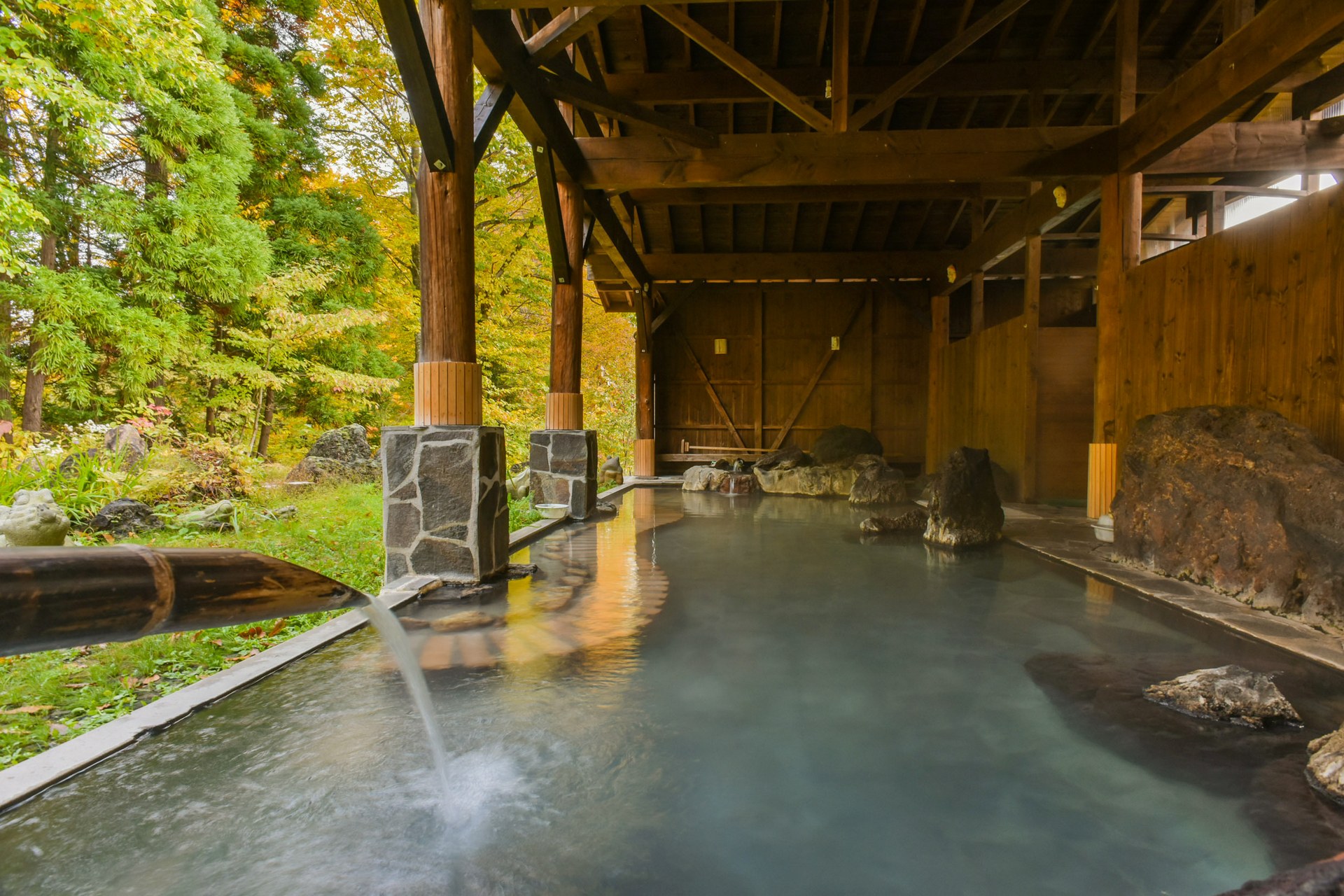
Visiting an onsen is one of the best ways to experience Japanese culture.
Photo by weniliou on Shutterstock
However, in most onsens, visitors will be expected to be naked. Here are a few things to know when visiting an onsen:
- Always check the tattoo policy before visiting. Tattoos still have negative connotations in Japan, although attitudes are changing towards them. Some onsens will not admit visitors with visible tattoos, while others will provide a waterproof plaster to cover them.
- Rinse before entering the hot spring. There are usually showering and washing facilities provided on site.
- Photos are strictly prohibited when visiting an onsen.
- Most visitors will use a small towel when getting ready to go into the hot spring. After leaving their clothes in a changing room, visitors will usually shower before going to the hot spring pool, using the towel to stay covered until they get into the water.
- Any towel that is brought into the onsen should stay above the water and should never be rinsed in the hot spring.
How to navigate shared accommodation
Tourists who are staying in shared accommodation, such as private homes and hostels, will also want to be mindful of Japanese etiquette. Cleanliness is held above all else, and it’s expected that all shared spaces are respected. Even in hotels, it’s expected that guests should keep noise levels as low as possible and remove footwear before entering their private rooms.
Here are a few top tips for staying in shared accommodation:
- Japan has strict waste segregation, including for plastic bottles, so it’s important to pay attention when getting rid of trash.
- Any shared spaces should be cleaned immediately after each use, even if there doesn’t appear to be any mess.
- Always rinse off before using an onsen in a shared accommodation.
- Japanese people are not as direct with their communication, but it’s important to be polite and respectful of those around you.
RateHawk’s accommodation search filters make it easy to find the right hostel, hotel, or private apartment to suit every type of traveler and vacation.
Social interactions and cultural sensitivities
Social interactions are where most tourists make mistakes, especially during their first visit to Japan. There is some social etiquette that is similar to other countries, like not pointing fingers, but Japan goes further by swapping handshakes for bows as the default form of greeting. Bowing is the Japanese equivalent of nodding your head at someone you know.
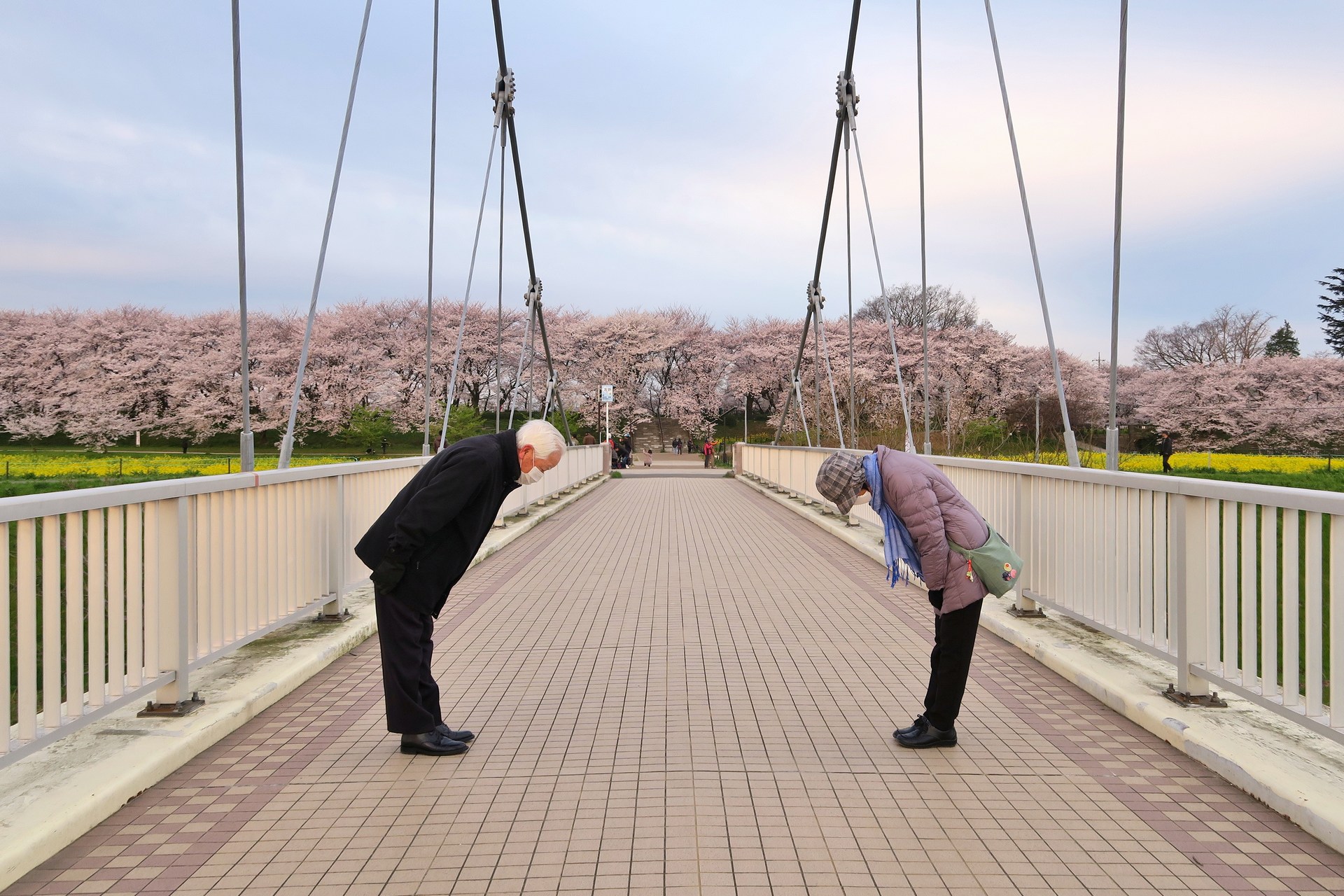
Bowing is the Japanese equivalent of nodding your head at someone you know.
Photo by Picturesque Japan on Shutterstock
One of the most important social interactions is when visitors are paying for purchases at a shop. The cashier will usually return any change by putting it into a small tray. It’s seen as disrespectful to count this money, and you may insult your cashier by doing so. Similarly, it’s best to place any money on these little trays when paying, instead of directly handing the cashier your money.
Japan is also different in how its taxis work. While you’ll usually open the door for yourself in other countries, Japanese taxi drivers will open the back door for you, which is partly a safety measure.
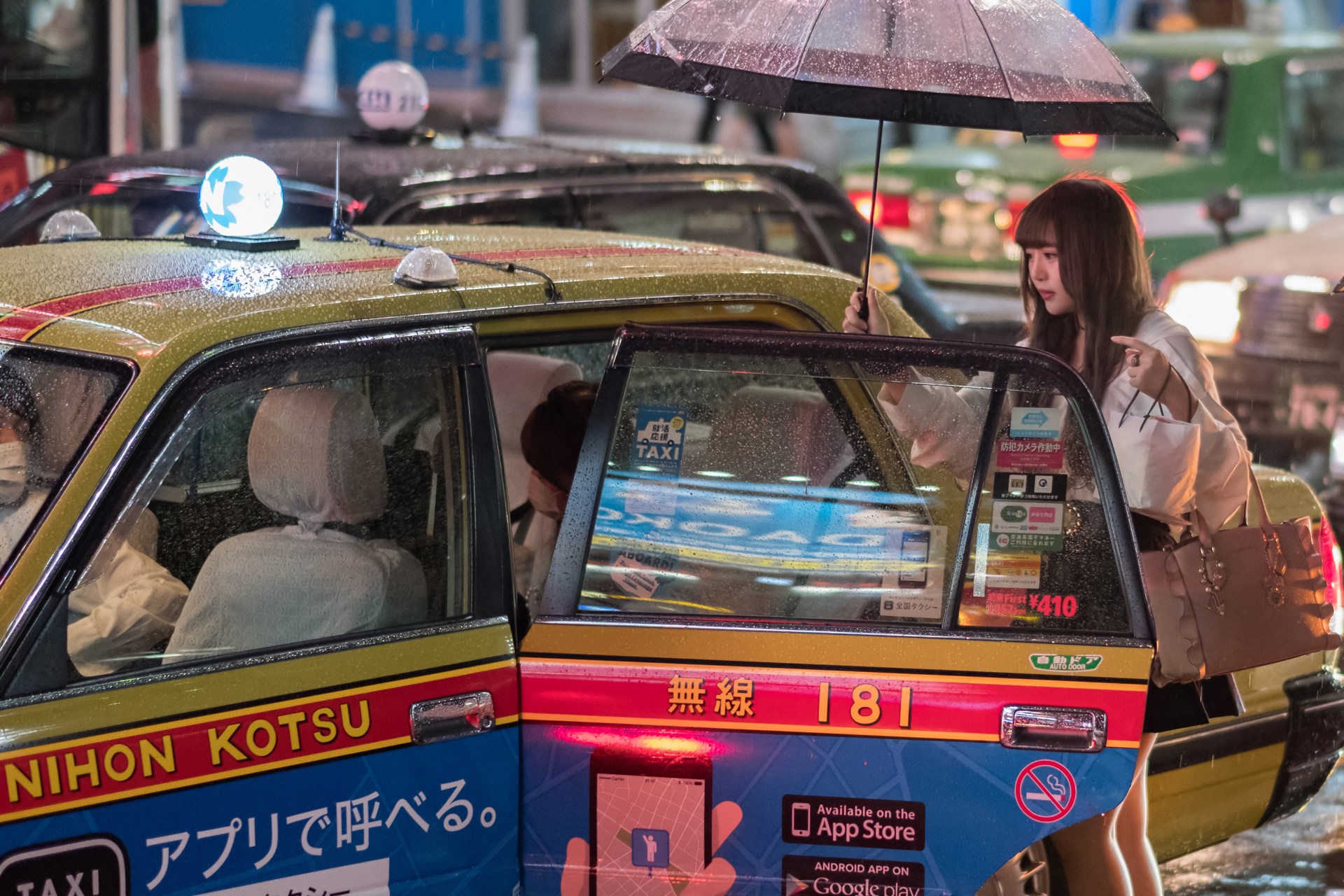
Japanese taxi drivers will open the back door for you, which is partly a safety measure.
Photo by MAHATHIR MOHD YASIN on Shutterstock
After you wave down a taxi, wait for it to pull up and for the door to open before trying to get inside. Alternatively, tourists who are traveling as a group can access the front passenger seat by manually opening the door. The taxi driver will automatically open the back doors once the fare has been paid.
Public displays of affection and phrases to know
Japanese culture is not a fan of public displays of affection, and people don’t often touch each other, including when greeting other people. Although basic body contact isn’t seen as inappropriate, any type of intimate public display of affection, including kissing, is frowned upon. Japanese people show affection in other ways, including bringing small souvenirs (known as “omiyage” お土産) when visiting someone’s home.
Even if you don’t speak fluent Japanese, it’s worth learning a few key phrases:
- Hello = Konnichiwa = こんにちは – koh-nee-chee-wah
- Good morning (formal) = Ohayou gozaimasu = おはようございます – oh-hah-yoh go-zai-mass
- Good evening = Konbanwa = こんばんは – kohn-bahn-wah
- Goodbye = Sayonara = さようなら – sah-yoh-nah-rah
- Sorry/excuse me = Sumimasen – すみません – soo-mee-mah-sehn.
- Thank you (formal) = Arigatou gozaimasu – ありがとうございます – ah-ree-gah-toh goh-zah-ee-mahs
- Can you speak English? = Eigo wo hanasemasu ka? = 英語を話せますか – ay-go oh hah-nah-she-mass kah?
Photography and respect in sacred spaces
Japanese people take privacy very seriously, even in public. If you’ve ever wanted a travel vlog of Japan, you may notice that the influencer has chosen to blur out the faces of people in the background. It’s seen as disrespectful to take photos or videos with other people without their permission. Always ask permission before filming and look out for any signs that may forbid photography or video, especially in traditional areas like temples and shrines.
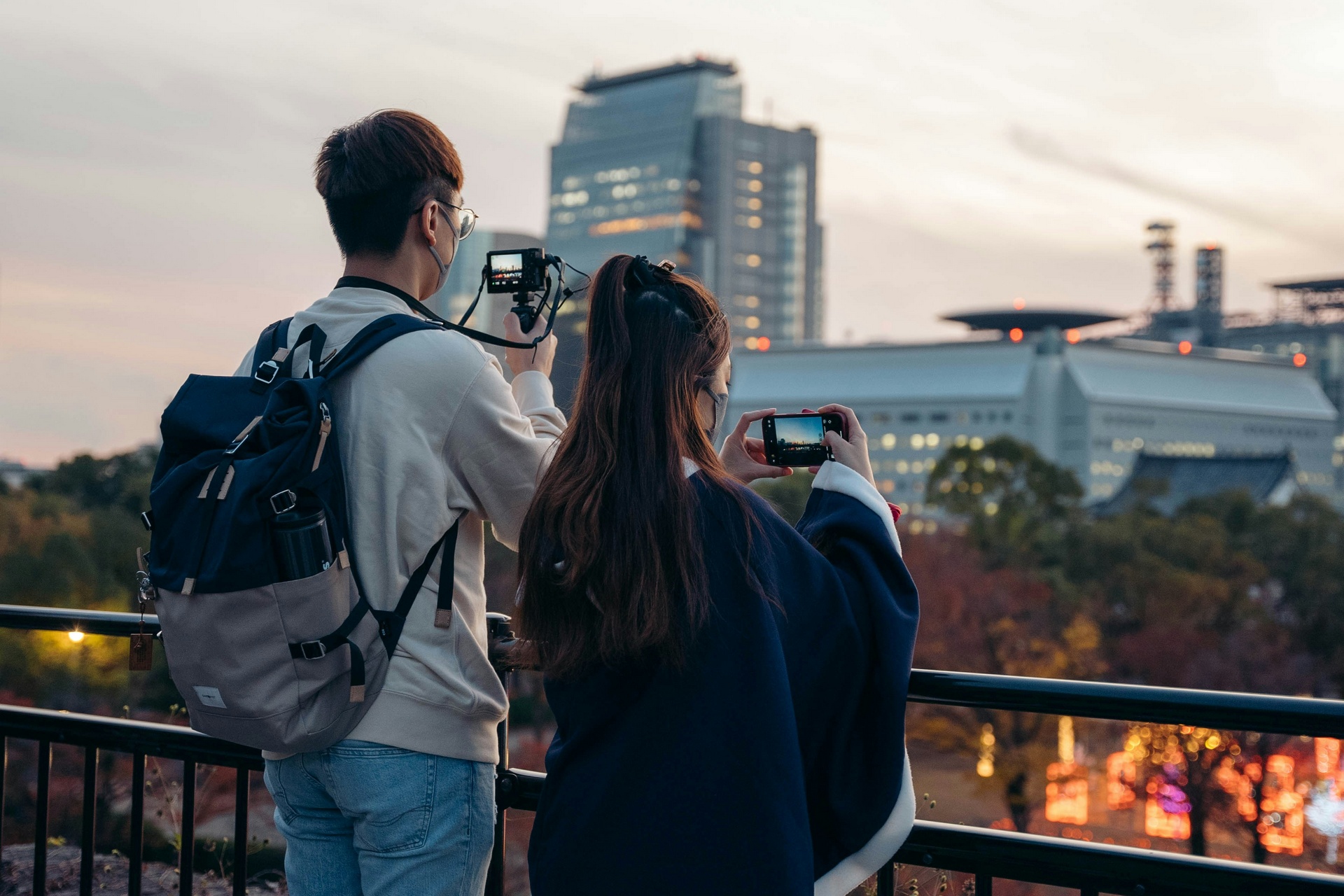
Always ask permission before filming and look out for any signs that may forbid photography or video.
Photo by Rory McKeever on Unsplash
Many tourists come to Japan hoping to see a geisha. However, taking a selfie with a geisha is one of the biggest mistakes a visitor can make in Japan. Tourists who want to explore this tradition can hire a kimono instead or look out for the “fake” geishas that are usually found on busier streets, as they’ll happily take a picture.
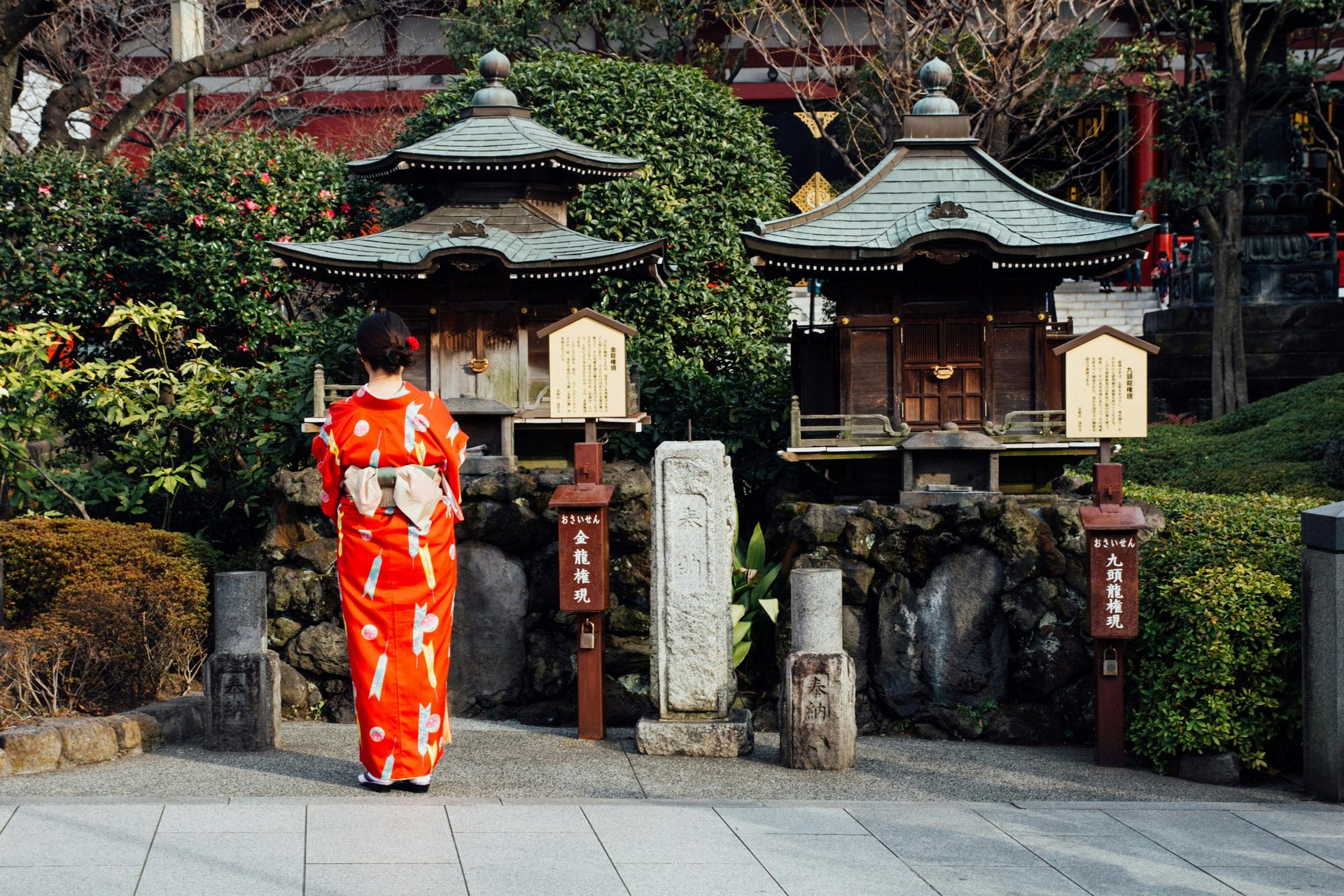
Temples are a sacred space, and tourists should behave accordingly. It’s important to dress modestly, including removing hats and shoes before entering. Visitors are expected to use the water basin, known as a temizuya, to wash their hands and rinse their mouths before entering.
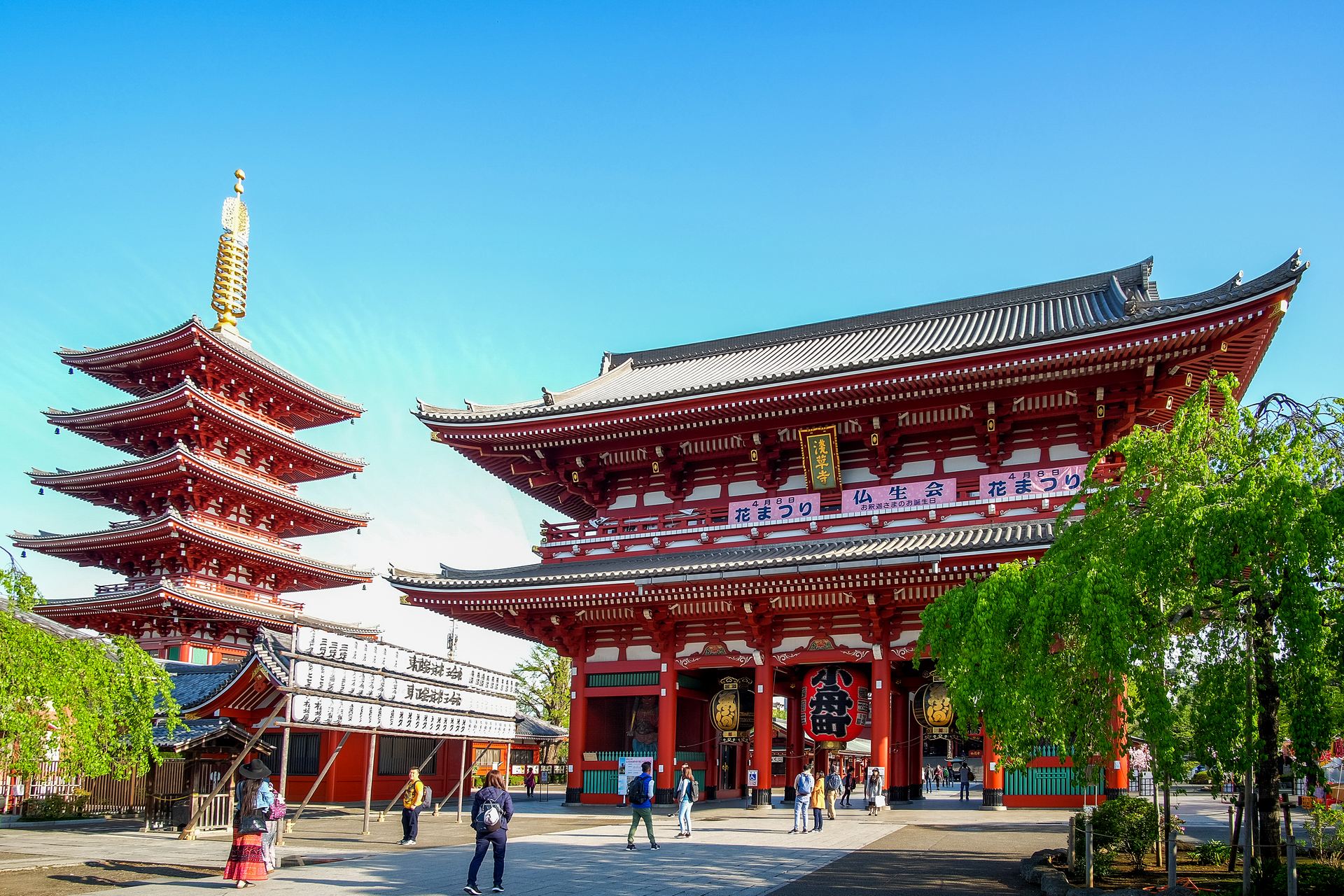
Temples are a sacred space, and tourists should behave accordingly.
Photo by Jo Panuwat D on Shutterstock
Clapping is forbidden in a Buddhist temple but allowed in the Shinto shrines. Visitors can offer a coin in the donation box, pray silently, or light an incense stick for purification. While photography is usually allowed on the grounds surrounding temples, they are rarely allowed indoors.
What to know before visiting Japan
Japan has so much to offer international guests, from music festivals to the iconic Sapporo Snow Festival. Learning about Japanese culture and social etiquette is one of the best ways to prepare for a trip to Asia.
Here are 7 more things to know before visiting Japan:
- Attraction tickets can sell out weeks in advance, especially for the Ghibli Museum and Disneyland, even outside of peak season.
- Public transport is the easiest and most affordable way to navigate around the country. RateHawk’s map feature makes it easy to find accommodation close to major attractions and transport hubs, which is ideal for shorter visits.
- It’s possible to speed up the immigration process on arrival by using the “Visit Japan” website in advance.
- Although the cost of a Japan Rail (JR) pass has increased in recent years, it is still the cheapest option for visitors planning to explore multiple cities.
- Download an eSIM before arriving in Japan to avoid paying roaming fees.
- Most stores and restaurants will accept major debit and credit cards, so don’t bring too much cash and make sure to have smaller notes.
- Flights to Japan are typically the most expensive part of any itinerary, but taking an indirect flight via China can drastically reduce flight prices.
FAQs about disrespectful things to do in Japan
Why is tipping rude in Japan?
Tipping is seen as rude in Japan as it implies that the servers are poorly paid or that you think your service hasn’t been as good elsewhere, especially as Japanese culture focuses on hospitality.
Is slurping rude in Japan?
Slurping is not rude in Japan and is actually seen as a sign of appreciation. However, it’s only appropriate to slurp food that is served in a broth, such as ramen or soba noodles.
How should you greet people in Japan?
The best way to greet people in Japan is by bowing from a small distance away, instead of hugging or shaking hands. Use the correct greeting of “gozaimasu” (morning) or “konbanwa” (evening) accordingly.
Do Japanese people take their shoes off inside?
Japanese people remove their outdoor shoes before going inside. This practice isn’t just for hygiene reasons, but also to protect traditional Tatami floors and show respect by avoiding bringing the “unclean” outside into the clean space inside.
Navigate Japan like a local expert with RateHawk
Respecting local customs is key to visiting anywhere in the world, but especially Japan. Planning ahead and learning about the local culture and etiquette is the best way to have a stress-free vacation.
At RateHawk, our booking platform makes it easy to plan an unforgettable trip to Japan. You’ll get instant access to over 2.5 million hotels from more than 230 suppliers internationally, including throughout Japan and across Asia.
Our user-friendly interface streamlines the booking process with an extensive inventory, exclusive rates, and 24/7 multi-lingual support. Get started with RateHawk today to explore different packages to suit every type of traveler and budget.
Cover image: Photo by PeopleImages on Shutterstock